A Quick Pre-Vacation Home Checklist for Total Peace of Mind
Don't let a flooded basement or high energy bill ruin your summer trip. Follow this 30-minute pre-vacation home shutdown routine to protect your property and save money.
The bags are packed, the itinerary is locked in, and summer vacation season is finally upon us. But as you stand by the front door, ready to head to the airport, a familiar anxiety often sets in. Did you leave the stove on? Is the air conditioning set correctly? What if a pipe bursts while the house sits empty for the next three weeks?
Leaving a house unattended for an extended period does not have to be a source of stress. By following a structured pre vacation home checklist, you can protect your property from catastrophic damage and significantly reduce your utility bills while you are away. This isn't about spending hours doing heavy maintenance right before a flight; it is about a targeted, 30-minute shutdown routine that empowers you to leave with total confidence.
A few years ago, a neighbor went to Florida for a three-week summer trip. A cheap plastic washing machine hose burst on day two. By the time they returned, water had been running continuously for nineteen days, completely destroying the first floor and basement. That single incident turned me into a shutdown fanatic. Let's walk through the essential steps to secure your plumbing, optimize your HVAC, and eliminate wasted energy so you can actually enjoy your time away.
The Core of Your Pre Vacation Home Checklist: Shutting Off the Water
If you only have time to do one thing before leaving for the airport, make it this: shut off the water. Indoor flooding is the single most common and destructive event that occurs in unattended homes. A ruptured braided hose, a failing refrigerator ice maker line, or a cracked toilet valve can pump hundreds of gallons of water into your home per hour.
Locate your home's main water shutoff valve. This is typically found in the basement, in a utility closet, or on an exterior wall near where the water meter is located. Modern homes usually have a quarter-turn ball valve with a straight handle. When the handle is parallel to the pipe, the water is on; when it is perpendicular, the water is off. Older homes might feature a gate valve that looks like a circular steering wheel, which requires several clockwise turns to close completely.
Once you have turned off the main valve, go to the lowest level of your home and open a faucet—like a utility sink—to drain the remaining pressure from the pipes. If shutting off the main valve isn't an option because you have an automatic sprinkler system tied into the same line, you must isolate the high-risk areas. At a minimum, turn off the hot and cold supply valves located directly behind your washing machine, as these rubber hoses are notorious for bursting under constant pressure.
Dialing Back the Water Heater for Energy Savings
Your water heater is one of the largest energy consumers in your home. Under normal circumstances, it constantly cycles on and off 24 hours a day to maintain a tank full of 120°F water. When you are on vacation, heating water that nobody is using is like leaving your car idling in the driveway for two weeks.
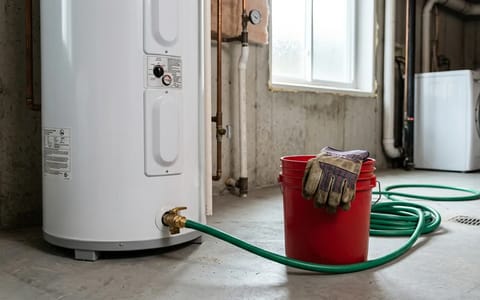
If you have shut off your main water supply (as recommended above), you must adjust your water heater. If a minor leak were to occur and drain the tank while the water supply is off, the heating elements would continue to fire. In an electric heater, this causes a "dry fire" that will instantly burn out the heating elements. In a gas heater, heating an empty tank can severely damage the unit.
- Locate the control dial. For gas water heaters, look at the gas valve box near the bottom of the tank.
- Turn to Vacation Mode. Rotate the dial from the temperature setting (often labeled A, B, C, or Hot) down to "VAC" or "Vacation." This keeps the pilot light on but prevents the main burner from firing.
- Handle electric heaters at the panel. Electric water heaters generally do not have a vacation mode dial. Simply go to your main electrical panel and flip the dedicated water heater breaker to the "Off" position.
- Address tankless systems. If you have a modern tankless water heater, you can simply unplug it from the wall or turn off its power switch, as it doesn't store any water that needs to be kept warm.
Smart Thermostat Settings: Balancing Savings and Mold Prevention
The temptation when leaving for a summer vacation is to simply turn the air conditioning completely off to save as much money as possible. In many climates, this is a dangerous mistake.
Air conditioning systems do more than just cool the air; they are your home's primary dehumidifiers. During hot, humid summer weeks, an un-air-conditioned home can quickly turn into a terrarium. If indoor humidity levels sit above 60% for an extended period, mold and mildew can rapidly bloom on drywall, leather furniture, clothing, and carpets.
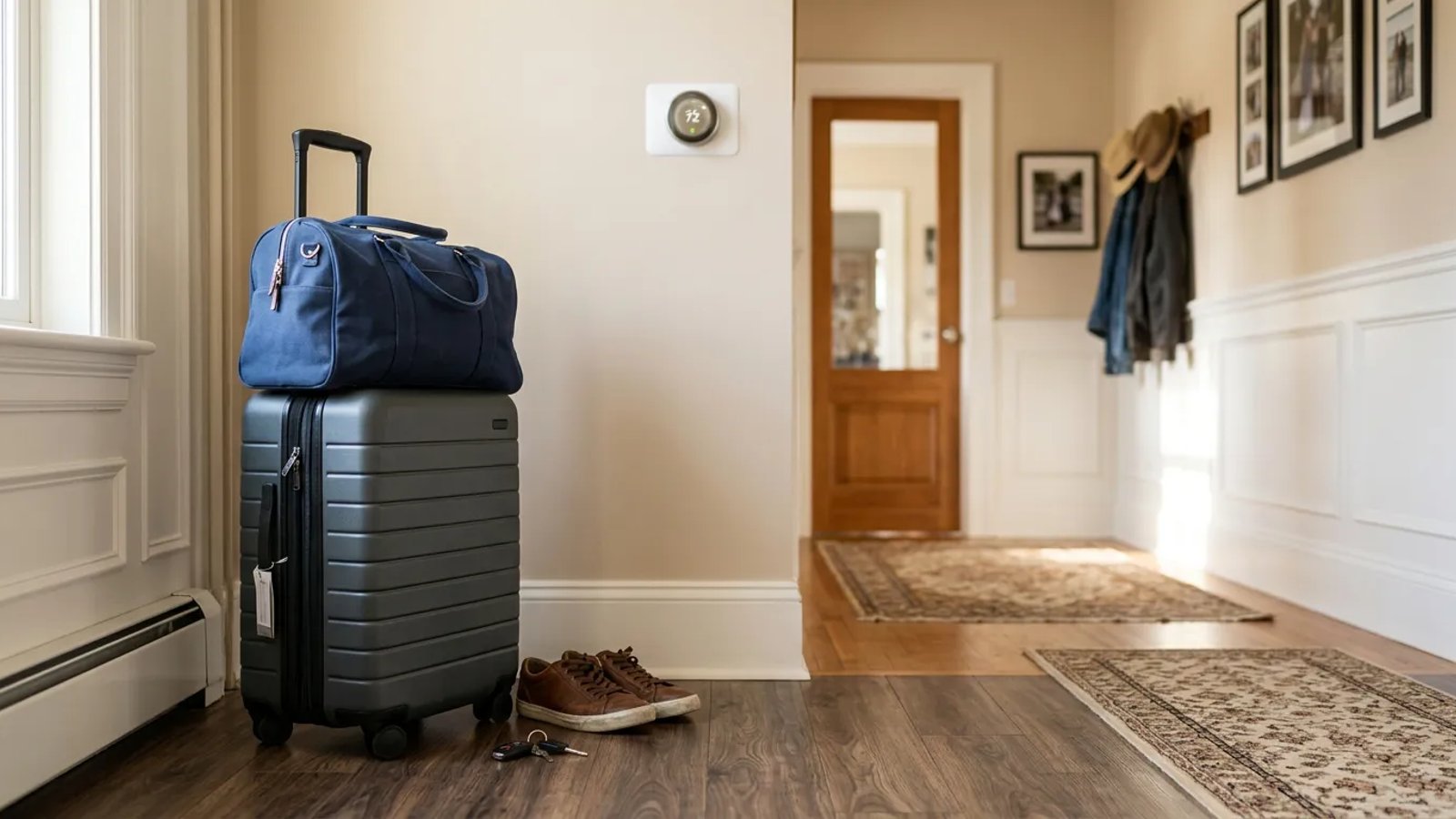
Instead of turning the system off, adjust your thermostat to 85°F. At this temperature, the air conditioner will run infrequently—saving you a massive amount of electricity—but it will cycle on just enough to pull excess moisture out of the indoor air. If you have a smart thermostat, many feature a dedicated "Vacation" feature that automatically maintains safe temperature and humidity thresholds while maximizing energy efficiency.
If you are traveling during the winter months, the opposite rule applies: never turn the heat completely off. Set your thermostat to 55°F to ensure the house stays warm enough to prevent the plumbing pipes inside your walls from freezing and bursting.
Slaying the Energy Vampires: Unplugging Electronics
Take a walk through your living room and kitchen. Look at the television, the microwave, the coffee maker, and the gaming consoles. Even when these devices are turned "off," they are still drawing power. This phenomenon is known as vampire energy or phantom power.
Appliances with digital clocks, standby lights, or remote-control receivers constantly pull a small amount of electricity from the grid. According to the Department of Energy, phantom power can account for up to 10% of your monthly electricity bill. When you are going away for weeks, unplugging these devices is an easy way to claw back some of that wasted money.
A 30-minute walkthrough today is the difference between returning to a relaxing home and stepping into a $10,000 plumbing disaster.
More importantly, unplugging sensitive electronics protects them from severe summer weather. Thunderstorms can cause sudden power surges that easily overwhelm basic power strips, frying the delicate motherboards inside modern televisions and computers. Physically disconnecting them from the 120-volt wall outlets is the only 100% foolproof method of surge protection.
Of course, leave the essentials plugged in. Your refrigerator, freezer, Wi-Fi router (if you have smart home cameras that rely on it), and home security systems should remain powered on.
The Final Exterior and Security Walkthrough
With the mechanical systems safely shut down, the final phase of your pre-vacation routine involves securing the envelope of the house. A home that looks obviously empty is a prime target for opportunistic burglaries.
Start by doing a physical check of every window on the first floor. It is incredibly common to open a window during a nice spring day and forget to lock the latch when closing it. Double-check the lock on the door leading from your garage into the house, as this is a frequently overlooked access point.
Next, manage your mail and lighting. A pile of packages on the porch or an overflowing mailbox is a glaring signal that nobody is home. Use the USPS website to place a temporary hold on your mail, and ask a trusted neighbor to grab any unexpected flyers or packages left at your door. Set two or three interior lamps on inexpensive digital timers ($15 at any hardware store) so they turn on and off at natural intervals in the evenings.
Taking the time to properly shut down your house might feel like an annoying chore when you are eager to start your holiday. But the peace of mind it provides is invaluable. By spending just thirty minutes walking through these critical steps, you ensure that the comfortable, safe home you leave behind will be exactly the same when you return.