How to Reduce Basement Humidity and Prevent Summer Mold
As spring rains transition into sticky summer heat, cool basements often begin to 'sweat.' Learn how to diagnose moisture sources, properly size a dehumidifier, and stop condensation before mold takes hold.
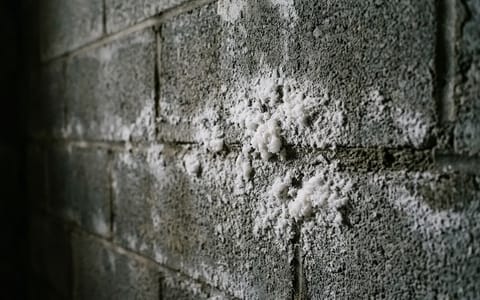
Full guide Foundation & Structure Learn how to spot dangerous foundation cracks and protect your home from costly structural damage.Now that sticky summer heat has fully arrived, warm, moist air inevitably finds its way into cool basements. When this humid air hits cold concrete walls and uninsulated water pipes, it creates condensation. This "sweating" is a major frustration because it quickly leads to musty odors, ruined cardboard storage boxes, and rapid mold growth. By taking a few proactive steps today, you can stop the sweating before the late-summer humidity peaks.
Why Basements Sweat in the Summer Heat
Understanding basement moisture requires a quick look at the dew point. Even in the middle of July, the soil surrounding your foundation remains relatively cool, which keeps your concrete basement walls hovering around 55 to 60 degrees Fahrenheit. Meanwhile, the outside air is 85 degrees and loaded with moisture.
Because warm air naturally moves toward cooler spaces, that heavy summer air seeps into your basement. The moment it touches those 60-degree walls or cold water pipes, the air cools rapidly. Cold air cannot hold as much moisture as warm air, so it drops the excess water directly onto your surfaces. I remember walking down into my own basement a few Junes ago, only to step in a puddle that I swore was a leaky pipe. Turns out, it was just severe condensation dripping off the main water line.
Your basement isn't necessarily leaking; it might just be sweating.
This physical reaction is why basements smell musty in July but feel perfectly dry in January. To protect your home's structure and your indoor air quality, you have to break this cycle of condensation.
The Foil Test: Condensation vs. Foundation Leaks
Before you spend money trying to reduce basement humidity, you must confirm that humidity is actually the culprit. Sometimes, what looks like condensation is actually groundwater seeping through the porous concrete. You can diagnose this with a roll of aluminum foil and some duct tape.
- Cut the foil. Tear off a 12x12 inch square of heavy-duty aluminum foil.
- Dry the wall. Use a towel to completely dry a section of the concrete wall where you frequently notice moisture.
- Tape it tight. Tape the foil square securely to the wall using duct tape. Make sure all four edges are sealed tight against the concrete so air cannot get behind it.
- Wait 24 hours. Leave the foil undisturbed for a full day and night.
- Check for moisture. Inspect the foil. If the outside (the side facing the room) is wet, you have a condensation problem. If you peel the foil back and the inside (the side touching the wall) is wet, moisture is seeping in from the soil outside.
How to Reduce Basement Humidity with the Right Dehumidifier
If your foil test confirms condensation, your primary weapon is a dehumidifier. However, many homeowners buy undersized units, run them on the wrong settings, and get tired of emptying heavy buckets of water every day.
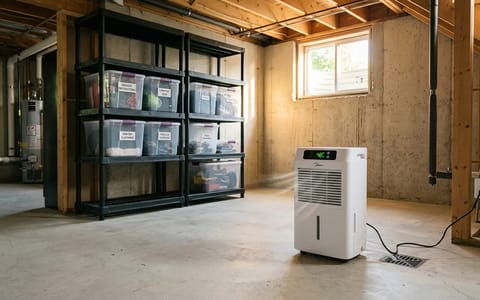
For a standard basement (up to 2,000 square feet), purchase a 50-pint dehumidifier. Under current Department of Energy sizing guidelines, a 50-pint capacity is the typical 2026 recommendation for large or damp spaces. Once you have the unit, placement and configuration are critical.
Set the machine's target relative humidity to between 45% and 50%. Setting it lower than 45% will force the compressor to run constantly, driving up your electric bill without offering any additional structural benefits. Letting it creep above 60% provides enough ambient moisture for mold spores to germinate.
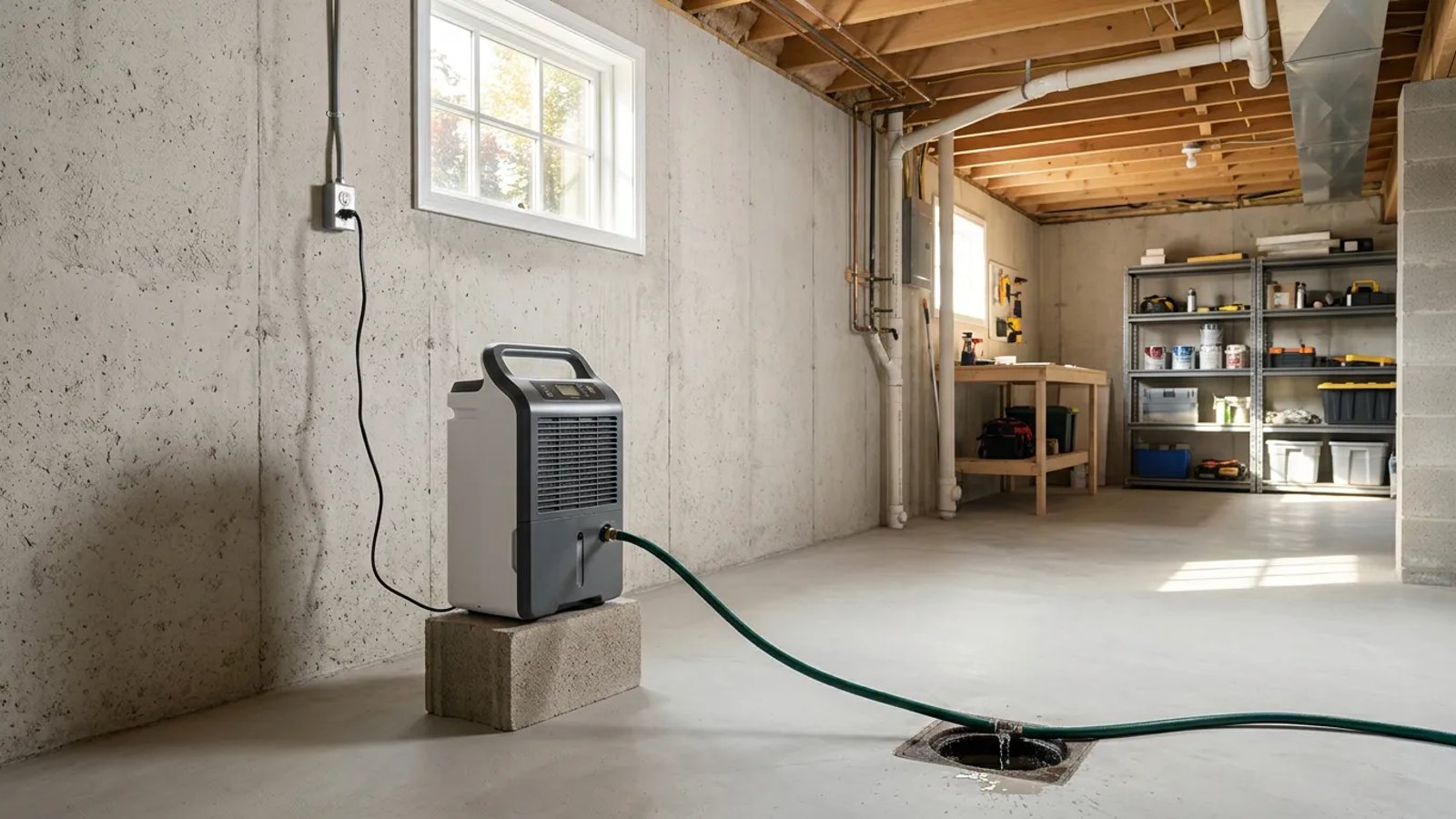
To set up a continuous drain, remove the bucket, locate the threaded drain port on the back or side of the unit, and attach a standard 5/8-inch garden hose. Run the other end of the hose directly into your basement floor drain or sump pit. If you don't have a floor drain, look for a dehumidifier with a built-in pump that can push the water up and out of a basement window or into a utility sink.
Monitor Conditions with a Smart Hygrometer
As of 2026, you no longer have to guess if your dehumidifier is keeping up with the weather. We highly recommend pairing your setup with a Wi-Fi-enabled smart hygrometer. These inexpensive sensors cost around $15 to $25 and ping your smartphone the moment your basement humidity spikes above your 50% threshold. It is a foolproof way to catch a tripped breaker or a frozen dehumidifier coil before mold has a chance to take hold.
Quick DIY Wins: Insulating Pipes and Sealing Drafts
Even with a great dehumidifier running, extremely cold surfaces can still sweat. The most notorious offenders are cold water supply lines. Because the water inside these pipes comes directly from underground municipal mains or a well, it is often between 45 and 55 degrees.
You can insulate these pipes in less than an hour using polyethylene foam pipe sleeves. These sleeves cost about $3 to $5 per 6-foot section in the typical 2026 hardware store range. Simply match the inner diameter of the sleeve to your pipe size (usually 1/2-inch or 3/4-inch for residential copper or PEX).
Pry open the pre-slit seam on the foam sleeve, slip it over the pipe, and press the adhesive edges together. If you buy un-glued sleeves, secure them every 12 inches with a zip tie or a wrap of foil tape. Be sure to push the ends of adjoining sleeves tightly together so no bare copper is exposed to the air.
Next, tackle the drafts. Humid air often infiltrates through aging, leaky basement windows. Inspect the perimeter of your window frames. If you see daylight or feel a warm breeze, clean the area with a damp rag and seal the gaps using an exterior-grade silicone caulk. A single $10 to $12 tube of caulk can seal three or four standard basement windows, drastically reducing the amount of humid air your dehumidifier has to process.
Maintaining a Dry Basement All Season
One of the most common mistakes homeowners make is trying to "air out" a damp basement by opening the windows on a warm, breezy day. While this works beautifully in the fall and spring, doing it in the summer is disastrous.
Check your dehumidifier's air filter once a month. A clogged filter restricts airflow, which can cause the internal coils to freeze into a block of solid ice, rendering the machine useless. Most filters can be rinsed in a utility sink, dried, and popped right back in.
A few hours of simple prep work, such as insulating pipes, sealing drafts, and properly configuring a continuous-drain dehumidifier, are all it takes to keep your below-grade space dry, odor-free, and safe for storage throughout the warmer months.