Condensation Between Window Panes? Here is the Real Fix
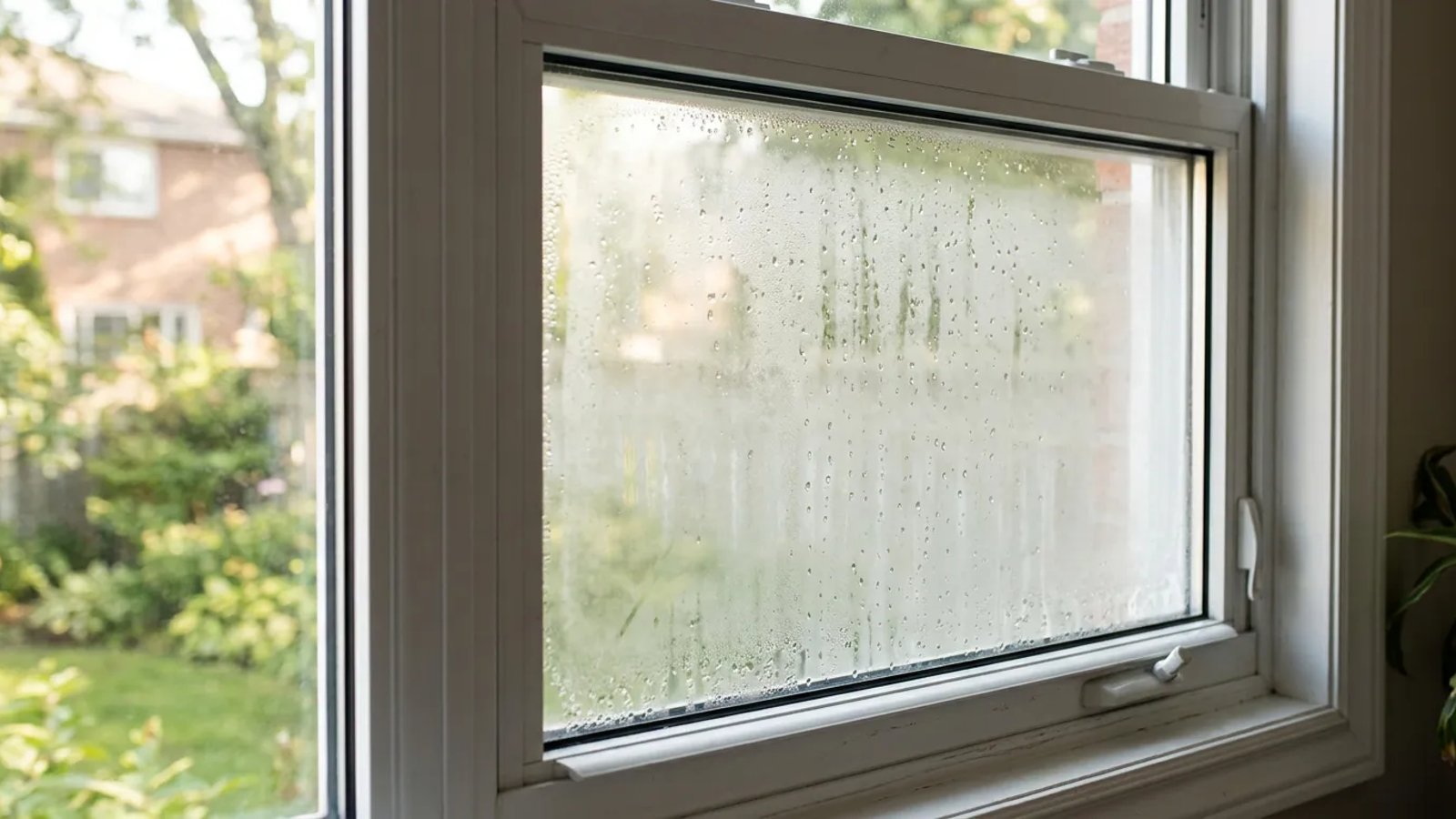
Wiping the glass won't fix a foggy window if the seal is blown. Learn why condensation gets trapped between double panes and the real, cost-effective ways to fix it.
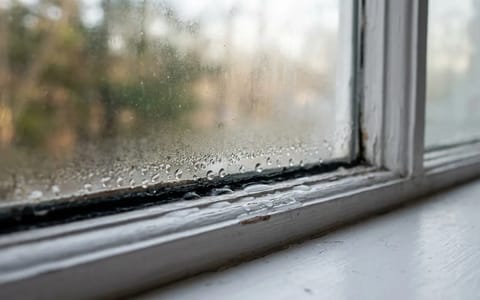
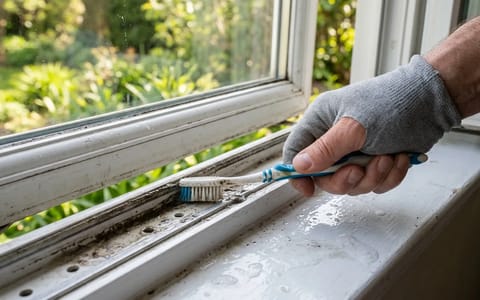
Full guide Windows & Doors Learn how to spot energy leaks, fix drafts, and decide when to replace your windows and doors.You are deep into your fall house cleaning. You spray the glass cleaner, grab a fresh microfiber cloth, and wipe down the bedroom window. The hazy, milky smudge remains. You scrub harder, maybe switch to vinegar, only to realize the frustrating truth: the dirt is not on the inside, and it is not on the outside. It is trapped right in the middle.
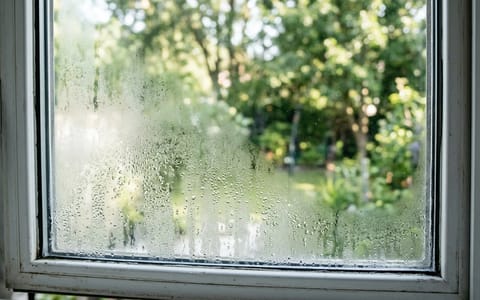
I remember spending twenty minutes scrubbing a second-story bedroom window, convinced it was just stubborn hard water. It was not until I looked at it from a sharp side angle that I realized the haze was completely trapped inside. Seeing condensation between window panes is an annoying moment for any homeowner. Wiping the glass will never fix it because the problem is not dirt; it is a failed mechanical seal.
Anatomy of a Blown Window Seal
To understand why this happens, look at how modern windows are built. They are not just single sheets of glass sitting in a wooden frame; they are complex assemblies called Insulated Glass Units, or IGUs.
An IGU consists of two or three panes of glass separated by a spacer bar. This spacer bar is filled with a moisture-absorbing material called a desiccant, similar to the small silica packets found in new shoe boxes. The gap between the glass is pumped full of an inert, heavy gas, usually argon or krypton, which acts as an invisible blanket of insulation. Finally, the entire perimeter is sealed with a heavy-duty butyl rubber sealant.
When that perimeter sealant cracks or degrades, the window is considered "blown." The heavy insulating gas leaks out, and regular, moisture-laden outside air gets sucked in. The desiccant inside the spacer bar absorbs this moisture for a while, but eventually, it becomes completely saturated. Once the desiccant is full, the moisture has nowhere to go but onto the glass itself, resulting in a foggy haze that ruins your view.
Why Condensation Between Window Panes Happens
Window seals do not last forever. Even the highest-quality windows have a lifespan, typically ranging from 15 to 25 years. However, several factors can cause an IGU to fail prematurely.
The primary culprit is a physics phenomenon called "thermal pumping." Every day, the sun hits your windows. The air and gas inside the IGU heat up and expand, pushing the glass panes slightly outward. When the sun goes down and the air cools, the gas contracts, pulling the panes slightly inward. This constant daily flexing puts immense stress on the perimeter seal. Over thousands of heating and cooling cycles, the butyl rubber eventually fatigues and cracks.
This explains why you usually notice condensation between window panes on the south- and west-facing sides of your house first. Those windows receive the most direct, intense sunlight, meaning they experience the most extreme thermal pumping.
The Truth About "Defogging" Hacks
If you search the internet for solutions to foggy windows, you will inevitably stumble across DIY defogging kits or companies offering defogging services. The process usually involves drilling a tiny hole in the exterior glass, spraying a liquid cleaning solution inside, vacuuming out the moisture, and plugging the hole with a tiny one-way air valve.
Do not waste your time or money on these methods.
Drilling a hole in your window does not fix the seal; it just turns your double-pane window into a dirty single-pane window.
While defogging might temporarily remove the visible condensation, it completely ignores the structural purpose of the window. The insulating argon gas is gone forever, and the thermal barrier is broken. You are left with a window that has the insulation value of a cheap piece of plastic. Furthermore, the interior of the glass usually has permanent etching from the mineral deposits left behind by the water, meaning the window will still look slightly cloudy even after it is dried out.
The Real Fixes: Repair vs. Replacement
When you have a blown seal, you have three legitimate options. The right choice depends on the age of your windows, the condition of the frames, and your budget based on typical 2026 pricing.
Option 1: Replacing the Glass Unit (IGU) Only
This remains the best-kept secret in the window industry. If your window frames are made of sturdy vinyl, fiberglass, or rot-free wood, you do not need to replace the entire window. You can simply hire a local glass shop (a glazier) to replace the glass unit itself. This restores the clarity and the energy efficiency for a fraction of the cost of a new window.
For advanced DIYers, swapping an IGU is entirely possible, though it requires precision.
- Measure the visible glass. You need to measure the width and height of the exposed glass, then add the depth of the pocket (usually 1/2 inch on each side). You also need to measure the overall thickness of the unit, which is often 5/8 or 3/4 of an inch.
- Order the replacement. Take these exact measurements to a local glass manufacturer to order a custom-sized IGU.
- Remove the glazing beads. Use a stiff metal putty knife to carefully pry off the plastic or wood strips holding the glass in place.
- Cut the old seal. Use a utility knife to slice through the double-sided foam tape or silicone holding the old glass to the exterior frame.
- Set the new glass. Place 1/8-inch rubber setting blocks at the bottom of the frame, press the new IGU into a fresh bead of silicone or glazing tape, and snap the interior beads back into place.
Replacing the IGU saves the frame, saves the surrounding exterior siding, and prevents you from having to repaint interior trim.
Option 2: Swapping a Removable Sash
If you have modern double-hung windows (the kind where the top and bottom halves slide up and down), you might have an even easier option. The operable part of the window that holds the glass is called the sash.
Many major window manufacturers allow you to order a replacement sash directly from the factory. You simply provide the serial number printed on the inside track of the window or etched into the corner of the glass. When the new sash arrives, you tilt the old foggy one inward, pop it out of the track, and snap the new one into place. The entire repair takes less than five minutes.
Option 3: Full Window Replacement
Sometimes, replacing the glass is throwing good money after bad. If you are dealing with condensation between window panes on a window that is 30 years old, the frame itself is likely failing.
If your wooden window sills are soft and rotting, or if you can feel a distinct draft blowing right through the frame joints in the winter, a new IGU will not solve your problems. The seal failed because the structural integrity of the frame shifted and twisted the glass. In this scenario, tearing out the window down to the rough opening and installing a brand new, energy-efficient window is the only permanent solution.
The 2026 Energy Standard Advantage
If you decide to replace the IGU or the entire window, there is a silver lining. As of 2026, new glass units must meet stringent updated energy codes. Upgrading a blown 15-year-old window means you will receive advanced low-E coatings and superior gas retention that were simply unavailable a decade ago, significantly lowering your winter heating bills.
Foggy windows are an eyesore, but they are also a clear diagnostic tool showing you exactly where your home is bleeding energy. Before you let a salesperson convince you to replace every window in your house, inspect your frames, check your manufacturer warranties, and consider calling a local glass shop to simply swap the glass.