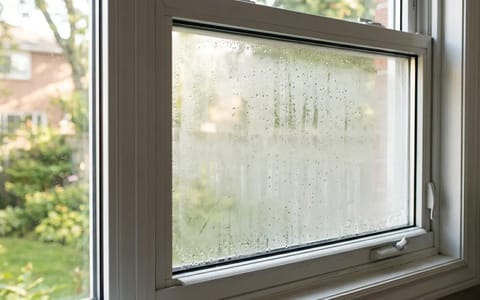
How to Stop Window Condensation on the Inside Before Mold Starts
Waking up to foggy windows and wet sills is rarely a window defect—it's an indoor humidity issue. Learn how to stop interior window condensation before it causes costly wood rot and mold.
Full guide Windows & Doors Learn how to spot energy leaks, fix drafts, and decide when to replace your windows and doors.Waking up to foggy glass and puddles on your window sills is incredibly frustrating. Many homeowners immediately assume their weeping windows mean the glass seal has failed and they are in for an expensive replacement project. However, window condensation on the inside is rarely a window defect. In fact, it is almost always an indoor humidity problem.
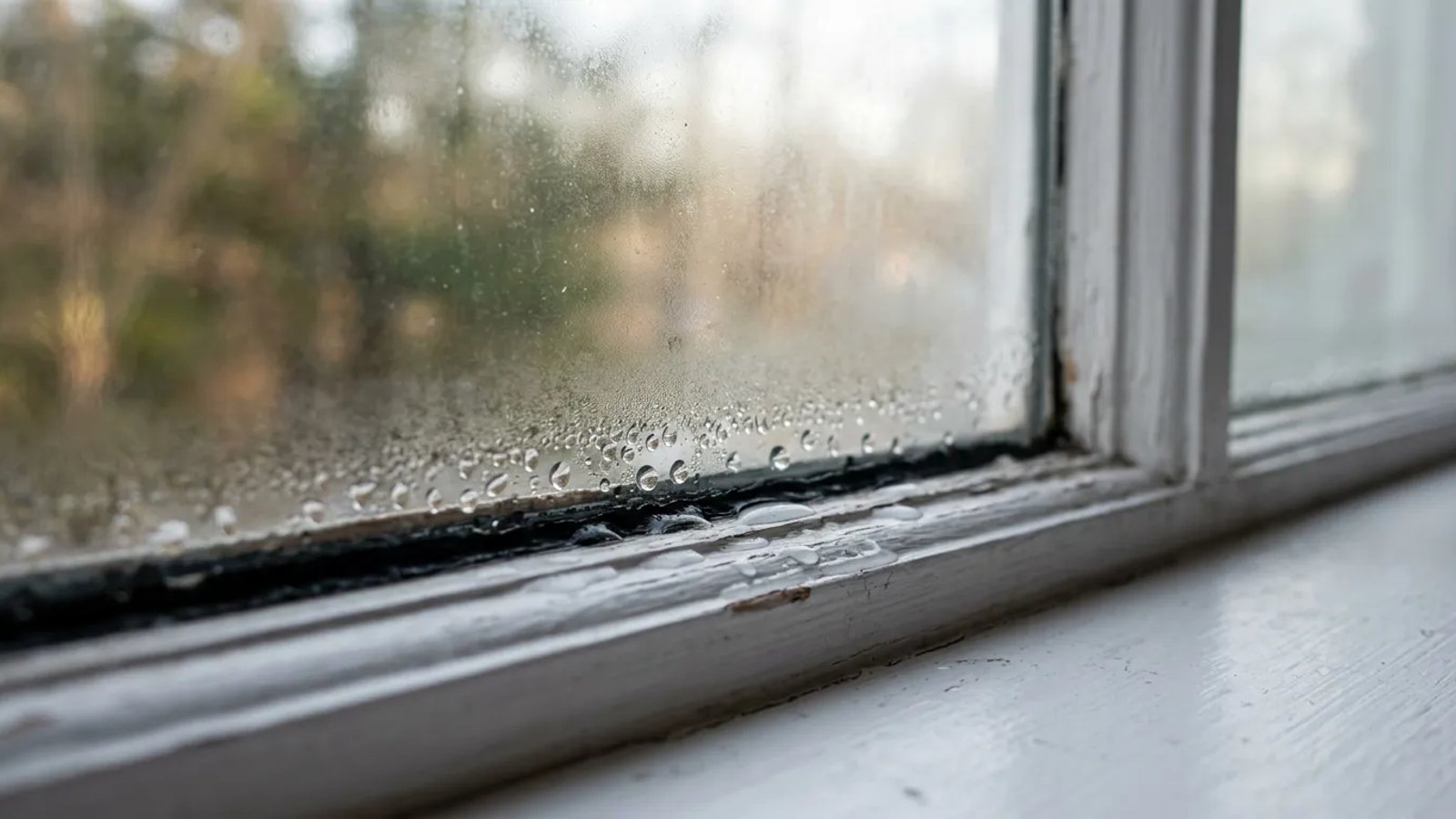
When warm, moisture-heavy indoor air collides with cool window glass—which frequently happens during chilly spring nights, deep winter freezes, or heavy AC usage in the summer—the air reaches its dew point and leaves water droplets behind. If left unchecked, this daily cycle of moisture will rot wooden window sills, peel your interior paint, and feed black mold.
This troubleshooting guide will help you understand exactly why your windows are sweating, how to balance your home's humidity, and how to protect your window frames from costly water damage.
The Science of the Sweat: Why Condensation Forms
To stop the condensation, you first need to understand the basic physics of your home's air. Warm air can hold significantly more invisible water vapor than cold air. When that warm, humid air comes into contact with a cold surface—like a window pane chilled by the night air—it rapidly cools down. Unable to hold all that moisture at the lower temperature, the air dumps the excess water directly onto the glass.
This exact same process happens when a glass of ice water sweats on a hot summer day. The glass isn't leaking; it is just pulling moisture out of the surrounding air.
A typical family of four produces roughly four to six gallons of water vapor every single day. Boiling pasta, taking hot showers, running the dishwasher, drying clothes, and even just breathing all pump invisible moisture into your home's envelope. Without proper ventilation, that moisture has nowhere to go except onto your coldest surfaces.
Immediate Fixes: Free Ways to Drop Indoor Humidity
You do not necessarily need to buy expensive equipment to solve this problem. Often, changing a few daily habits can dramatically reduce the moisture load in your home and clear up your windows within 48 hours.
Here are the most effective, zero-cost adjustments you can make right now:
- Run your exhaust fans longer. Bathroom and kitchen exhaust fans are your first line of defense. Turn them on before you start the shower or boil water, and leave them running for a full 30 minutes after you finish. This pulls the concentrated moisture out of the house before it can migrate to your bedrooms and living areas.
- Adjust your window treatments. Heavy curtains and pulled-down blinds trap stagnant, cool air against the glass, creating a micro-climate that encourages condensation. Raise your blinds two to three inches from the sill at night, or leave your curtains slightly open. This allows your home's ambient heat to reach the glass and evaporate the moisture.
- Change your thermostat fan setting. Look at your HVAC thermostat and switch the fan setting from "Auto" to "On." While "Auto" only runs the fan when the system is actively heating or cooling, the "On" setting circulates air continuously. Moving air prevents moisture from settling and equalizes temperatures across the room.
- Skip air-drying clothes indoors. Hanging wet laundry on drying racks inside your home releases a massive amount of water into the air. Whenever possible, use a vented tumble dryer or hang clothes outside.
The goal isn't to stop living in your house; the goal is to give all that daily moisture a clear path to the outside.
Long-Term Solutions for Stubborn Condensation
If you have implemented the free fixes and are still waking up to wet sills, your home has a systemic humidity issue that requires a more robust approach. The ideal indoor relative humidity is between 30% and 50%. You can track this easily by purchasing a basic digital hygrometer for $10 to $15 online or at any hardware store.
When humidity consistently reads above 50%, it is time to look at long-term solutions.
First, consider adding a dehumidifier. For targeted issues, a portable compressor dehumidifier placed in the hallway outside the bathrooms or bedrooms can pull gallons of water out of the air daily. These units typically cost between $150 and $250. If the problem is house-wide, you may need to consult an HVAC professional about installing a whole-home dehumidifier tied directly into your ductwork.
Next, investigate the hidden areas of your home. A surprisingly common cause of upper-floor window condensation is actually a damp basement or crawl space. Moisture from bare dirt floors evaporates and rises through the house—a process known as the stack effect. Installing a 6-mil polyethylene vapor barrier over a dirt crawl space is a weekend DIY project that costs under $100 but can completely transform your home's indoor air quality.
Damage Control: Cleaning Mold and Repairing Sills
If window condensation on the inside has been happening for a while, you likely have black spotting along the caulk lines or peeling paint on the wooden sills. It is critical to address this before the wood rots entirely, which would require a complex and expensive carpentry repair.
Many homeowners reach straight for the bleach to kill window mold, but this is a mistake. Bleach only removes the surface color; it cannot penetrate porous materials like wood. Instead, the water in the bleach soaks into the wood, actually feeding the mold roots left behind.
To safely clean and repair your sills, follow these steps:
- Kill the mold with vinegar. Mix equal parts white vinegar and water in a spray bottle, adding a few drops of liquid dish soap to help it stick. Spray the affected wood and let it sit for one hour. The acetic acid in the vinegar will penetrate the wood grain and kill the mold at its roots.
- Scrub and dry. Use an old toothbrush or a nylon scrub brush to lift the dead mold and dirt. Wipe the area completely dry with a clean microfiber cloth or paper towels.
- Sand away the damage. Once the wood is bone dry (wait at least 24 hours), use 120-grit sandpaper to smooth out any peeling paint, water stains, or raised wood grain. Sand down to bare, healthy wood if necessary.
- Prime and paint. Wipe away the sanding dust. Apply a high-quality, mold-killing primer (like Kilz or Zinsser) to seal the wood. Once dry, topcoat it with an interior semi-gloss acrylic paint. Semi-gloss creates a hard, water-resistant shell that will protect the wood if minor condensation happens again.
Managing window condensation is ultimately about managing the ecosystem inside your home. By taking control of your indoor humidity, you will not only keep your windows crystal clear, but you will also create a healthier, more comfortable breathing environment for everyone under your roof.