How to Clean Window Weep Holes to Prevent Leaks
Don't panic over water pooling in your window tracks. Learn how to quickly locate and clean window weep holes to prevent costly spring rain leaks.
Full guide Windows & Doors Learn how to spot energy leaks, fix drafts, and decide when to replace your windows and doors.You are walking through your living room after a heavy summer downpour and spot something that makes your stomach drop: a puddle of water forming on the interior windowsill. Homeowners often panic when they find water pooling in their sliding tracks or spilling inside the house. Most immediately assume the window seal has permanently failed and brace themselves for a typical 2026 replacement bill of $1,200 or more.
Before you call a contractor, take a deep breath. In the vast majority of cases, the window itself is perfectly fine. The culprit is usually just clogged weep holes. These tiny, built-in drainage slots are designed to manage water, but they require a little bit of seasonal attention to function correctly.
What Are Window Weep Holes?
Sliding windows and double-hung windows are not perfectly watertight by design. When heavy rain hits the glass, water naturally seeps down into the bottom track. To prevent this water from filling the track like a bathtub and overflowing into your drywall, manufacturers build a drainage system directly into the frame.
Weep holes are the exit points for this drainage system. They are small, rectangular slots located at the very bottom of the exterior window frame. Water enters the interior track, flows through a hidden channel inside the frame, and exits safely down the exterior siding through these weep holes.
The problem often begins during the winter and spring. Dirt, dead bugs, pine needles, and heavy summer pollen blow against the house and accumulate in these tiny passages. Once the weep holes are blocked, the water has nowhere to go. It backs up into the track, eventually spilling over the interior lip and ruining your drywall, paint, and hardwood floors.
That terrifying puddle on your windowsill usually is not an expensive replacement problem. It is a 10-minute cleaning task.
How to Locate Your Weep Holes
Before you can clean window weep holes, you have to find them. Head outside and look at the bottom horizontal edge of your window frame. You are looking for two or three small rectangular cutouts, usually about 1/2-inch to 1-inch wide.
On standard white vinyl windows, they are usually plain, open slots. On higher-end or newer aluminum and fiberglass windows, they might be covered by tiny plastic flaps or metallic grilles designed to keep out wasps and spiders. If your windows have these flaps, gently lift them with your finger to inspect the opening beneath.
New Window Drainage Designs in 2026
If you recently upgraded your windows, you might notice your new units look different. As of 2026, many major window manufacturers have shifted toward hidden drainage channels or offset weep systems to improve energy efficiency and curb appeal. These modern designs still require cleaning, but you will need to look under the exterior sill lip to find the drainage exit rather than looking at the front face of the frame.
The Tools You Need
You do not need specialized equipment to clear these blockages. You likely have everything you need in your kitchen or garage right now. The entire process takes about 10 to 15 minutes per window and costs absolutely nothing.
Gather a stiff-bristled toothbrush or a small nylon utility brush. You will also need a poking tool. A wooden toothpick works in a pinch, but a bent paperclip, a piece of stiff 1/8-inch wire, or a small flathead screwdriver is much better for breaking up compacted dirt. Finally, grab a shop vacuum with a crevice attachment and a small cup of water.
3 Steps to Clean Window Weep Holes
Tackling this job during your seasonal exterior inspection is the best way to prevent unexpected water damage. Follow this simple process to get your tracks flowing freely again.
- Clear the exterior opening. Take your wire or paperclip and gently insert it into the exterior weep hole. Wiggle it around to break up any hardened dirt, dead insects, or debris blocking the exit. Do not jam the wire too far or too aggressively, as you do not want to puncture any internal weatherstripping.
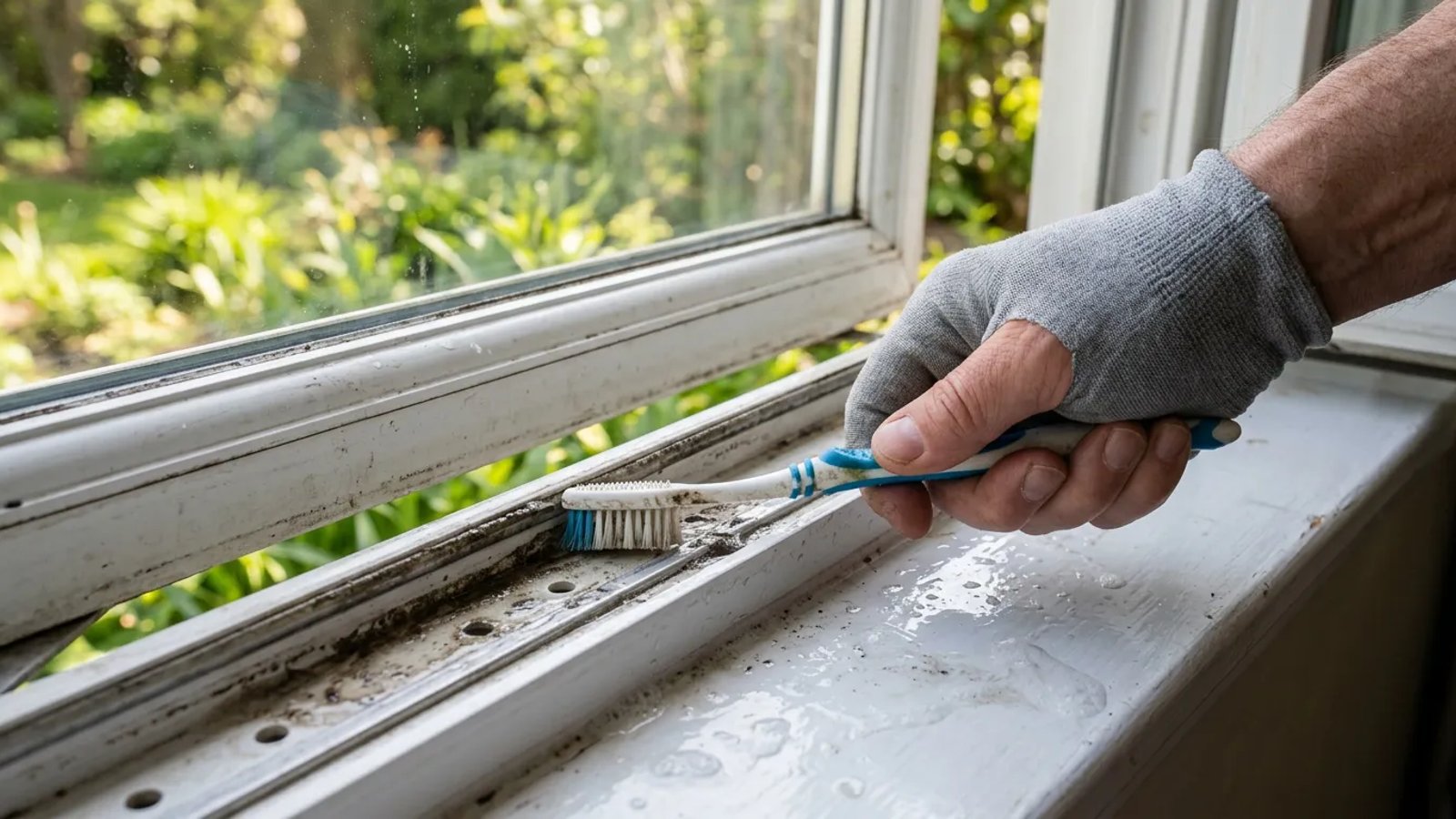
- Scrub and vacuum the interior track. Go back inside and open the window fully. Use your stiff toothbrush to aggressively scrub the bottom track, loosening all the accumulated grime and pollen. Use your shop vacuum to suck up the loose dirt. A clean track ensures new debris won't immediately wash into the internal channel during the next storm.
- Flush the system. Pour a small amount of clean water directly into the interior window track. Watch how the water behaves. It should drain away quickly and flow steadily out of the exterior weep holes.
Testing and Troubleshooting the Drainage
If you pour water into the track and it drains sluggishly or backs up, the internal channel connecting the track to the weep hole is still blocked. This happens when dirt has bypassed the exterior hole and compacted deep inside the vinyl frame.
To fix a stubborn internal clog, you can try spraying a specialized electrical contact cleaner or a gentle stream of water from a spray bottle directly into the weep hole to blast the dirt back out. Avoid using high-pressure air compressors, as they can blow the debris permanently into corners where you can never reach it.
Taking a few minutes to clean window weep holes can save you from the massive headache of drywall repairs, mold remediation, and ruined baseboards. By adding this quick task to your regular spring maintenance routine, you ensure your home is fully prepared to handle whatever heavy weather the season brings.