Dishwasher Not Draining at End of Cycle? Check the High Loop
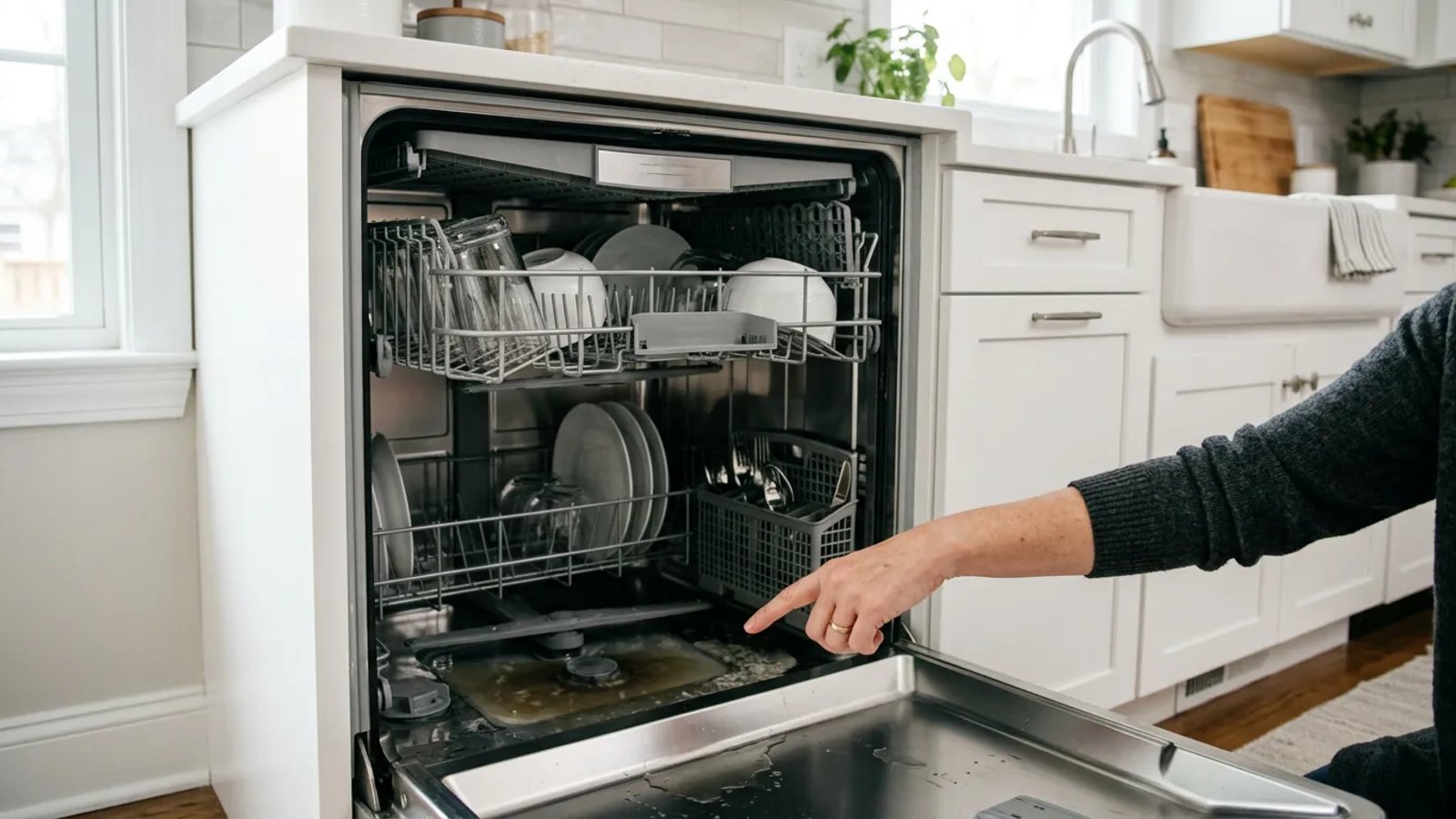
Finding murky water at the bottom of your dishwasher after a wash? The problem usually isn't a broken pump—it's likely dirty sink water siphoning back through the drain hose.
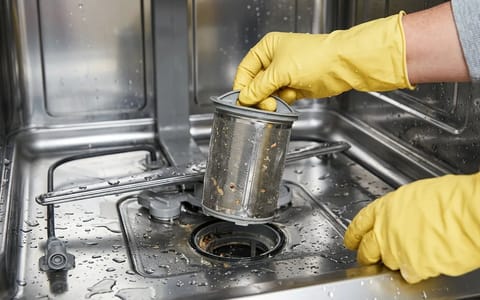
Full guide Appliances Learn how long your home appliances will last and when to repair or replace them.You open the dishwasher expecting sparkling plates and clean glasses, only to find a murky, foul-smelling puddle of dirty water sitting at the bottom of the tub. This frustrating discovery forces you to rewash the load and leaves your kitchen smelling like old soup. If you have already checked the internal filter at the bottom of the tub and found it completely clear, that standing water is not a draining issue. It is a backflow problem.
When a dishwasher leaves water behind, most homeowners immediately assume the drain pump has failed. More often than not, the appliance did its job perfectly. It pumped all the dirty water out, finished the cycle, and shut off. The problem occurred afterward when wastewater from your kitchen sink simply flowed backward down the hose and settled into the machine. This common plumbing oversight is incredibly easy to fix without calling a repair technician.
Diagnosing a Dishwasher Not Draining at End of Cycle
To fix the issue, we first need to confirm exactly what is happening under the hood. There is a distinct difference between a dishwasher that fails to drain and one that suffers from backflow. Understanding this distinction saves you from buying expensive replacement parts you do not need.
If the drain pump is broken, or if the internal filter is completely choked with food debris, the appliance will halt mid-cycle, or you will hear it struggling to push water out. The water left behind will be the exact water used during the wash. However, if you are dealing with a dishwasher not draining at end of cycle due to backflow, the symptoms look a bit different. You might notice the tub is empty right after the cycle finishes, but an hour later, especially after someone uses the kitchen sink, a puddle magically appears.
This happens because of a simple law of physics: gravity. Your sink basin, garbage disposal, and dishwasher all share the same drain pipe. If the flexible plastic hose connecting the dishwasher to the sink drain lies flat on the floor of your cabinet, any water draining from the sink can easily slide down that hose. To stop this, we must fight gravity by forcing the water to travel uphill.
The Mechanics of the High Loop and Air Gap
Plumbers use two primary methods to prevent dirty sink water from invading your clean dishes: the high loop and the air gap. Depending on when your home was built and your local plumbing codes, you will have one or the other.
A high loop is exactly what it sounds like. The corrugated drain hose routes from the bottom of the dishwasher, loops up as high as possible underneath the kitchen counter, and then routes back down to connect to the sink drain or garbage disposal. Because water cannot flow uphill without pressure, the sink wastewater simply drops down the main drain pipe instead of climbing up the dishwasher hose.
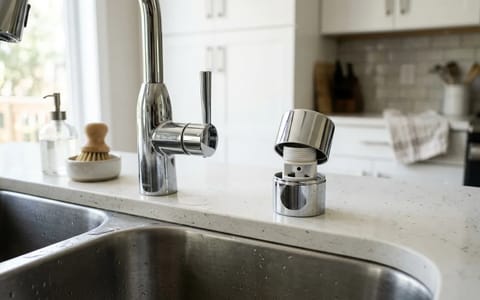
An air gap serves the same purpose but uses a different mechanism. It is that small, cylindrical metal or plastic fixture sitting on your countertop near the faucet. The dishwasher hose runs up to the air gap, and a separate hose runs from the air gap down to the drain. It literally introduces a gap of air into the line, breaking any possible siphon effect. If water backs up, it spills out of the air gap into the sink rather than flowing back into the appliance.
Gravity is the ultimate plumber, and right now, it is working against your dishwasher.
2026 Plumbing Code Updates: Air Gap vs. High Loop
As of 2026, many homeowners wonder if they still need a countertop air gap. While modern dishwashers come with built-in check valves to prevent backflow, the Uniform Plumbing Code (UPC) and local municipal codes still dictate your setup. Several states have updated their 2026 residential codes to allow a simple high loop inside the cabinet, phasing out the countertop air gap requirement. However, regions like California and Washington still mandate physical air gaps for new installations. Always check your local 2026 building codes before removing an existing air gap to rely solely on a high loop.
The 5-Minute Under-Sink Inspection
If you are tired of bailing out dirty water with a sponge, it is time to look under the sink. Clear out the cleaning supplies, grab a flashlight, and locate the ribbed plastic hose coming through the cabinet wall from the dishwasher.
Trace the path of that hose. Where does it go? If it comes out of the cabinet wall, drops to the floor, lies flat behind your trash can, and then slopes gently upward to connect to the garbage disposal, you have found your culprit. There is no physical barrier preventing the water in the disposal from running backward.
You want to see that hose immediately travel upward, reaching a peak higher than the point where it connects to the sink drain. Ideally, the peak of the loop should be attached just underneath the countertop, or at least 32 inches off the floor. If the hose is drooping, sagging, or completely flat, you need to create a high loop.
How to Create a Proper High Loop
Fixing a missing or fallen high loop is one of the easiest DIY tasks in the kitchen. You do not need to cut any pipes or turn off the water supply. You just need to elevate the existing hose and secure it so it stays put.
You will need a few basic supplies: a galvanized or plastic pipe strap (often called plumber's tape or a J-hook), a 1/2-inch or 3/4-inch wood screw, and a drill or screwdriver. If you are in a pinch, a heavy-duty 14-inch zip tie and a screw-in eye hook will also work perfectly. The typical 2026 range for these materials is about $5 to $8 at any local hardware store.
- Locate the highest mounting point. Find a solid spot on the back or side wall of the sink cabinet, as close to the underside of the countertop as possible. Ensure the spot is higher than the drain connection.
- Pull the hose upward. Gently pull the corrugated drain hose up to your chosen mounting point. Be careful not to kink the hose or pull it so tight that it strains the connection at the dishwasher.
- Attach the mounting hardware. If using a pipe strap, wrap it around the hose. If using a zip tie, loop it around the hose and through an eye hook.
- Secure it to the cabinet. Drive the 3/4-inch wood screw through the strap into the cabinet wall. Make sure the screw is short enough that it won't poke through to the outside of the cabinet.
- Test the flow. Run a short rinse cycle on the dishwasher and watch the hose. Ensure there are no leaks and that the water flows up the loop and down into the drain smoothly.
What If You Have an Air Gap? (And How to Clean It)
If you looked under your sink and saw the hose running up to a cylinder on your countertop, you already have an air gap. In this case, you do not need a high loop. However, if your dishwasher is still experiencing backflow, or if water is spewing all over your counter when the appliance drains, the air gap is clogged.
Over time, grease, coffee grounds, and tiny food particles get pumped up into the air gap and accumulate in the narrow plastic channels. When the water cannot pass through to the drain hose, it has nowhere to go but backward into the tub or outward onto the counter.
Cleaning an air gap takes about two minutes. First, grab the decorative chrome or plastic cover and pull it straight up. It should pop right off. Underneath, you will see a plastic inner cap. Depending on the model, this cap might unsnap, or you may need to pinch two tabs to lift it off. Once the cap is removed, you will see the inner tubes.
Use a small bottle brush, a pair of tweezers, or even a wooden toothpick to dig out the gunk. You will likely pull out a surprising amount of gray sludge. Once the visible debris is clear, squirt a little dish soap into the gap and pour hot water down it to flush the line. Snap the caps back on, and run a test cycle. The water should flow freely without backing up.
When to Check the Garbage Disposal Knockout Plug
There is one more highly specific scenario that causes severe drainage issues. If you or a plumber recently installed a brand-new garbage disposal, and this is the very first time you are running the dishwasher, the water will have nowhere to go. It will completely back up into the tub.
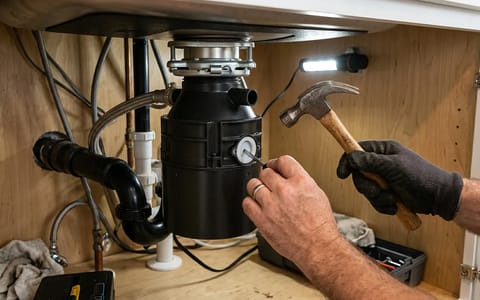
New garbage disposals come from the factory with a solid plastic knockout plug inside the dishwasher inlet port. This plug prevents water from leaking out if the homeowner does not own a dishwasher. Before connecting the drain hose, that plug must be removed.
If you suspect this is the issue, place a bucket under the disposal and disconnect the dishwasher hose. Look inside the disposal's inlet pipe with a flashlight. If you see a solid wall of plastic instead of the inside of the grinding chamber, the plug is still there. Place a flathead screwdriver against the plug and tap it firmly with a hammer until it pops into the disposal. Reach into the disposal (with the power off!) to retrieve the plastic disc, then reconnect your hose.
Dealing with standing water in your kitchen appliances is never a fun chore, but diagnosing the root cause saves you time and unnecessary expense. By ensuring your drain hose respects the laws of gravity with a proper high loop, and keeping your air gap free of debris, you protect your appliance from dirty sink water. A few minutes of under-sink maintenance is all it takes to keep your dishes sparkling and your kitchen smelling fresh.