Garage Door Won't Close All the Way? How to Fix It Fast
Standing in an open garage when you need to leave is incredibly frustrating. Learn how to quickly troubleshoot and fix a garage door that won't close all the way, saving yourself a $150 service call.
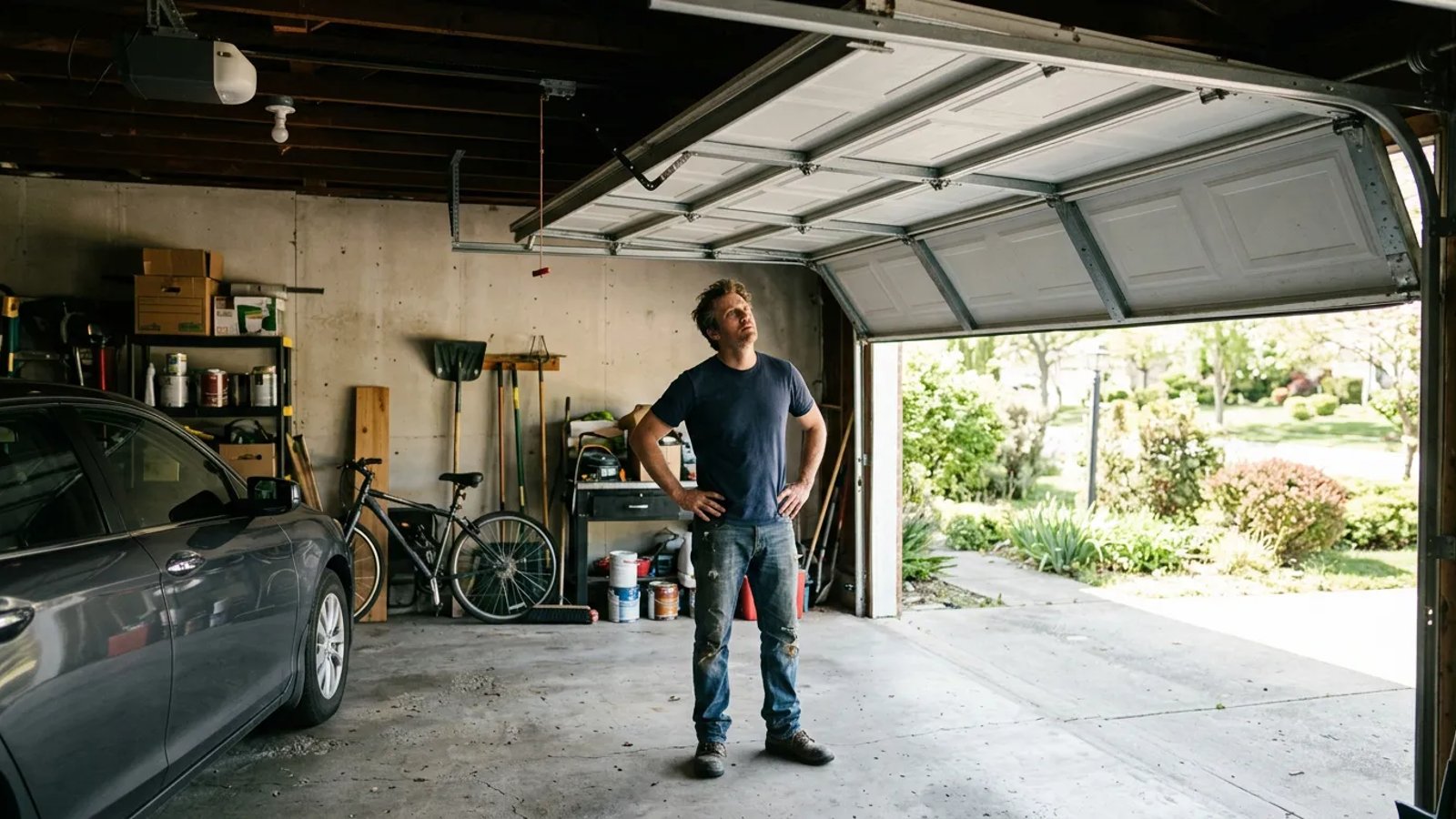
Full guide Windows & Doors Learn how to spot energy leaks, fix drafts, and decide when to replace your windows and doors.You are standing in your driveway, already running five minutes late for work, and you press the remote button. The motor hums, the door starts its descent, and then—frustratingly—it stops, reverses, and goes right back up. A garage door won't close when you need it to, and suddenly your morning is thrown into chaos.
Leaving the door open isn't an option. It exposes your home, your tools, and your vehicles to theft and the elements. Your first instinct might be to call a local repair company, but before you spend $150 to $200 on a basic service call, take a deep breath. Most of the time, this issue is a simple safety mechanism doing its job perfectly, even if it feels like a malfunction.
Modern garage doors are heavy pieces of machinery, often weighing upwards of 150 pounds. To prevent accidents, they are equipped with strict safety protocols. When something interrupts those protocols, the door defaults to an open position. We are going to walk through the most common, easily fixable reasons your door is refusing to cooperate, starting with the absolute most frequent offender.
Garage Door Won't Close? Check the Safety Sensors First
Since 1993, federal law has required all automated garage doors to feature an optical safety mechanism. These are the small, camera-like devices mounted near the floor on either side of your garage door tracks, known as photo-eye sensors. They shoot an invisible infrared beam across the opening of your garage. If anything breaks that beam while the door is coming down, the motor instantly reverses course.
This is a fantastic feature if a child or a pet runs under the door. It is less fantastic when the beam is broken by a stray cobweb or a slight bump from a trash can. If your garage door refuses to close and the main overhead light on the motor unit is flashing, the sensors are almost certainly your problem.
Go over to the sensors and look at their small LED indicator lights. Typically, one sensor is the "sender" (often a yellow or amber light) and the other is the "receiver" (usually a green light). The sender light should be solid. If the receiver light is blinking, flickering, or completely dark, the sensors are not communicating.
How to Clean and Realign Your Photo-Eye Sensors
Fixing a sensor issue requires absolutely no tools and usually takes less than five minutes. I remember the first time I faced this issue; I spent an hour inspecting the ceiling motor before realizing I had accidentally nudged the floor sensor with a push broom the day before.
- Clear the area. Move any bikes, rakes, or trash cans away from the door tracks. Even a shovel handle leaning slightly into the beam's path will trigger the reverse mechanism.
- Wipe the lenses. Grab a clean, dry microfiber cloth. Gently wipe the small glass lens on both the sending and receiving sensors. Garages are dusty environments, and a thick layer of debris or a dense spiderweb is enough to scatter the infrared beam.
- Check the alignment. Loosen the wingnut holding the blinking receiver sensor to its metal bracket. Gently pivot the sensor by hand until the LED light stops blinking and shines a solid, steady green.
- Tighten and test. Once the light is solid, carefully hand-tighten the wingnut so the sensor stays in place. Press your wall button to test the door.
Inspecting the Tracks for Debris and Binding
If the sensors are glowing solid but the door still reverses mid-way down, the motor might be detecting physical resistance. Garage door openers have an internal force-sensitivity setting. If the motor feels too much friction, it assumes the door is crushing something and pulls back up.
Grab a flashlight and carefully inspect the vertical and horizontal metal tracks on both sides of the door. You are looking for anything that shouldn't be there. A small pebble, a buildup of hardened grease, or a bent section of the metal track can cause the hard plastic or steel rollers to bind.
A garage door motor isn't smart enough to know the difference between a pebble in the track and a car bumper in the way; it only knows resistance.
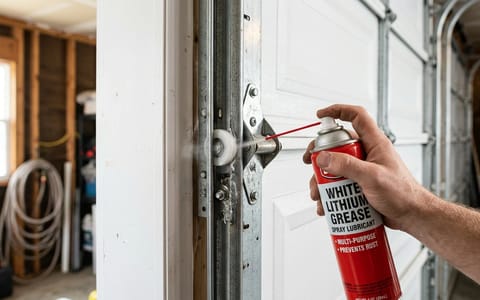
Wipe out the inside of the tracks with an old rag. Do not apply heavy grease to the tracks themselves, as this will just attract more dirt and create a sticky sludge. If the rollers look dry, you can apply a quick spray of a silicone-based garage door lubricant directly to the roller bearings—never WD-40, which acts as a solvent and strips away necessary lubrication. A can of proper garage door lube costs about $8 at the hardware store and is a great preventative maintenance investment.
Adjusting the Travel Limit Switch
Sometimes, the problem happens at the very end of the cycle. The door travels all the way down, kisses the concrete floor, and then immediately pops back up as if it touched something hot. This specific behavior points to an improperly set travel limit switch.
The travel limit tells the motor exactly how far to unspool the lifting cables before stopping. Over time, vibrations from daily use, seasonal shifting of your home's foundation, or a settling concrete slab can throw this measurement off by a fraction of an inch. If the motor thinks the door should travel 7 feet, but the floor stops it at 6 feet 11 inches, the motor interprets the floor as an obstruction.
To fix this, you will need a stepladder and a flathead screwdriver. Locate the motor unit on your garage ceiling. On the side or back panel, you will find two recessed plastic adjustment screws labeled "Up/Open" and "Down/Close" travel limits.
Turn the "Down" screw slightly in the direction that decreases the travel distance (usually indicated by an arrow or a minus sign). A quarter-turn is often enough. Test the door. If it still pops up, give it another quarter-turn. You want the heavy weatherstripping at the bottom of the door to compress firmly against the concrete without the metal door panels buckling or the motor straining.
Temporary Fix: How to Secure the Door Right Now
If you are reading this while late for work and simply do not have the five minutes to troubleshoot the sensors, you still need to secure your home. You cannot just leave the garage wide open. Thankfully, there is a built-in override designed exactly for this situation.
To bypass the safety sensors temporarily, walk over to the hardwired wall button mounted inside your garage. Press and firmly hold the button down. Do not let go. The door will begin to travel downward. Keep holding the button until the door makes full contact with the concrete floor. If you release the button even a fraction of a second before the door is fully closed, it will immediately reverse and go back up.
Once the door is firmly on the ground, you can exit through your side door or front door and lock up. This buys you the time you need to get to work or handle your emergency, leaving the actual troubleshooting for when you return home and have the patience to realign the photo-eyes.
Diagnosing Mechanical Failures
If you have cleaned the sensors, cleared the tracks, and adjusted the travel limits, but the door still refuses to cooperate, you might be dealing with a larger mechanical failure. Garage doors rely on a system of heavy-duty torsion springs and steel cables to counterbalance the immense weight of the door panels. The motor itself does very little actual lifting; it merely guides the balanced door along the track.
Disconnect the door from the electric opener by pulling the red emergency release cord hanging from the central rail. Once disconnected, try to lift the door manually. A properly balanced garage door should feel relatively light—you should be able to lift it with one hand, and it should stay in place if you let go of it halfway up.
If the door feels incredibly heavy, slams shut like a guillotine, or refuses to budge at all, you have a serious counterbalance issue. Look closely at the thick steel springs mounted on the wall directly above the closed door. If you see a visible gap in the middle of the spring coils, the torsion spring has snapped.
Keeping Your Garage Secure
Dealing with a stubborn garage door is stressful, especially when you are on a tight schedule. However, taking a few calm minutes to wipe down a dusty sensor lens or flick a pebble out of a metal track can save you the cost of a professional service call and get your day back on track.
Make it a habit to check the alignment of your sensors and the cleanliness of your tracks a few times a year. A little routine attention ensures the mechanisms keep running smoothly, keeping your home secure and your vehicles safe from the elements.