How to Check Weatherstripping and Keep Summer Heat Out
Don't let your expensive air conditioning seep out the window. Learn how to inspect, remove, and replace your home's weatherstripping before the summer heat hits.
Full guide Windows & Doors Learn how to spot energy leaks, fix drafts, and decide when to replace your windows and doors.We all know the frustration of a mid-summer afternoon. Heat radiates off the pavement, your air conditioner runs for hours, yet the living room remains uncomfortably warm. You check the thermostat and air vents, but the culprit often remains invisible. Tiny, unassuming gaps around your exterior doors and windows quietly siphon expensive, conditioned air out of the house. To keep heat out and utility bills manageable, check your weatherstripping before peak cooling season.
Most homeowners associate drafts strictly with winter, noticing the cold air blowing in. However, air leakage goes both ways. During summer, hot, humid exterior air constantly tries to push into your cool, dry home. When window and door seals crack, compress, or go missing, your HVAC system works overtime just to maintain a baseline temperature.
According to 2026 Department of Energy estimates, up to 30% of a home's cooling energy is lost through poorly sealed windows and doors.
Spending a Saturday morning inspecting and replacing degraded seals is one of the highest-return DIY projects you can tackle. It requires no specialized skills, basic hand tools, and relatively inexpensive materials. Let us walk through how to find those hidden leaks and seal your home tight.
How to Check Weatherstripping: The Dollar Bill Test
Before visiting the hardware store, you must know exactly which doors and windows leak. Visual inspections provide a good starting point. Stand inside on a bright, sunny day with the lights off. Look closely at the perimeters of your exterior doors and closed windows. Daylight peeking through the edges guarantees an air leak, but not all leaks are visible.
The classic dollar bill test offers a simple, highly effective way to check weatherstripping compression.
- Position the bill. Open your exterior door or window and place a crisp dollar bill across the weatherstripping seal.
- Close the door or window. Shut it completely and lock it, trapping the bill between the door and the jamb (or the window sash and the frame).
- Pull the bill. Grab the exposed end of the bill and gently try to pull it out.
If the bill resists slightly and grips the surface, your seal remains in good shape. If the bill slides out effortlessly, the weatherstripping in that spot is failing. Repeat this test every 12 to 18 inches around the entire perimeter. Often, a door seals perfectly at the top but fails near the bottom hinge.
Spotting Leaks with 2026 Smartphone Technology
If the dollar bill test feels too old-fashioned, modern technology offers a high-tech alternative. As of 2026, affordable plug-in thermal cameras for smartphones have become a staple in the DIY homeowner's toolkit. These small devices attach to your phone's charging port and visually highlight temperature differences around your door frames and window sashes. On a hot summer day, a quick scan will instantly reveal bright orange or red spots where exterior heat bleeds through failed weatherstripping. This takes the guesswork out of finding drafts and helps you pinpoint exactly which seals need replacement.
Choosing the Right Weatherstripping Material
After identifying problem areas, purchase your replacement materials. The weatherstripping aisle at a home improvement center can feel overwhelming. Choosing the right option from dozens of profiles depends on gap size and surface friction.
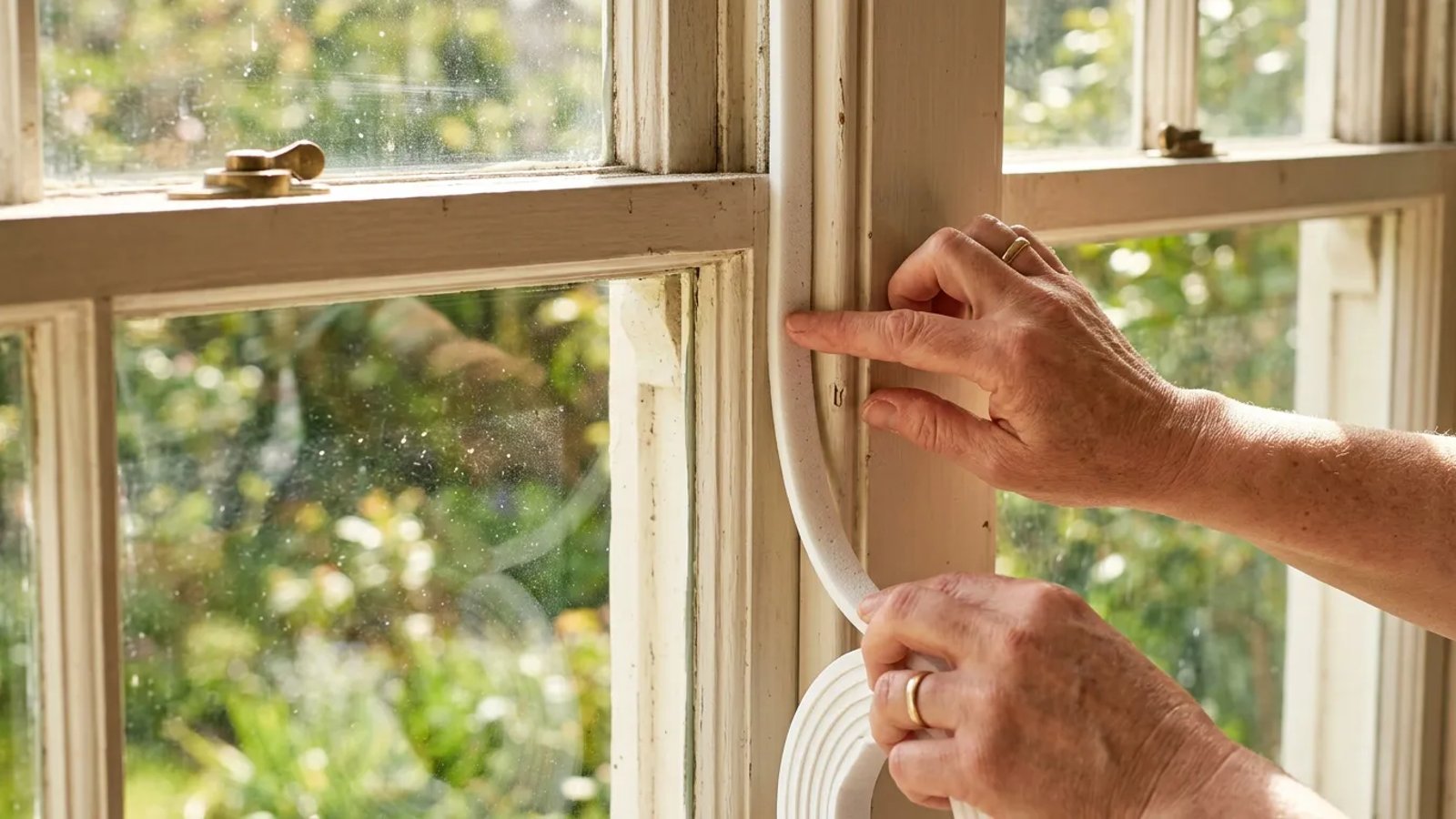
Adhesive-Backed Foam Tape: This common, affordable option comes in rolls and is incredibly easy to cut and apply. It works best for irregular gaps and stationary windows. Because it is susceptible to friction, foam tape on a high-traffic door jamb often shreds or loses elasticity within a year or two.
Tubular Rubber or Silicone: This material features a hollow tube attached to an adhesive backing or flange. When the door closes, the tube compresses to form an airtight seal. Silicone remains flexible in extreme temperatures and bounces back to its original shape. This ideal choice for exterior doors easily lasts five to ten years.
V-Strip (Tension Seal): Made of durable vinyl or thin metal like bronze or aluminum, V-strips fold into a 'V' shape that springs open to fill gaps. They are excellent for the sliding channels of double-hung windows or door sides, withstanding constant friction without tearing.
The Crucial Step: Removing Old Seals and Prepping the Surface
Rushing the preparation phase is the biggest mistake homeowners make when replacing weatherstripping. You cannot simply stick new tape over old, brittle foam. Applying a new seal to a dirty, uneven surface guarantees the adhesive will fail and peel off within weeks.
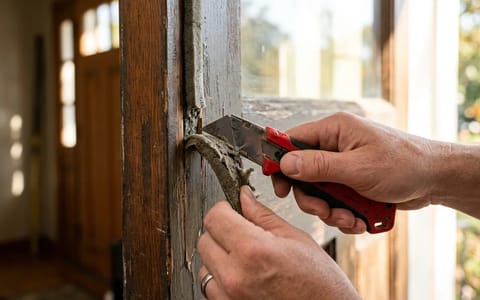
Start by gently pulling away the old weatherstripping. Older materials will likely tear, leaving chunks of foam and stubborn residue behind. Use a rigid metal putty knife to scrape away the bulk of the remaining material, being careful not to gouge the wood frame or chip the paint.
Once the heavy debris is gone, dissolve the leftover glue. Apply a commercial adhesive remover to a rag and rub it into the residue. Let it sit for five minutes to soften the glue, then scrape it away. If the surface remains rough, a quick pass with 120-grit sandpaper smooths things out nicely.
Step-by-Step: Applying New Weatherstripping Like a Pro
With a perfectly clean, dry surface, you are ready to install the new seals. For optimal adhesion, work on a mild day. Most adhesives require the surface temperature to remain above 50°F (10°C) to cure properly.
- Measure twice, cut once. Measure the length of the door jamb or window frame. Roll out your weatherstripping and cut it to the exact length using sharp heavy-duty scissors or utility shears. Do not try to stretch the material to fit, as it will eventually shrink back and leave a gap.
- Peel and stick gradually. Do not remove the entire backing strip at once. Peel back just the first two inches of the paper backing.
- Press firmly into place. Start at a top corner. Press the sticky side firmly against the frame. Slowly peel the backing away with one hand while trailing closely with your other thumb, pressing the strip firmly into the jamb.
- Check the compression. Once installed, close the door or window. You should feel a slight resistance as the latch clicks into place, indicating that the weatherstripping is properly compressed.
Don't Forget the Door Sweep and Threshold
Perfect weatherstripping along the sides and top means little if the bottom leaks massive amounts of conditioned air. The gap beneath an exterior door notoriously lets in hot drafts, humidity, and summer pests.
First, check your threshold. Many modern exterior doors feature adjustable thresholds with large screws running across the top. If you see daylight under the door, turn these screws counter-clockwise slightly to raise the threshold until it makes snug contact with the door bottom.
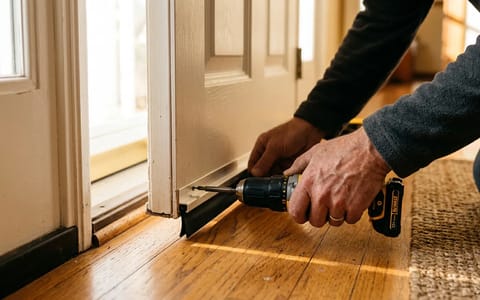
If your threshold lacks adjustment screws or the bottom rubber fin is torn, you need a new door sweep. Based on typical 2026 hardware store prices, a standard aluminum-and-rubber door sweep costs about $15 to $25. Measure the door width, cut the sweep to size with a hacksaw, and screw it directly into the interior bottom face. Adjust it so the rubber fin sweeps firmly across the threshold without making the door difficult to close.
Checking weatherstripping and replacing failing seals creates an afternoon project that pays immediate dividends. Your home will maintain a more consistent temperature during brutal July heatwaves, and your air conditioner will cycle less frequently, extending its lifespan. Grab a crisp dollar bill, walk around your house this weekend, and start sealing those leaks.