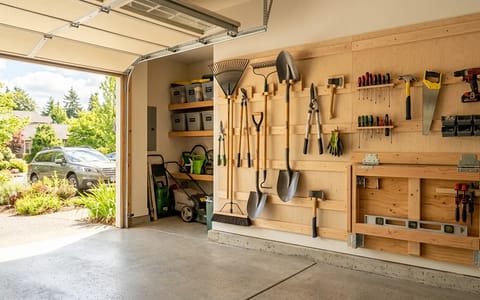
How to Organize a One Car Garage (And Still Park Inside)
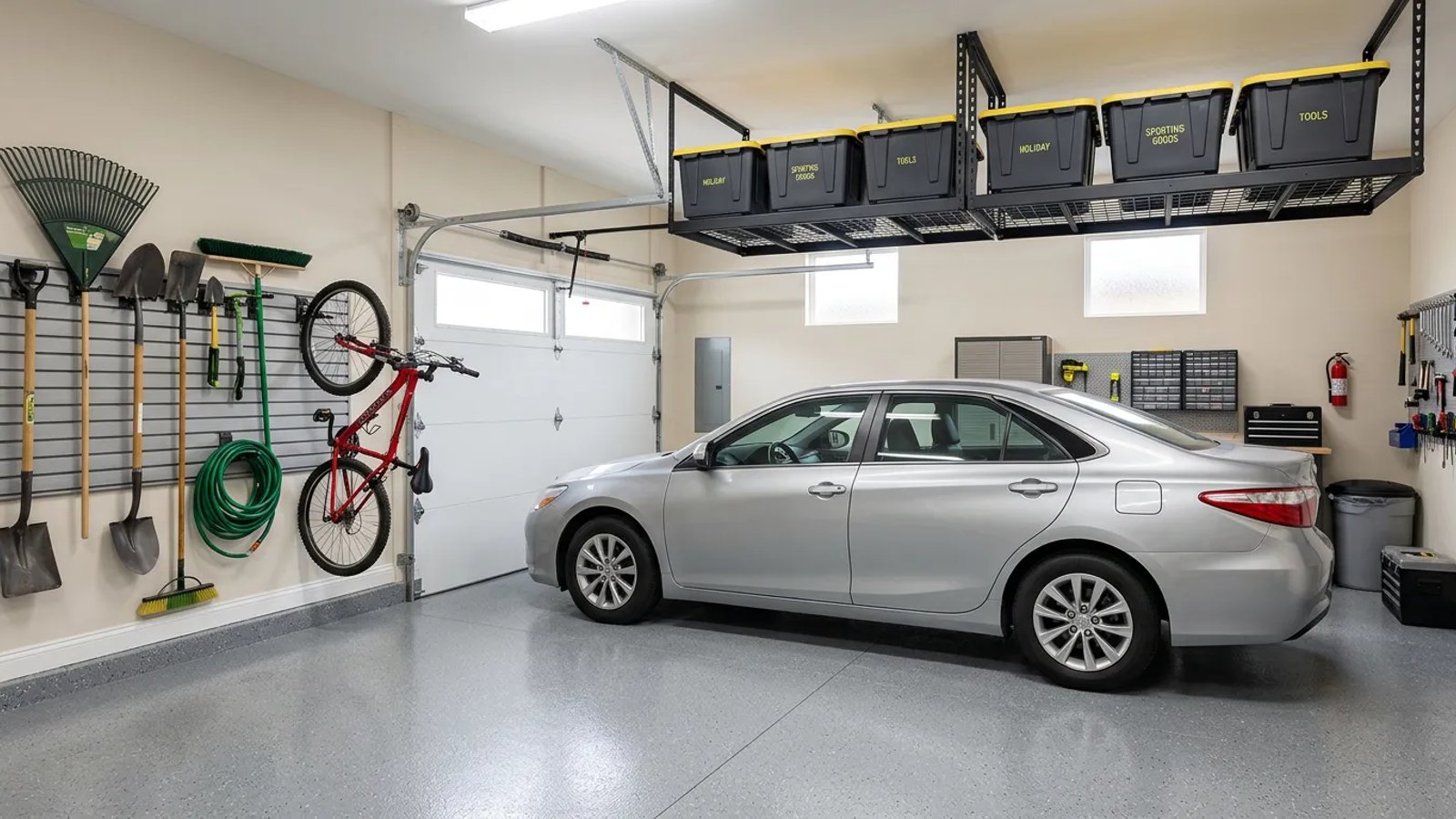
Reclaim your parking spot before the summer heat hits. Learn how to ruthlessly declutter, maximize vertical space, and install overhead storage in a single-car garage.
Full guide Interior: Paint, Drywall & Trim Learn how to patch drywall, choose the right paint, and update your interior trim.In my experience, many homeowners with a single-car garage face a frustrating reality: the space quickly becomes a dumping ground for tools, bikes, and holiday decor, forcing their actual vehicle out into the driveway. With summer heat and sudden storms approaching, reclaiming that indoor parking spot is a top priority. If you want to organize a one car garage and still have room to open your doors, you need a plan that uses every available inch of space. The goal is to get absolutely everything off the floor.
When you only have about 250 square feet to work with, standard floor-standing shelving units simply take up too much floor space. A standard car is about 6 feet wide, and a single-car garage is typically 12 feet wide. Once you account for the space needed to open your car doors and walk around the vehicle, you have very little margin for error. We are going to fix that by moving your storage to the walls and the ceiling.
Phase One: The Ruthless Purge
Before you buy a single hook, track, or bin, you have to clear the floor. You cannot organize clutter; you can only store it, and storing things you do not need is a waste of valuable real estate. Pick a sunny Saturday, pull your car out of the driveway, and drag every single item out of the garage, armed with at least five contractor-grade trash bags for the inevitable purge.
- Empty the space completely. Do not try to sort items while they are still sitting in the corner of the garage. Seeing the completely bare floor will give you a sense of the actual space you have.
- Create three distinct zones. Lay out tarps on your driveway for Keep, Donate, and Toss piles.
- Be honest about duplicates and broken items. If you have not used a tool in two years, or if you are holding onto a broken lawnmower you swear you will fix someday, it is time to let it go.
- Sweep and inspect. While the garage is empty, sweep the floor, clear out any cobwebs, and check the bottom plates of your walls for any signs of water intrusion or pest activity.
When I tackled my own 12x20 garage last spring, I realized I was storing three broken weed trimmers and a stack of warped lumber from a project I finished five years ago. Once I hauled that junk to the local transfer station, I instantly regained a quarter of my available wall space.

How Do You Maximize Vertical Space to Organize a One Car Garage?
Once you have pared down your belongings to the essentials, it is time to look at your walls. In a narrow space, the wall is your best friend. Instead of buying 18-inch deep freestanding metal shelves, invest in a heavy-duty wall track system. Brands like Rubbermaid FastTrack or Gladiator GearTrack allow you to mount a steel rail horizontally across your wall studs. You can then snap specialized hooks onto the rail to hold shovels, rakes, ladders, and even heavy bicycles flat against the wall.
To install a track system, you will need a high-quality stud finder, a drill, a level, and 2.5-inch wood screws. Locate your studs—they are usually spaced 16 inches on center in a standard garage. Mark the stud locations with a pencil, hold the track against the wall, check it with your level, and drive the screws directly into the center of the studs. Most steel track systems can hold up to 1,750 pounds if anchored properly into the wood framing.
For smaller hand tools, wrenches, and tape measures, heavy-duty metal pegboards are vastly superior to the flimsy pressed-wood versions. Mount a 2x4 foot metal pegboard above your workspace. This keeps your most frequently used tools visible and within arm's reach, rather than buried in the bottom of a heavy toolbox.
Look Up: Overhead Ceiling Storage Racks
The space above your garage door tracks is the most underutilized area in a home. When the garage door is open, the space between the top of the door and the ceiling is usually just dead air. This is the perfect location for overhead ceiling storage racks.
Ceiling racks are designed to hold heavy, bulky items that you only need to access once or twice a year. Think winter snow tires, camping gear, artificial Christmas trees, and plastic bins full of seasonal clothing. A standard 4x8 foot ceiling rack can hold up to 600 pounds and frees up an enormous amount of floor space.
I installed a 4x8 overhead rack above my garage door last year, and it instantly freed up 32 square feet of floor space. Suddenly, I could open my passenger-side car door without hitting a stack of plastic bins. When installing these racks, you must locate the ceiling joists using a stud finder and secure the mounting brackets using heavy 3/8-inch lag bolts. Always pre-drill your holes to prevent the wood joists from splitting.
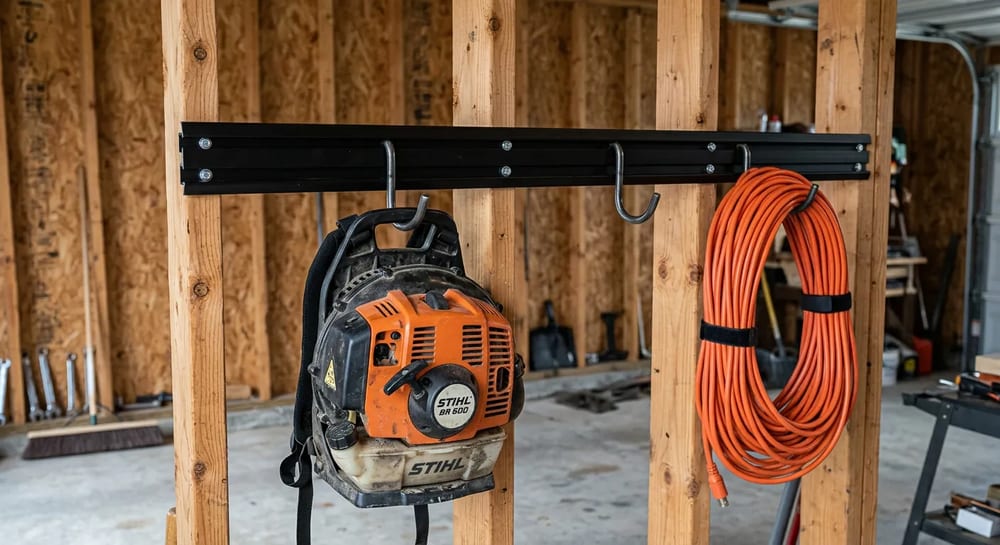
Smart Storage for Hazardous Materials
While you are organizing, pay special attention to where you put chemicals, paints, and automotive fluids. A garage is subject to wild temperature swings. According to EPA guidelines for household hazardous waste, extreme heat can degrade certain chemicals, and freezing temperatures will completely ruin latex paint.
Never store weed killer, fertilizers, or pest control chemicals on the bottom shelf where pets or children might reach them. Keep them high up on a securely mounted wall shelf, or better yet, lock them in a small, wall-mounted steel cabinet. Move your house paint and delicate adhesives indoors to a climate-controlled basement or utility closet.
A well-organized garage treats floor space as a luxury reserved exclusively for your vehicle.
Fold-Down Workbenches for Tight Clearances
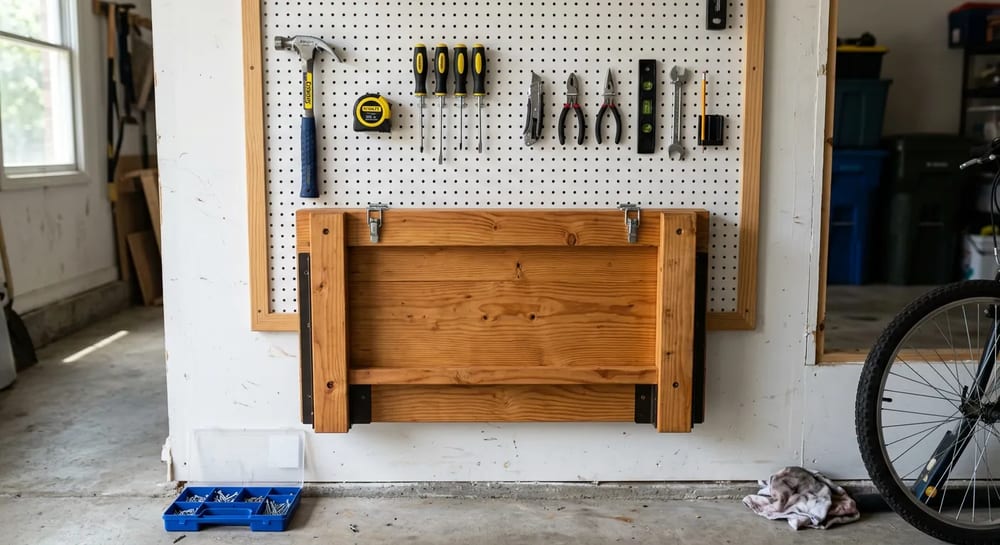
Many homeowners think that parking a car inside means giving up their DIY workspace. A traditional 24-inch deep workbench takes up a massive amount of room and makes it nearly impossible to walk past the hood of your car. The solution is a heavy-duty fold-down workbench.
You can build a fold-down bench using a piece of 3/4-inch plywood, a piano hinge, and heavy-duty folding shelf brackets rated for 500 pounds. Mount the brackets directly into the wall studs at a comfortable standing height—usually around 36 to 38 inches from the floor. When you need to fix a lawnmower or cut a piece of lumber, you simply lift the bench until the brackets click into place. When you are done, release the latches, and the bench folds completely flat against the wall, protruding less than two inches.
A folding workbench gives you a solid, reliable surface for weekend repairs, then vanishes against the wall when it is time to pull the car in for the night. Pair this with your wall-mounted pegboard, and you have a complete, highly functional workshop that requires zero permanent floor space.
Final Clearances and Parking Alignment
Once everything is off the floor and secured to the walls or ceiling, you need to set up a reliable parking system. Pulling into a tight one-car garage can be nerve-wracking, especially if you drive a larger SUV or crossover.
You can use the classic tennis ball trick: park your car exactly where you want it, ensuring you have enough clearance to open the doors and walk around the back. Then, hang a tennis ball from the ceiling using a piece of string so that it just touches the center of your windshield. In the future, you simply pull forward until the ball taps the glass, and you know you are perfectly parked.
If you prefer a modern approach, you can install a laser parking guide on the ceiling. These small devices plug into your garage door opener outlet and shine a bright red laser dot onto your dashboard when you pull in. Either method ensures you never pull in too far and bump your newly organized wall storage.
Reclaiming a single-car garage takes a bit of sweat equity and some smart vertical planning. By getting everything off the concrete and utilizing the empty space on your walls and ceiling, you protect your expensive tools, create a functional workspace, and finally give your vehicle the safe, dry home it deserves.
- Floor space in a small garage is strictly for your vehicle; everything else belongs on the walls or ceiling.
- Track systems offer much more flexibility than fixed shelving for oddly shaped sports and lawn equipment.
- Overhead racks utilize the dead space above the garage door, which is perfect for items you only need once a year.
- A folding workbench provides a sturdy DIY surface without sacrificing the crucial inches needed to open your car doors.