High Electric Bill? Why Your Water Heater Could Be to Blame
A sudden $50 to $100 spike in your electric bill is frustrating, especially when your daily habits haven't changed. Discover why a struggling electric water heater is often the silent culprit and how to troubleshoot it.
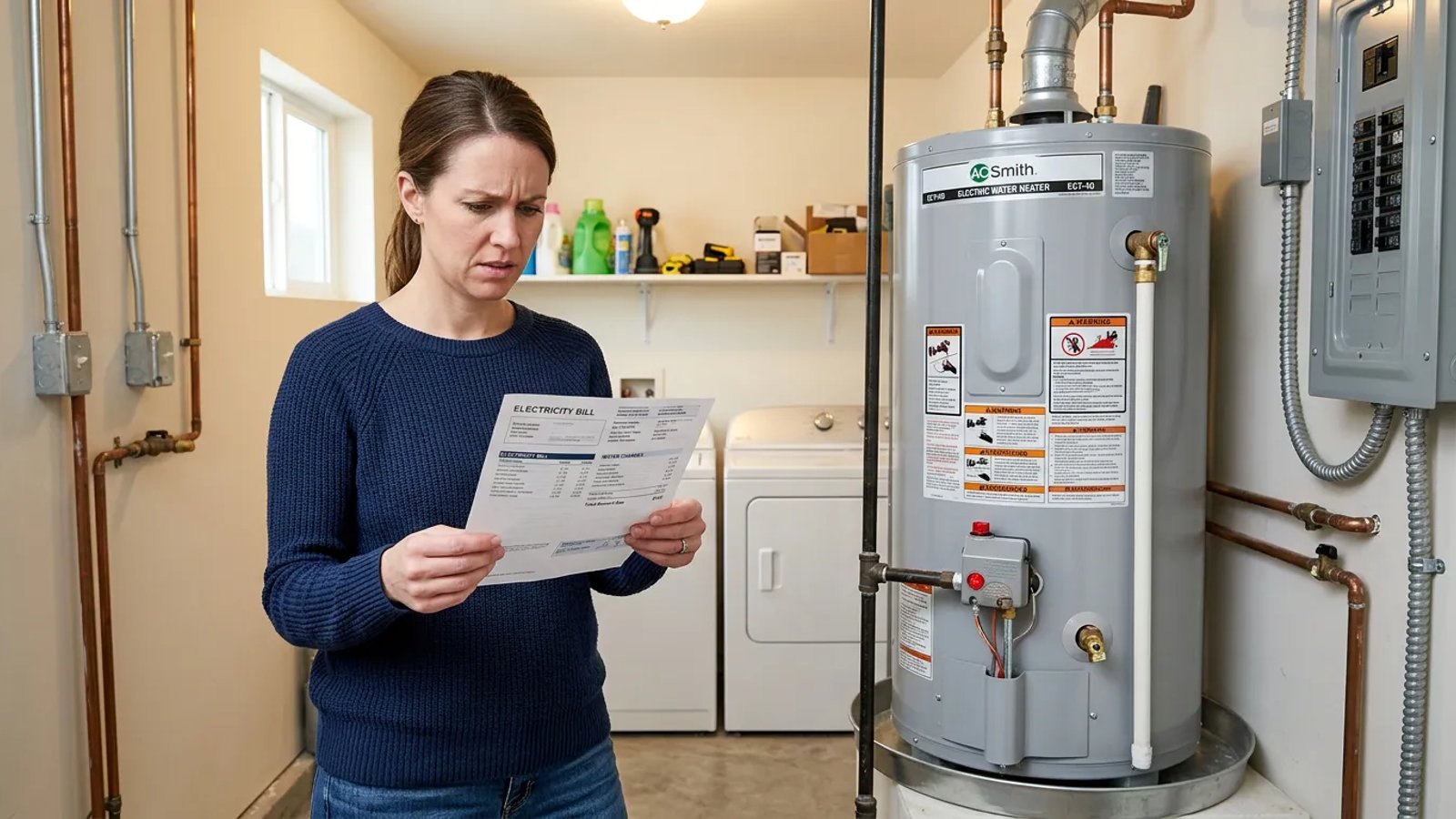
Full guide Plumbing Learn how your home plumbing works and how to stop leaks before they ruin your house.Opening your monthly utility statement to see a sudden $50 to $100 jump ruins a perfectly good afternoon. When the weather remains steady and you have not plugged in power-hungry gadgets, a mystery spike feels frustrating. Many homeowners suspect a faulty utility meter or seasonal rate hike. However, a much more common, completely silent culprit hides in your utility closet or garage.
A struggling electric water heater is the ultimate hidden energy hog. Operating out of sight, it suffers mechanical failures or plumbing leaks that consume massive amounts of electricity without warning. If you face a mystery expense, investigate your water heater before paying an electrician for a diagnostic house call.
The Mystery Spike: Why Your Bill Jumped
To understand why water heaters commonly cause electric bill spikes, look at how much power this appliance commands. Next to your HVAC system, the electric water heater is the second-largest energy consumer in your home. It operates on a 240-volt circuit and typically uses 4,500-watt heating elements.
Under normal conditions, a water heater only runs for a few hours a day. It heats the water to your set temperature, usually around 120 degrees Fahrenheit, and then turns off, relying on the tank's heavy insulation to keep the water hot. It only kicks back on when you use hot water or when the standby temperature drops.
But what happens when something forces that 4,500-watt element to run continuously? If an element runs 24 hours a day, it consumes 108 kilowatt-hours (kWh) daily. At an average 2026 rate of $0.18 per kWh, that single appliance can silently add over $580 to your monthly bill. When your usage spikes without a change in habits, a water heater stuck in a constant heating cycle is almost always the reason.
The 24/7 Heater: When a Burnt-Out Element Doubles Your Bill
The most frequent cause of a runaway water heater is a burnt-out lower heating element. Standard electric water heaters feature two elements: one near the top of the tank and one near the bottom. They do not operate at the same time. The upper element turns on first to quickly heat the top third of the tank so you have hot water fast. Once the top is hot, power switches to the lower element, which does the heavy lifting of heating the remaining cold water at the bottom.
Over time, mineral buildup from hard water encapsulates the lower element. This sediment acts as an insulator, trapping the heat and eventually causing the element to overheat and burn out. When the lower element dies, the bottom thermostat never gets satisfied. The tank's water cools, and the upper element is forced to turn back on.
When your lower heating element fails, your upper element works overtime, silently spinning your electric meter 24 hours a day.
The upper element is only designed to heat the top portion of the tank. It simply cannot heat the cold water resting at the bottom. As a result, the upper element runs constantly, trying and failing to bring the entire 50-gallon tank up to 120 degrees. The worst part? Because the top third of the tank is still getting hot, your morning shower might feel perfectly normal. You will never know the lower element is dead until the electric bill arrives.
The Hidden Leak: Draining Your Tank and Your Wallet
While a burnt element is an electrical failure, a plumbing failure causes the exact same spike in your electric bill. A hidden hot water leak, specifically a slab leak, is a catastrophic energy waster. A slab leak occurs when the copper pipes buried beneath your concrete foundation corrode and rupture.
If the leak happens on the hot water line, your water heater will continuously drain hot water into the ground. To replace the water being lost, the tank constantly pulls in fresh, cold water from the city supply, which usually sits around 50 to 60 degrees Fahrenheit.
Because cold water is constantly entering the tank, the thermostats tell the heating elements to turn on and stay on. You are essentially paying to heat the soil beneath your house. Even a moderate leak can force your water heater to run 24/7. In this scenario, you face a double financial penalty: a massive electric bill for the constant heating and a massive water bill for the constant leak.
How to Test It: A Simple DIY Troubleshooting Guide
You do not need to be a master electrician to determine if your water heater is the source of your billing woes. With a few simple observations and a basic digital multimeter, you can diagnose the problem in about 15 minutes.
- Check the tank's exterior temperature. Carefully place your hand on the outside of the water heater jacket. If the tank feels unusually hot to the touch all over, or if you hear a constant hissing or boiling sound inside the tank when no hot water is running, the elements are stuck in the "on" position.
- Perform the water meter test. To rule out a hidden hot water leak, turn off all faucets and appliances in your home. Go outside and locate your main water meter. Look for the small red or black triangle (the flow indicator). If it is spinning even slightly, you have a leak. To confirm it is a hot water leak, shut off the cold water supply valve directly above your water heater. If the meter stops spinning, the leak is on your hot water line.
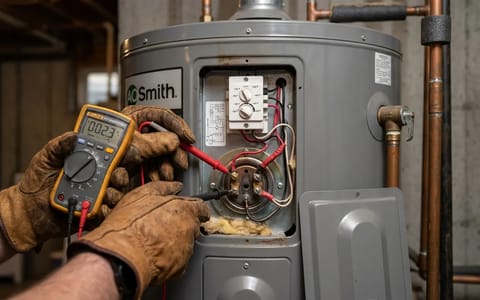
- Test the elements for continuity. If there is no leak, you need to check the heating elements. Go to your main electrical panel and flip the water heater breaker to the OFF position. Never skip this step. Use a Philips head screwdriver to remove the upper and lower access panels on the tank. Pull back the insulation to reveal the elements.
- Use your multimeter. Ensure the power is truly off with a non-contact voltage tester. Disconnect the two wires attached to the face of the element. Set your digital multimeter to the Ohms (resistance) setting (often marked as Rx1K or 200 Ohms). Touch one probe to each screw terminal on the element. A healthy element should read between 10 and 16 Ohms. If the multimeter reads "OL" (Open Loop) or shows no change, the element is burnt out and must be replaced.
Repair or Replace: What Will It Cost?
If you have identified the water heater as the culprit, the next step is deciding how to fix it. The good news is that if the issue is a burnt element or a faulty thermostat, replacement parts are inexpensive. If the tank is leaking from the bottom, however, the entire unit must be replaced.
If your water heater is under 10 years old and the tank is rust-free, replacing a $20 heating element is a massive win for your wallet. You can find replacement elements at any local hardware store like Home Depot or Lowe's. Just be sure to check the wattage and voltage printed on the side of your old element to ensure you buy the exact same size.
The 2026 Upgrade: Switching to a Heat Pump Water Heater
If your tank is leaking or too old to repair, replacing it with a standard electric model is no longer your only option. As of 2026, updated Department of Energy efficiency standards make heat pump water heaters the preferred upgrade. These units pull heat from the surrounding air rather than generating it from scratch, cutting electricity usage by up to 70 percent. Thanks to expanded federal rebates currently available, the upfront cost of upgrading is heavily subsidized, making it a smart long-term investment against future utility spikes.
Do not let a mystery utility bill leave you feeling powerless. By taking a few minutes to inspect your water heater, do a simple meter check, and test the elements, you can quickly identify the problem, stop the energy waste, and get your monthly budget back on track.