How to Baby Proof Windows Without Drilling in a Rental
Secure your rental apartment's windows and blind cords against toddler hazards using these heavy-duty, damage-free methods.
Renting an apartment with a toddler means constantly scanning rooms for hidden hazards, and accessible windows usually sit right at the top of that list. Between dangling blind cords and low sills, an unsecured window is a terrifying risk. However, most lease agreements strictly prohibit altering the property, leaving parents scrambling to figure out how to baby proof windows without drilling into the sashes or frames. Fortunately, you can effectively secure your windows, protect your child, and ensure you get your security deposit back.
Why Standard Rental Windows Need Baby Proofing
Before modifying anything, it helps to understand exactly what you are protecting against. The U.S. Consumer Product Safety Commission (CPSC) warns that window-related falls and blind cord strangulations are among the top hidden home hazards for young children, with approximately 3,300 children treated for falls from windows each year. Many parents mistakenly believe that a heavy glass sash or a tight insect screen offers a layer of protection.
Standard window screens are engineered to keep bugs out, not to keep kids in. They frequently pop out with just 10 to 15 pounds of lateral force—easily matched by a leaning two-year-old. My own toddler figured out how to unlock a standard sash latch in about three seconds, which is a terrifying realization when you live on the second floor. Securing these openings requires a multi-layered approach: managing cords, restricting opening heights, blocking the gap, and reinforcing the glass itself.
How Do You Restrict Window Opening Height?
The universal safety standard for window openings is 4 inches. If a window cannot open wider than 4 inches, a child cannot slip through. Achieving this in a rental depends entirely on the type of windows you have.
For sliding aluminum windows or single-hung metal frames, adjustable track locks are your best friend. These small metal blocks slide over the track lip and tighten down with a thumbscrew or an Allen wrench. They cost about $15 for a multi-pack at hardware stores. You simply measure 4 inches up from the closed window, clamp the lock onto the track, and the window physically cannot open past that point. Because they use friction and clamping force, they leave zero holes.
For vinyl windows where a metal clamp might crack the plastic track, heavy-duty adhesive wedges are the safer route. These clear plastic wedges stick directly to the glass on the upper pane of a single-hung window or the stationary pane of a slider. When engaged, they block the moving pane from passing them. When we rented an older duplex, I tested three different adhesive wedges before finding one that could actually withstand my two-year-old pushing on it. The trick is to scrub the glass aggressively with rubbing alcohol and let it dry completely before sticking the wedge on; otherwise, window cleaner residue will cause the adhesive to fail.
Taming Dangling Blind Cords Damage-Free
Older rental apartments are notorious for having outdated horizontal blinds with long, looped pull cords. These present a severe strangulation risk. If your landlord refuses to replace them with cordless models, you must secure the cords out of reach.
Adhesive cord cleats are the simplest fix. Using heavy-duty removable strips (like 3M Command strips), you can attach a clear plastic cleat high up on the wall next to the window frame. Simply wrap the excess cord in a figure-eight pattern around the cleat. Alternatively, you can buy plastic cord wind-ups. These small, hollow plastic shells snap closed over the cord, allowing you to manually roll the excess string up into a tight, inaccessible bundle near the top rail.
Standard window screens are engineered to keep bugs out, not to keep kids in. They frequently pop out with just 10 to 15 pounds of lateral force.
Installing Tension-Mounted Window Guards
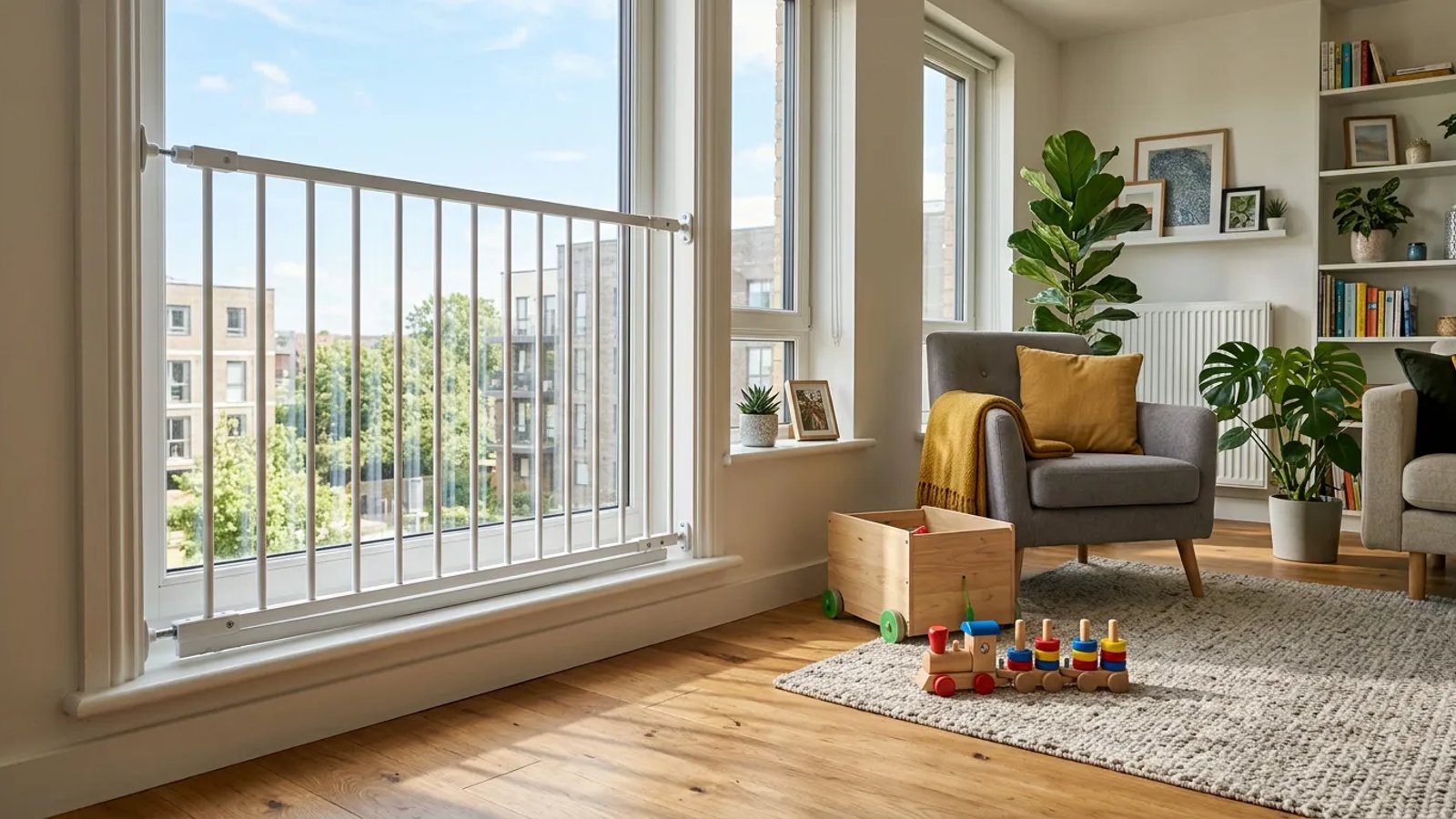
If you have low windows—where the sill is less than 36 inches from the floor—restricting the opening height might not feel like enough protection, especially if you like to keep the window wide open for a cross-breeze. In this case, you need a physical barrier.
Tension-mounted window guards operate exactly like pressure-mounted baby gates. They feature rubberized bumpers on threaded rods that press tightly against the inside of the window frame. You simply expand the guard until it wedges firmly into the window casing, then tighten the tension knobs. A high-quality tension guard can withstand up to 150 pounds of outward force without requiring a single screw.
Applying Shatter-Resistant Safety Film
Low windows present an additional hazard: the glass itself. If a toddler trips and falls against a standard pane of annealed glass, it can shatter into large, dangerous shards. While you cannot replace the glass in a rental, you can reinforce it.
Shatter-resistant safety film is a thick, clear vinyl sheet (usually 4-mil to 8-mil thick) that applies directly to the glass via static cling or a mild, water-soluble adhesive. If the glass breaks, the film holds the shards together like a car windshield, preventing severe cuts.
- Measure and cut. Measure the visible glass pane and cut the safety film about 1/2 inch larger on all sides.
- Clean the glass. Scrub the window with soapy water and a razor blade to remove any paint specks or stuck-on dirt.
- Spray the surface. Fill a spray bottle with water and three drops of baby shampoo. Drench the glass completely.
- Apply the film. Peel the backing off the film, stick it to the wet glass, and use a rigid squeegee to push all the water and air bubbles out to the edges.
- Trim the excess. Use a sharp utility knife to trim the film flush with the window gasket.
When it is time to move out, you can simply peel the film off starting from one corner. It leaves no permanent residue behind.
Additional Tips for Baby Proofing Rental Windows
While hardware and films are essential, creating a truly safe window environment for toddlers in a rental goes beyond just installing physical barriers. One of the easiest yet most overlooked steps is managing the furniture in a child's room. Toddlers are natural climbers, and a crib, bed, dresser, or toy chest placed too close to a window becomes an instant ladder to danger. Always ensure that any climbable furniture is positioned at least three feet away from windows. This creates a buffer zone that makes it much harder for a curious little one to reach the window or its potentially unsecured elements. Regularly check the room's layout as your child grows and furniture gets rearranged during play.
Additionally, while all the gadgets and films are crucial, they are never a substitute for vigilant adult supervision. Always keep an eye on your child, especially when windows are open, even if they are secured. For older toddlers and preschoolers, take the opportunity to educate them about window safety. Explain in simple terms why windows are dangerous to climb on or play near. Consistency in enforcing safety rules helps children understand boundaries and risks, reinforcing the physical barriers you've put in place. Make it a routine part of their safety education.
Finally, even the most robust safety measures can degrade over time or become dislodged during enthusiastic play. Make it a habit to regularly inspect all your window safety installations. Check tension guards for tightness, ensure adhesive wedges are still firmly attached, and verify that blind cords remain securely wrapped. Window screens can also become damaged or loose. A quick weekly or monthly check can catch potential failures before they become hazards, ensuring your damage-free baby proofing efforts remain effective and your little adventurer stays safe.
Securing an apartment for a toddler takes a bit of creativity, but you do not need a drill to create a safe environment. By combining track locks, cord wind-ups, tension guards, and safety film, you can let the fresh air in while keeping the hazards out. Take an afternoon to assess your sills, measure your tracks, and install these damage-free upgrades.
- Never allow a window to open more than 4 inches if a toddler can reach it.
- Standard window screens are designed to keep bugs out, not kids in—they will pop out under a toddler's weight.
- Tension-mounted window guards offer heavy-duty protection without leaving screw holes in the frame.
- Shatter-resistant film holds broken glass together, preventing serious cuts if a child hits a low window.