How to Clean Mildew Off Siding (Without a Pressure Washer)
Got green fuzz on your house? Learn how to safely clean mildew and algae off your exterior siding using a simple low-pressure method that won't cause water damage.
Full guide Exterior: Siding, Garage & Decks Learn how to maintain your siding, garage doors, and decks to protect your home from the weather.You step outside to enjoy a crisp morning, turn toward your house, and spot it: a layer of fuzzy green slime coating your siding. This frustrating sight makes even a well-maintained property look neglected. After a wet winter or heavy rains, this growth is incredibly common. If you want to clean mildew off siding without causing expensive damage, you are in the right place.
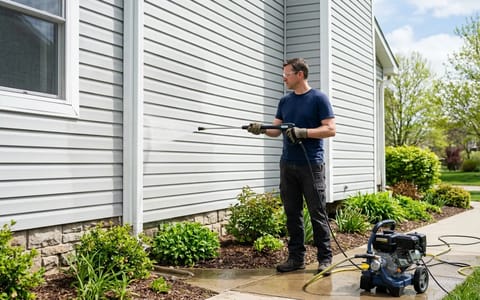
Many homeowners immediately head to the hardware store to rent the most powerful pressure washer available. Blasting the grime away feels satisfying, but it is actually one of the worst things you can do to your exterior. High-pressure water can force its way behind siding panels, soaking the wood sheathing and insulation underneath. We will walk through a much safer, low-pressure method that gets the job done perfectly with basic tools you probably already own.
Why Does Algae and Mildew Grow on Siding?
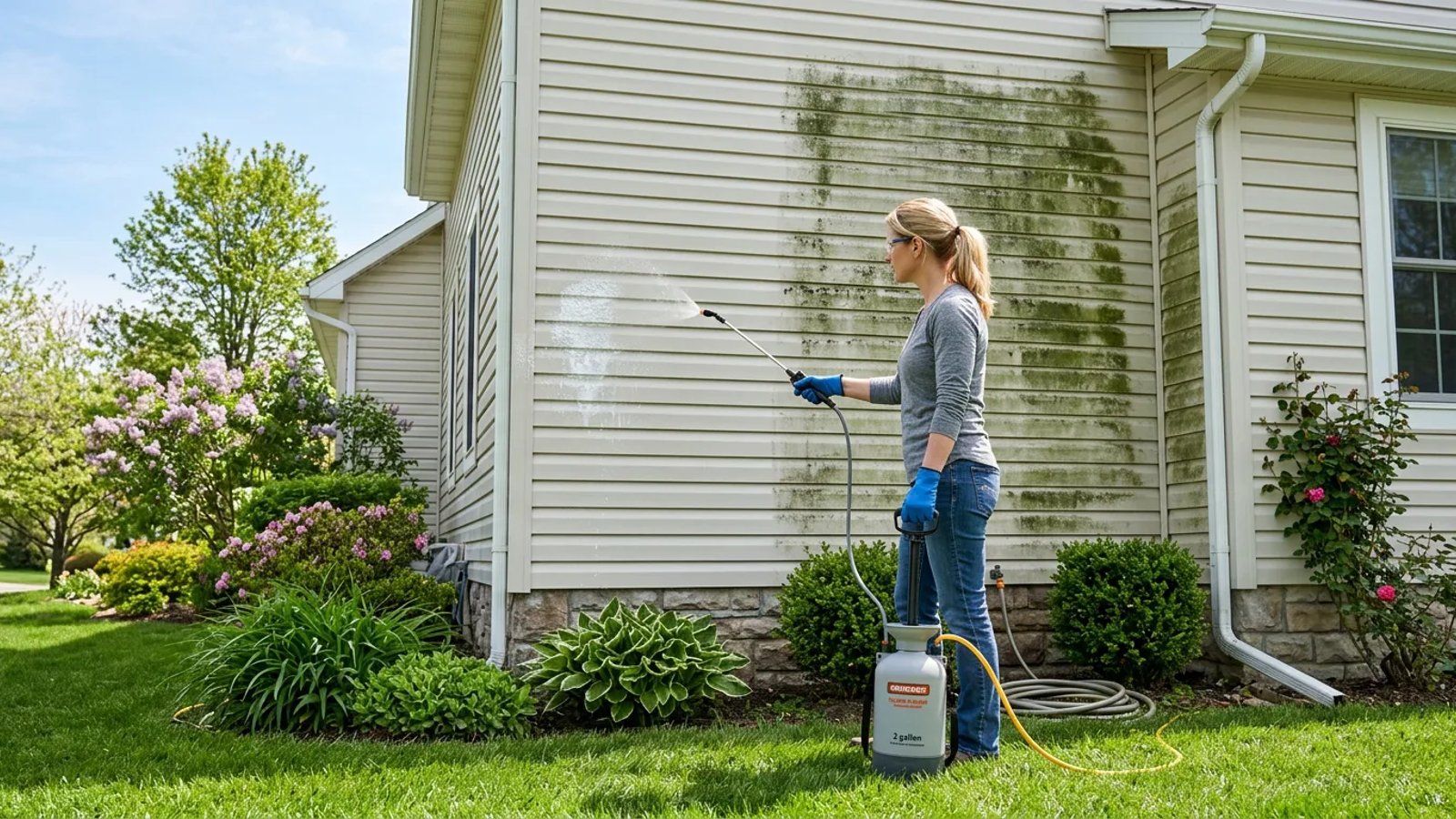
Before scrubbing, it helps to know your enemy. That green or black film on your house is usually a mix of algae, mildew, and sometimes mold. These organisms need three things to thrive: moisture, shade, and a food source (like dirt or the sugars found in tree sap).
If you live in the Northern Hemisphere, you will almost always find this growth concentrated on the north-facing side of your home. Because the north side receives the least direct sunlight, morning dew, rain, and humidity stick around much longer. Without the sun to dry the siding, the constant moisture creates a perfect breeding ground. You will also frequently spot mildew behind large bushes or under deep roof overhangs where airflow is restricted.
Why You Should Skip the Pressure Washer
Siding is designed to shed water that falls downward, like rain. It is absolutely not designed to stop water blasting horizontally or upward at 2,000 PSI. When you use a pressure washer, water easily shoots up under the overlapping lips of vinyl, aluminum, or wood lap siding.
Once water gets trapped behind the siding, it has very little airflow to dry out. This trapped moisture rots the wooden wall sheathing, ruins fiberglass insulation, and creates a massive mold problem inside your walls. On top of the water damage risk, high pressure can permanently dent aluminum siding, blast the paint right off wood siding, and crack older, brittle vinyl siding.
Siding is designed to shed falling rain, not to stop water blasting upward at 2,000 PSI.
Recently, I tested the low-pressure method on my own heavily shaded garage wall. The green slime melted away in about 15 minutes, I did not dent a single panel, and I did not ruin the hosta plants growing below. A gentle approach is always better for the long-term health of your home.
What Tools Do You Need?
You can achieve professional results with a few basic supplies. The secret is letting the cleaning solution do the heavy lifting rather than relying on brute force.
How to Clean Mildew Off Siding Safely
Pick a cloudy day for this job. If you apply cleaning solutions in direct, hot sunlight, the liquid evaporates too quickly, leaving dried soap scum and chemical residue behind before it has a chance to kill the mildew.
- Protect your plants. Bleach and strong cleaners can scorch leaves and alter soil pH. Thoroughly water any plants or grass directly below the work area before you start. Wet leaves absorb less chemical runoff. You can also drape a cheap plastic tarp over delicate shrubs.
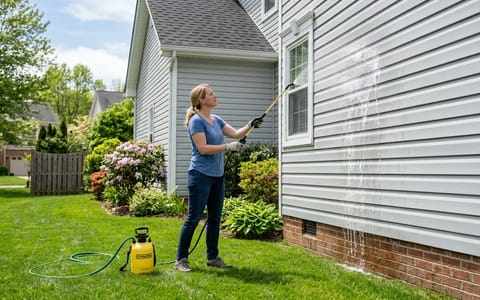
- Mix your cleaning solution. In your pump sprayer, mix 1 quart of standard household bleach with 3 quarts of warm water. Add two tablespoons of liquid dish soap. The soap acts as a surfactant, helping the mixture cling to the siding instead of immediately running off.
- Spray from the bottom up. This is the most important step. Always apply your cleaning solution starting at the bottom of the wall and working your way to the top. If you spray from the top down, the strong cleaner will run down the dry, dirty siding below, leaving permanent clean streaks that are nearly impossible to blend later.
- Let it sit, then scrub. Allow the mixture to sit on the siding for 10 to 15 minutes. Do not let it dry completely. Take your soft-bristle brush and gently scrub the stubborn areas. You will not need much pressure; the algae will turn brown and wipe away easily.
- Rinse from the top down. Grab your garden hose and rinse the wall thoroughly. Unlike the application step, you must rinse from the top down to wash all the dirty water and soap residue off the house.
New 2026 Environmental Runoff Guidelines
As of 2026, many local municipalities have introduced stricter guidelines regarding chemical runoff into storm drains. When cleaning your siding, ensure your cleaning solution absorbs into your lawn or foundation soil rather than flowing down the driveway into the street. Using biodegradable soaps and oxygen-based bleaches helps you stay compliant with these updated local water protection standards.
DIY Cleaning Solutions vs. Commercial Cleaners
The bleach mixture above is a standard, cost-effective choice for vinyl and aluminum. However, bleach is harsh. If you have wood siding, painted cedar, or delicate landscaping, you might want an alternative.
White vinegar is an excellent natural option. Mix 30% white vinegar with 70% water and a squirt of dish soap. Vinegar kills the mold spores effectively, though it requires slightly more elbow grease during the scrubbing phase. For guidance on safe mold cleanup and the limitations of biocides, the EPA provides excellent resources on moisture control.
You can also buy commercial "soft wash" or house wash products at the hardware store. Products like Wet & Forget or OxiClean are highly effective. The typical 2026 price range for a gallon of concentrated commercial house wash is $20 to $35. Many commercial options are oxygen-bleach based, which is generally safer for plants and will not bleach your clothes if you accidentally splash yourself. Always read the manufacturer's label to ensure the product is safe for your specific siding material.
How Can You Prevent Mildew From Returning?
Cleaning the siding is only half the battle. If you do not change the environment around the house, that green fuzz will return next season. You need to reduce moisture and increase sunlight and airflow.
Start by inspecting the landscaping right up against your foundation. Shrubs, bushes, and tree branches should be trimmed back at least two feet from the siding. When plants physically touch the house, they trap morning dew against the panels and block the wind from drying the area. Grab a pair of loppers and create a clear air gap around the perimeter.
Finally, look up at your gutters. If your gutters are clogged with leaves and debris, rainwater will spill over the edges and splash dirt and moisture directly onto your siding. Keeping your gutters clean ensures water is safely routed down the downspouts and away from the walls. A little preventative trimming and gutter maintenance will keep your siding looking fresh and clean for years to come.
- Skip the pressure washer to avoid forcing water behind your siding panels.
- Use a DIY mix of bleach, water, and a little dish soap in a standard garden pump sprayer.
- Apply cleaner from bottom to top, wait 10-15 minutes, then rinse from top to bottom.
- Prevent future growth by trimming vegetation two feet away from the house to allow sunlight and airflow.