How to Remove Chalky Oxidation From Vinyl Siding Safely
Don't ruin your home's curb appeal with pressure washer tiger stripes. Learn how to safely remove chalky oxidation from your vinyl siding using simple tools and the right technique.
Full guide Exterior: Siding, Garage & Decks Learn how to maintain your siding, garage doors, and decks to protect your home from the weather.You step outside to admire your yard, but your eyes lock onto the side of the house. The once-vibrant vinyl siding looks dull, faded, and covered in a dusty, white powder. This chalky layer heavily impacts your home's curb appeal, making the entire property look older and poorly maintained. The immediate instinct for many homeowners is to drag the pressure washer out of the garage, fire it up, and blast the grime away.
Stop right there. If you want to safely remove oxidation from vinyl siding, high pressure is the exact opposite of what you need. Blasting degraded plastic with intense water pressure is a fast track to permanent exterior damage. Restoring your siding requires a gentler approach, relying on basic chemistry and a bit of light scrubbing rather than brute force.
What Causes Vinyl Siding Oxidation?
Vinyl siding is primarily made of polyvinyl chloride (PVC). While modern siding is manufactured with protective coatings and colorants baked in, it still lives outside, exposed to the elements 365 days a year. Over time, ultraviolet (UV) rays from the sun break down the molecular structure of the PVC. This chemical degradation manifests as a powdery, chalk-like substance on the surface of the siding.
You will almost always notice this chalky buildup on the south and west-facing sides of your house, as these walls take the most direct, intense sunlight. From my observations, the north side of your house, which stays mostly shaded, might look perfectly fine or suffer from green algae instead of oxidation.
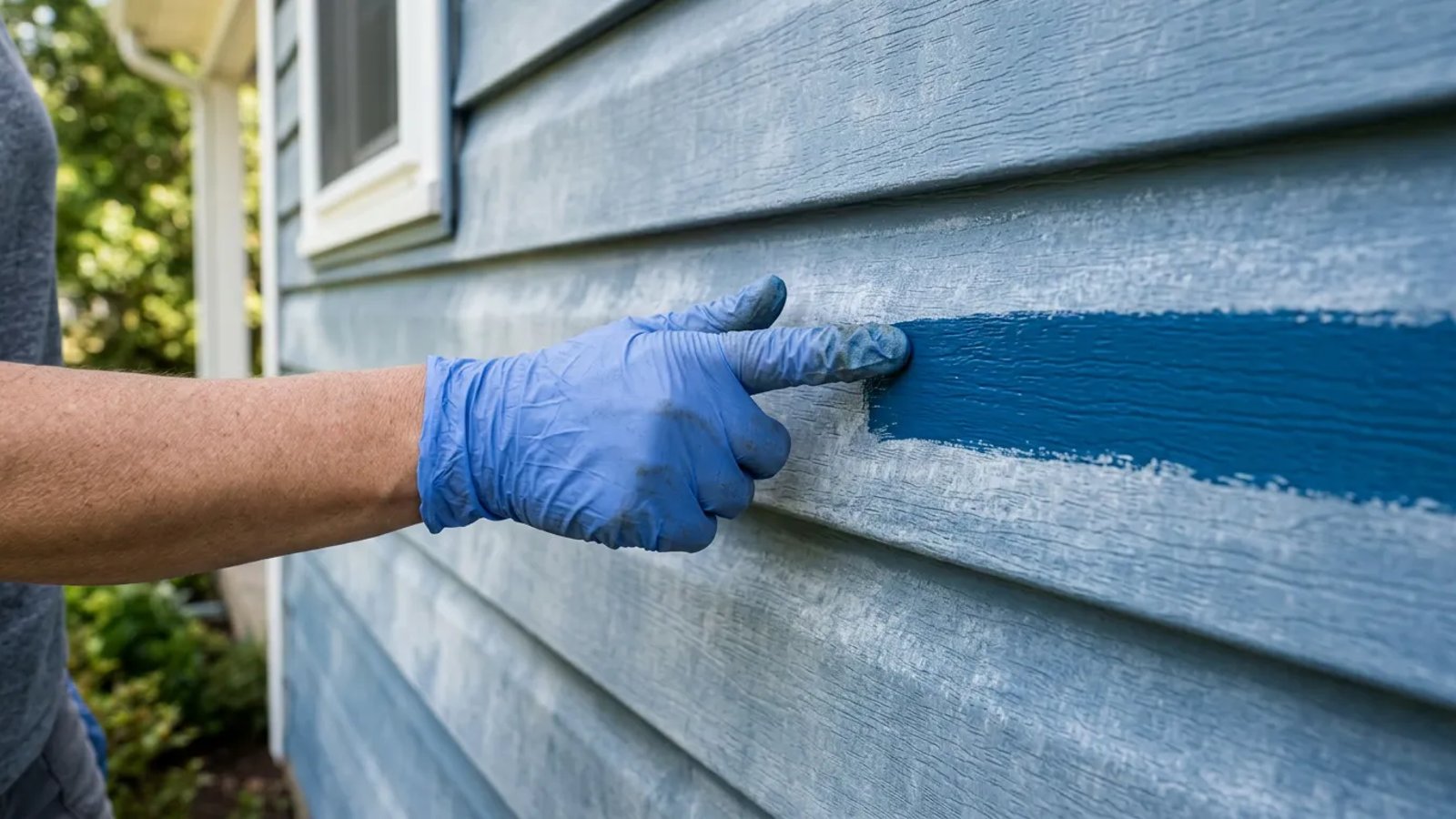
Before you buy any cleaning supplies, confirm you are actually dealing with oxidation. You can do this using the simple finger-swipe test. Run a bare, dry finger across a dry section of the faded siding. If your finger comes away coated in a fine, white, chalky dust, you have oxidation. If your finger just picks up regular brown dirt or green slime, you just need a standard seasonal wash.
The High-Pressure Mistake: Avoiding Tiger Stripes
A few years ago, I decided to blast the chalky residue off my own detached garage with a 3100 PSI gas pressure washer. I figured the sheer force would strip the white powder away and leave the original blue color looking brand new. Instead, I ended up permanently etching clean, erratic zigzag lines into the vinyl. These are known in the exterior cleaning industry as "tiger stripes," and they forced me to replace the entire wall. It was a very expensive lesson.
When you hit oxidized siding with high pressure, the water stream blasts away the degraded chalky layer in a highly concentrated, uneven pattern. Because you cannot move the wand perfectly uniformly by hand, the pressure removes more oxidation in some spots and less in others. The result is a permanently scarred surface.
You cannot blast away chemical degradation with water pressure; you have to lift it gently with the right chemistry.
To safely clean this residue, you need to dissolve and suspend the chalky powder so it can be rinsed away evenly. That means ditching the heavy machinery and picking up a few simple, inexpensive hand tools.
The Right Tools for the Job
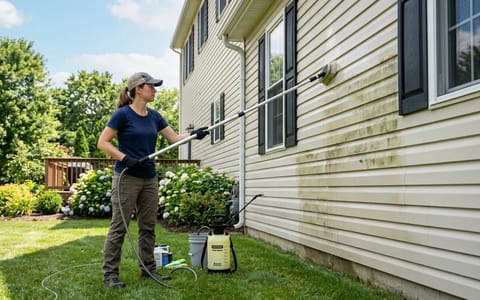
You do not need to spend hundreds of dollars on specialized equipment to restore your exterior. A trip to the local hardware store with a budget of about $50 to $75 will get you the four essential items you need.
- Pump Sprayer: A standard 1-gallon or 2-gallon garden pump sprayer ($15-$25). This allows you to apply your cleaning solution evenly across a large surface area without wasting product.
- Soft-Bristle Brush: Look for a "truck wash brush" or an "RV brush" with flagged (split) synthetic bristles. These are designed to clean automotive clear coats without scratching. Attach this to a telescoping aluminum extension pole so you can reach the upper sections of your siding.
- Oxidation Cleaner: You can buy commercial vinyl siding oxidation removers, but a simple TSP substitute (Trisodium Phosphate substitute) works incredibly well. You can find safe, effective TSP substitutes listed on the EPA Safer Choice registry. Mix it according to the manufacturer's instructions—usually about half a cup of powder per gallon of warm water.
- Garden Hose: A standard hose with an adjustable spray nozzle set to the "shower" or "cone" setting.
How to Remove Oxidation From Vinyl Siding Safely?
With your tools assembled and your cleaning solution mixed in the pump sprayer, wait for an overcast day or tackle the job in the early morning. Direct, hot sunlight will cause your cleaning solution to dry on the siding before it has a chance to work, leading to frustrating streaks.
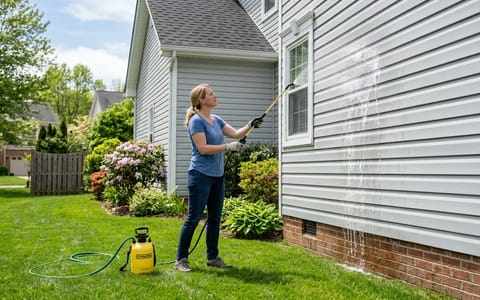
- Protect your landscaping. Use your garden hose to thoroughly soak any plants, bushes, or grass directly below the wall you are cleaning. Wetting the leaves creates a barrier so any dripping cleaning solution dilutes immediately and runs off into the soil harmlessly.
- Wet the siding. Spray the entire section of siding with plain water from your hose. This cools the vinyl down and provides a wet surface for your cleaner to cling to.
- Apply cleaner from the bottom up. Pump up your sprayer and apply the TSP substitute mixture to the siding, starting at the foundation and working your way up to the roofline. Work in manageable sections, about 10 feet wide.
- Let it dwell. Allow the cleaning solution to sit on the siding for 5 to 10 minutes. Do not let it dry. If the sun comes out and the wall starts to dry, mist it lightly with more cleaner or plain water.
- Agitate gently. Dip your soft-bristle brush into a bucket of clean water and lightly scrub the siding. Keep the brush moving side to side, following the horizontal lines of the vinyl panels. You do not need to scrub hard; the chemical is doing the heavy lifting. You are simply breaking the surface tension to loosen the chalk.
- Rinse from the top down. Grab your garden hose and thoroughly rinse the section. Start at the top and work your way down to the bottom, pushing all the milky, chalky water off the wall and into the grass.
Should You Apply a Siding Restorer?
Once the siding is completely dry, you should see a dramatic improvement in the depth and richness of the color. The chalky haze will be gone. However, because the actual PVC has experienced UV degradation, the surface might still look slightly dull compared to brand-new siding.
If you want to bring back a glossy, wet look, you can apply a vinyl siding restorer. These wipe-on liquids act like an automotive wax or a sunscreen for your house. They contain UV inhibitors and specialized polymers that penetrate the porous, oxidized plastic, deepening the color and providing a protective barrier against future sun damage. Applying a restorer typically requires wiping the product on by hand with a microfiber cloth, which is labor-intensive, but the results can last for a few years.
Keeping Your Exterior Looking Fresh
Vinyl siding is marketed as a low-maintenance material, but low maintenance does not mean zero maintenance. To keep that chalky powder from building up to severe levels again, make exterior washing a part of your annual home care routine. A gentle wash every spring removes the surface dirt, pollen, and microscopic pollutants that accelerate the breakdown of the plastic.
By understanding the chemistry of oxidation and respecting the limits of your vinyl siding, you can easily maintain a vibrant, clean exterior. Leave the heavy pressure washer in the garage for your concrete driveway, and stick to the pump sprayer and soft brush for your home's delicate exterior walls.
- Confirm oxidation using the simple finger-swipe test before buying specialized cleaners.
- Ditch the pressure washer wand and opt for a standard garden hose to avoid permanently etching the plastic.
- Work in small sections, keeping the siding wet, and always apply your cleaning solution from bottom to top.