How to Remove Hard Water Stains From a Shower Door
Tired of cloudy shower doors? Learn why standard cleaners fail on mineral deposits and discover a cheap, highly effective DIY method to melt away hard water stains.
Full guide Plumbing Learn how your home plumbing works and how to stop leaks before they ruin your house.A beautiful bathroom remodel can be completely overshadowed by a shower enclosure that looks like it hasn't been cleaned in a decade. Hard water stains are one of the most stubborn maintenance issues homeowners face. If you live in an area with hard mineral-heavy water, you know the frustration of a glass shower enclosure that looks perpetually cloudy. You spend an hour scrubbing, only to see a milky white film reappear the second the glass dries.
Learning how to remove hard water stains shower door glass accumulates is less about elbow grease and more about basic chemistry. When you understand what those white spots actually are, you can stop wasting money on ineffective cleaning products and tackle the root cause.
The Chemistry of Hard Water Stains: Why Standard Glass Cleaners Fail
To beat hard water stains, you have to understand what causes them. Hard water is simply tap water that contains high concentrations of dissolved minerals, primarily calcium and magnesium. Water with a hardness exceeding 7 grains per gallon (GPG) is typically classified as hard. As groundwater travels through limestone and chalk deposits, it picks up these minerals and carries them through your municipal pipes and right out of your showerhead.
When you take a shower, water droplets cling to the glass doors. The water eventually evaporates, but the minerals do not. They are left behind on the glass, drying into an alkaline crust. Layer upon layer, shower after shower, this crust builds up into the cloudy, white haze you see.
Most homeowners reach for a standard blue glass cleaner to fix the problem. This is where the process breaks down. Standard glass cleaners are formulated to remove fingerprints, dust, and light grease. They often rely on ammonia, which is an alkaline substance. Because mineral deposits are also alkaline, an alkaline cleaner will not dissolve them. It will simply wet the surface, smear any accompanying soap scum around, and evaporate, leaving the hard water crust perfectly intact. To break down an alkaline mineral deposit, you need the opposite end of the pH scale: a mild acid.
The DIY Magic Formula for Shower Glass
The most effective solution for cloudy shower glass costs less than five dollars and uses items you likely already have in your kitchen: standard white vinegar and a heavy-duty, grease-cutting dish soap.
In my experience, I spent years buying expensive specialty bathroom chemicals for the master bath shower before I tested this simple mixture. We measured the results side-by-side, and nothing else cut through the buildup as effectively or as quickly.
White vinegar contains acetic acid. At a standard 5% concentration, it is acidic enough to dissolve calcium and magnesium deposits without being so harsh that it damages the glass. However, vinegar is thin. If you spray it directly onto a vertical shower door, it immediately runs down into the drain before it has time to work.
This is where the dish soap comes in. By mixing the vinegar with a thick, grease-cutting dish soap, you create a viscous solution that clings to the glass. The soap serves a dual purpose: it holds the acid against the mineral stains so it can work, and its surfactants break down the oily soap scum that is often mixed in with the hard water spots. According to the EPA Safer Choice standards, utilizing simple ingredients like white vinegar and mild detergents heavily reduces your exposure to indoor air pollutants compared to harsh commercial bathroom solvents.
How to Remove Hard Water Stains From a Shower Door?
Getting the glass perfectly clear requires a specific application method. You cannot simply spray and wipe. Here is the exact process to melt away that cloudy barrier.
- Heat the vinegar. Pour one cup of white vinegar into a microwave-safe measuring cup. Heat it in the microwave for 30 to 45 seconds until it is hot but not boiling. Heating the vinegar increases the kinetic energy of the acid, making it react faster with the mineral deposits.
- Mix the solution. Pour the hot vinegar into a clean spray bottle. Add one cup of grease-cutting dish soap. Swirl the bottle gently to mix the two liquids. Do not shake it vigorously, or you will create a massive amount of foam that makes spraying difficult.
- Spray and soak the glass. Coat the shower door heavily from top to bottom. This is the crucial step most people miss: you must let the mixture sit undisturbed for 15 to 30 minutes. The acid needs time to chemically break down the alkaline crust.
- Scrub the loosened minerals. After the soaking period, use a non-scratch sponge to scrub the glass. A blue Scotch-Brite pad works perfectly. Scrub in small, overlapping circles. Never use green heavy-duty scouring pads, steel wool, or abrasive powders, as these will permanently scratch the tempered glass.
- Rinse and dry completely. Use a handheld showerhead or a bucket to rinse the glass thoroughly with warm water. Immediately dry the door with a clean microfiber cloth to ensure no new tap water is left behind to create fresh spots.
Protecting Your Shower Hardware and Stone Surfaces
While vinegar is safe for glass, it is not safe for every material in your bathroom. Because it is an acid, it can cause significant damage to certain porous surfaces and delicate finishes.
If your shower features natural stone—such as marble, travertine, or limestone—you must be incredibly careful. Acid will etch natural stone on contact, leaving dull, white marks that cannot be cleaned away. If you have a natural stone shower floor, lay down an old towel at the base of the glass door to catch any drips from your cleaning solution.
Alternative Methods for Severe Calcium Buildup
If your shower door has not been deeply cleaned in years, the heated vinegar and dish soap method might need a little extra help. For thick, crusty calcium nodules that form near the bottom tracks or hinges, you can make an abrasive paste.
Mix half a cup of baking soda with just enough water to form a thick paste. Apply this paste directly to the stubborn spots. Spray a small amount of white vinegar over the paste to create a fizzing chemical reaction, which helps lift the stain. Scrub with an old toothbrush. The baking soda acts as a mild, safe abrasive that will not scratch the glass but will help physically dislodge the thick mineral scale.
The secret to clearing cloudy shower glass isn't scrubbing harder—it's giving the acid enough time to dissolve the alkaline minerals.
Dealing with Permanently Etched Glass
Sometimes, no matter how much you soak and scrub, the glass still looks slightly cloudy when it dries. If the glass feels perfectly smooth to the touch but still looks hazy, you are likely dealing with permanent etching.
When heavy mineral deposits are left on glass for extended periods, the high pH of the minerals can actually eat into the surface of the glass, causing microscopic pitting. This is physical damage, not a stain, and no amount of chemical cleaning will reverse it.
How to Prevent Hard Water Buildup Going Forward
Once you have restored your shower door to a crystal-clear state, the goal is to keep it that way with minimal effort. Spending a few seconds on prevention will save you hours of scrubbing later.
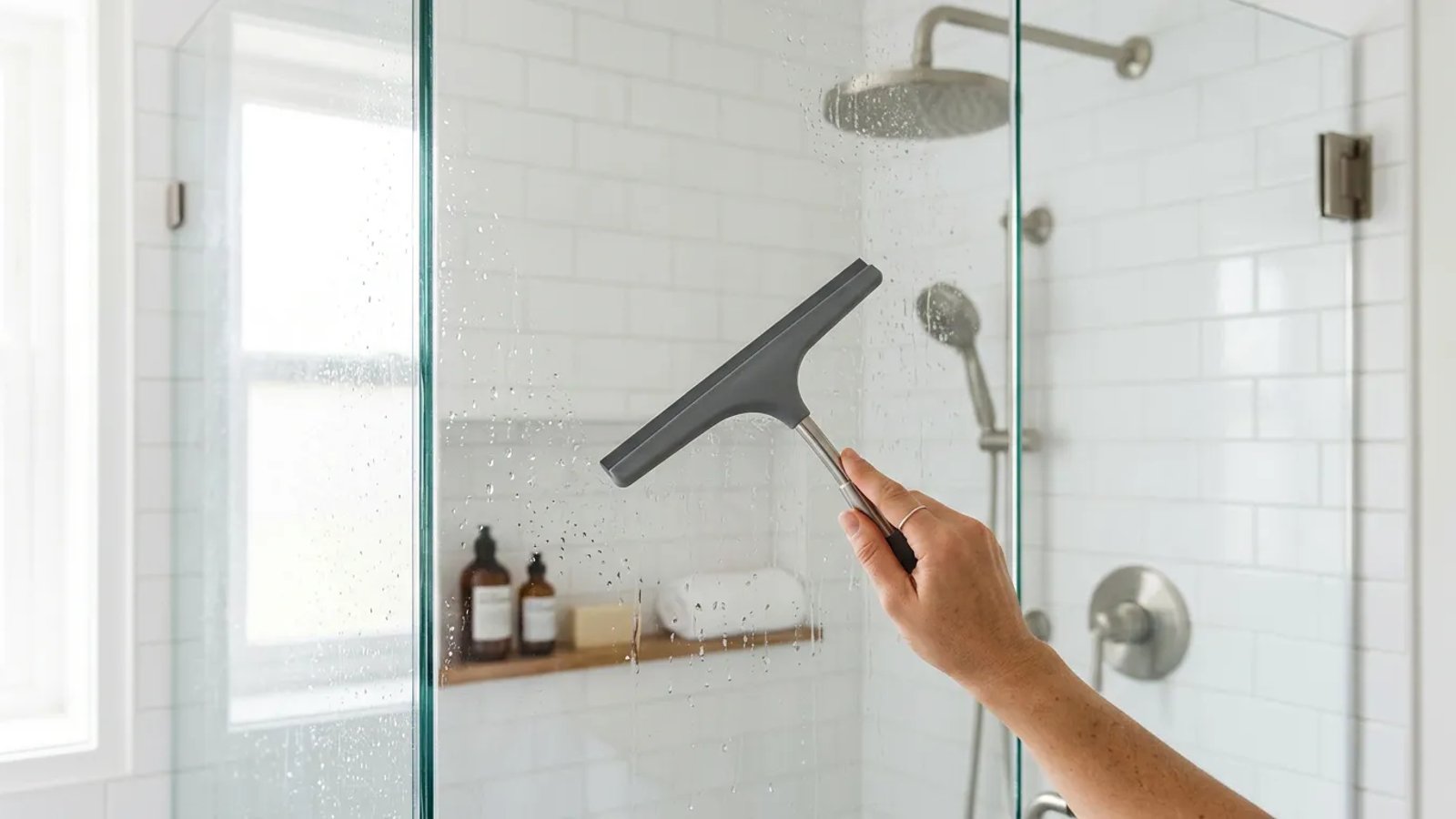
The absolute best defense against hard water stains is a daily squeegee habit. Purchase a high-quality silicone squeegee and hang it inside the shower on a suction hook. After every shower, take 15 seconds to wipe down the glass. Start at the top corner and pull straight down, overlapping your strokes slightly. By physically removing the water from the glass before it can evaporate, you completely eliminate the opportunity for mineral deposits to form.
For an extra layer of protection, you can treat the inside of the shower door with an automotive rain-repellent spray, such as Rain-X. Apply the spray to clean, dry glass according to the manufacturer's instructions, and buff it out with a microfiber cloth. This creates a hydrophobic barrier that forces water to bead up and roll off the surface, drastically reducing the amount of water that clings to the glass.
If you are tired of dealing with hard water spots on your shower doors, faucets, and dishes, you might also consider addressing the water itself. Installing a whole-house water softening system will remove the excess calcium and magnesium before the water ever reaches your bathroom. While this is a larger upfront investment, it protects your plumbing fixtures, extends the life of your water heater, and completely solves the cloudy shower door problem.
Maintaining clear shower glass doesn't require harsh chemicals or hours of exhausting scrubbing. By understanding the chemistry behind the stains and using a simple, acidic soaking method, you can easily cut through the toughest mineral buildup. Adopt a quick daily squeegee routine, and your bathroom will stay looking sharp, bright, and clean for years to come.
- Mix equal parts hot white vinegar and grease-cutting dish soap for an inexpensive, highly effective glass cleaner.
- Always let the acidic mixture sit on the glass for 15 to 30 minutes to chemically break down the alkaline mineral crust.
- Use only non-scratch sponges, like blue Scotch-Brite pads, to avoid permanently scratching tempered shower glass.
- Protect unsealed natural stone and oil-rubbed bronze hardware from acidic cleaners to prevent etching and finish damage.
- Wipe down the shower door with a silicone squeegee after every use to stop hard water spots before they dry.