Lights Flickering in One Room? How to Find the Cause Fast

Don't panic over a strobe-light effect. Learn how to safely diagnose isolated flickering lights, from simple LED mismatches to worn-out switches, before calling an electrician.
Full guide Electrical Learn how your home electrical system works and what parts are safe for you to handle.Sitting in a living room that suddenly feels like a 1990s dance club is unnerving. Most homeowners picture sparks behind the drywall and an imminent electrical fire. Before panicking, note exactly where the issue happens. Lights flickering in just one room provide a massive diagnostic clue.
An isolated flicker points to a localized problem. It rules out major grid issues from your utility provider and catastrophic failures of your main electrical service drop. Instead, the issue is confined to a single branch circuit, a specific switch, or the fixtures themselves. You can often track down the culprit using a few safe, systematic checks before paying a professional call-out fee.
1. The Easiest Fix: Check for Loose Bulbs and Sockets
Always start with the simplest explanation. Light bulbs vibrate loose over time, especially in ceiling fixtures beneath high-traffic areas like upstairs hallways or children's bedrooms. Thermal expansion and contraction (the natural heating and cooling of the bulb and socket metal) also contributes to bulbs backing out of their threads.
When a bulb is loose, the metal base barely touches the contact point inside the socket. As electricity tries to bridge that microscopic gap, it arcs, causing the light to flicker or buzz. Turn off the light switch, let the bulbs cool for ten minutes, and gently tighten them. For recessed can lights, ensure the entire trim baffle hasn't slipped down, pulling the socket connection away from the housing.
2. The LED and Dimmer Mismatch
If you recently upgraded to energy-efficient lighting, you might have inadvertently created the problem. The number one cause of lights flickering in one room is a mismatch between modern LED bulbs and older dimmer switches.
Standard rotary or slide dimmers installed before 2010 were designed for incandescent bulbs. They work by rapidly chopping off parts of the alternating current (AC) voltage wave, essentially turning the power on and off 120 times per second. Incandescent filaments glow hot and retain heat, smoothing out this rapid switching to appear dimmed. LEDs, however, contain micro-electronic drivers that react instantly. When an old dimmer chops the power, the LED driver gets confused, resulting in a visible and highly irritating strobe effect.
To test this, temporarily swap the LED bulb with a traditional incandescent bulb. If the flickering stops instantly, your wiring is perfectly fine. You simply need to replace the wall switch with a modern, LED-compatible dimmer (often labeled as a CL or trailing-edge dimmer), which typically costs between $25 and $45 at a hardware store as of 2026.
3. The "No-Neutral" Smart Switch Issue
As of 2026, many homeowners are upgrading to smart lighting controls. However, installing a "no-neutral" smart switch can easily lead to flickering. These switches draw a tiny trickle of power through the light bulb itself to keep their Wi-Fi or Zigbee radios connected. While old incandescent bulbs ignored this trickle, modern LEDs often flash or glow faintly in response. If you recently installed a smart switch, you may need to install a bypass capacitor at the fixture or switch to a model that utilizes a dedicated neutral wire.
4. The Shared Circuit Power Draw
Sometimes the lighting in a room works perfectly but gets bullied by something else on the same electrical circuit. Standard residential lighting circuits are usually rated for 15 amps, providing roughly 1,800 watts of available power. If a high-draw appliance kicks on, it can momentarily starve the lights of voltage.
This is commonly known as the vacuum cleaner effect, but it also happens with window air conditioners, space heaters, and laser printers. A laser printer draws a massive surge of electricity to heat its internal fuser roller right before printing. If your home office lights dim or flicker every time you print a document, you have found the culprit.
5. Worn-Out Light Switches and Loose Wiring
Light switches are mechanical devices that do not last forever. Inside that plastic toggle, metal contacts snap together to complete the circuit. Over thousands of flips, these contacts become pitted, carbonized, and worn down. When they fail to make a clean, solid connection, the electricity stutters.
A flickering light is your home's electrical system trying to tell you a secret; your job is to listen before it stops talking entirely.
I once spent three hours tracing wires in a 1970s split-level, only to find the hallway switch's internal spring had simply given up. The contacts barely touched, creating a tiny, invisible arc that made the hallway look like a haunted house. If you hear a faint crackling or buzzing sound near the switch plate, or if the toggle feels mushy rather than delivering a crisp "snap," the switch is failing.
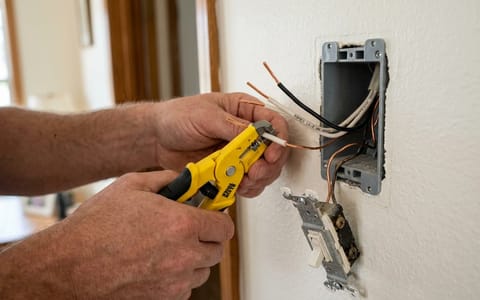
Replacing a switch is an approachable DIY task for many homeowners, provided you follow strict safety protocols:
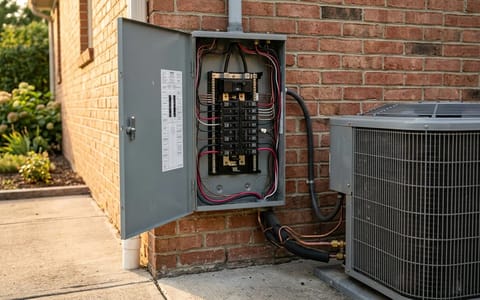
- Kill the power. Locate your main electrical panel and flip the breaker for the affected room to the OFF position.
- Verify the power is off. Remove the plastic switch plate cover. Use a non-contact voltage tester pen (an essential $15 to $20 tool as of 2026) near the wires to confirm the circuit is completely dead.
- Inspect the connections. Unscrew the switch from the box and pull it out gently. Look for loose wires under the terminal screws or wires pushed into the quick-connect holes in the back (which are notorious for coming loose over time).
- Replace if necessary. If the wires were tight but the switch is old, replace it with a new single-pole switch, ensuring you wrap the wires clockwise around the terminal screws and tighten them securely.
6. The Pro Zone: Loose Neutrals and Breaker Issues
If you have checked the bulbs, verified your dimmers, unplugged heavy appliances, and confirmed the switch is sound, you have reached the edge of safe DIY territory. An isolated flicker surviving all these basic checks usually points to a loose connection deeper in the system.
The most common hidden culprit is a loose neutral wire. The neutral wire (typically white) is the return path for the electricity. If a wire nut vibrates loose inside a ceiling junction box, the return path is compromised. This creates severe voltage fluctuations. The lights might flicker, or you might notice them getting unusually bright before dimming down again. This is incredibly dangerous; loose connections generate intense heat and are a primary cause of electrical fires.
The other possibility is a degrading connection at the breaker panel itself. The breaker controlling that specific room may be failing, or its connection to the panel's bus bar might be pitted and arcing. Furthermore, Arc-Fault Circuit Interrupter (AFCI) breakers, which are required by 2026 electrical codes for most living areas, are highly sensitive and can interrupt power if they detect even minor wiring faults.
Dealing with electrical anomalies can be stressful, but methodical troubleshooting is your best defense. By working through the easiest fixes first (tightening bulbs and checking dimmer compatibility), you can often solve the problem in minutes for just a few dollars. If the issue does require an electrician, you will save them valuable diagnostic time by clearly explaining exactly which steps you have already ruled out.