Mice in Kitchen Cabinets? Seal the Hidden Gaps for Good
Finding mouse droppings in your pantry is frustrating. Learn exactly where builders leave hidden gaps behind your cabinets and appliances, and how to seal them for good.
Full guide Pest Control Learn how to stop ants, mice, termites, and wasps from invading your home and know when to hire a pro.Finding mouse droppings inside your pantry or silverware drawer is incredibly frustrating, especially when dealing with mice in kitchen cabinets. If you are trying to figure out how to get rid of mice in kitchen cabinets, your first instinct is usually reactive. You clean everything, sanitize the shelves, and set a few snap traps. You might even catch a mouse or two. But a few weeks later, the droppings return. If you find yourself stuck in this cycle, you are fighting the symptoms instead of the source.
The real question is: how are mice getting inside your closed cabinetry in the first place? They do not magically appear, and they rarely walk straight through your front door. Instead, they use hidden "superhighways" built right into your home. During construction, builders cut holes in the drywall and flooring to run pipes and wires. These utility holes are almost always cut larger than necessary, leaving gaps that lead directly into the dark, hidden voids behind your cabinets.
Why Mice Target Kitchen Cabinets in the First Place?
Mice choose their nesting and foraging grounds based on three basic survival needs: food, water, and warmth. Your kitchen provides an endless supply of all three, making it the most attractive room in the house.
Even the cleanest kitchen has microscopic crumbs under the stove or behind the fridge; mice can survive on as little as 3 grams of food per day. Furthermore, a single female house mouse can have up to 10 litters a year. What starts as two mice can become a severe infestation in just a few months. Water is readily available from the condensation line on your refrigerator, a slightly weeping dishwasher connection, or just the moisture around the sink drain. Finally, the motors on your refrigerator and dishwasher generate a constant, reliable source of heat. Once a mouse finds its way into the wall cavities of your home, following the draft of warm air and food odors straight into your kitchen cabinets is a natural next step.
To permanently stop them, you have to find and block these specific interior entryways.
The Sink Cabinet: Inspecting Plumbing Cutouts
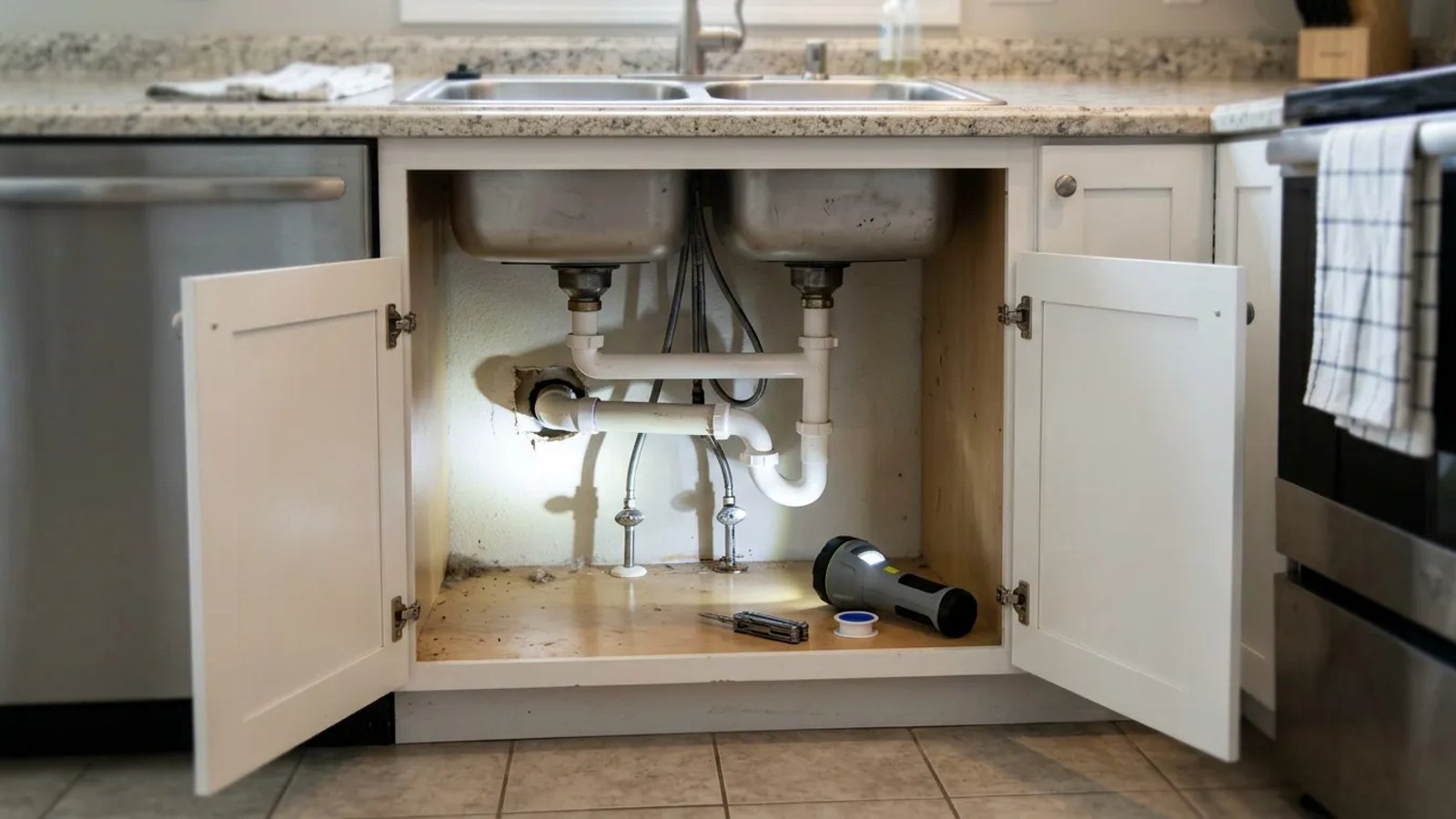
The cabinet beneath your kitchen sink is ground zero for rodent entry. Plumbers need to bring hot and cold water supply lines in, and a large PVC drain pipe out. To do this, cabinet installers cut holes in the back or bottom of the cabinet. Because these holes are hidden from view, they are rarely cut neatly and are almost never sealed by the builder.
Empty the cabinet completely. Get on your hands and knees with a bright LED flashlight. Look closely at the exact spots where the pipes pass through the wood or drywall. You are looking for any gap wider than a quarter of an inch, which is roughly the width of a standard pencil. If a pencil can slide into the gap beside the pipe, a mouse can squeeze through it. This applies to modern PEX plumbing lines just as much as older copper pipes.
A few years ago, I helped a neighbor track a persistent mouse issue right back to one of these oversized holes. We pulled everything out of her sink cabinet and found a jagged, unsealed cutout around the hot water valve. Droppings were scattered right below it. We packed it with copper mesh, sealed it up, and the cabinet has been mouse-free ever since.
The Appliance Voids: Stoves, Dishwashers, and Fridges
Cabinets are not the only hiding spots. The empty spaces behind large appliances offer direct, unbothered access to the wall cavities. As of 2026, most modern building codes require larger utility cutouts for smart appliances, which unfortunately creates even wider paths for rodents if left unsealed.
The area behind the stove is a notorious entry point. Gas lines require a hole in the floor or wall, and electric ranges require a massive 220V outlet. Electricians often cut a large square in the drywall to mount the heavy 220V receptacle, leaving wide gaps around the plastic box. Because the stove hides the wall, nobody bothers to patch it.
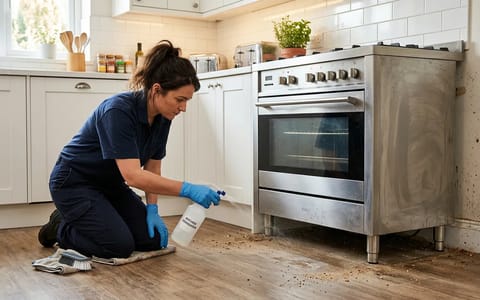
Pull your stove away from the wall. You will likely need to slide it out a few feet to get a good look behind it. Shine your flashlight down at the baseboards and around the power outlet or gas pipe. Look for dark smudges along the baseboards. Mice leave behind greasy rub marks from the oils in their fur when they squeeze through tight spaces repeatedly.
Setting traps without sealing the entry points is like bailing water out of a boat without plugging the leak.
The dishwasher is another major culprit. Unlike a stove, a dishwasher is hard-plumbed and screwed to the underside of the countertop, making it difficult to pull out. However, you can usually remove the bottom kick-plate (the metal panel near the floor) with a Phillips-head screwdriver. Shine your light underneath. You will often find holes cut directly into the subfloor for water lines and electrical conduit.
The Toe-Kicks: The Hidden Under-Cabinet Space
Take a step back and look at your lower kitchen cabinets. Notice the recessed area at the floor level where your toes go when you stand at the counter? That is the toe-kick. What many homeowners do not realize is that the space behind that thin piece of finished wood is completely hollow.
Cabinets sit on a raised wooden base. The void underneath them is dark, warm, and runs the entire length of your kitchen. If a mouse gets into the wall, they can chew through the drywall right at floor level and enter this long tunnel. From there, they can easily find a spot to chew upward through the thin floor of the cabinet to reach your food.
Inspect the toe-kick panels carefully. Look for corners where the wood has been gnawed, or places where the trim doesn't quite meet the floor. If you find a gap, you can use a small mirror and a flashlight to peek underneath the cabinets. If you cannot see under the cabinets, consider buying a cheap smartphone borescope camera. As of 2026, a basic Wi-Fi borescope costs under $35 online and lets you inspect these hidden voids without removing any woodwork.
How to Get Rid of Mice Currently in Your Kitchen Cabinets
Sealing the gaps keeps new mice out, but you still need to get rid of the mice that are already trapped inside your home. The most effective and sanitary method is using traditional wooden or plastic snap traps. Never use rodent poison inside your kitchen. Poisoned mice will often crawl back into your wall cavities or under your cabinets to die, creating an unbearable odor that can linger for months.
To successfully trap the remaining mice, follow these three rules:
- Choose the right bait: Mice are drawn to high-calorie foods. A pea-sized drop of peanut butter or hazelnut spread works perfectly. Press the bait firmly into the trap's trigger so the mouse has to work for it.
- Place traps along walls: Mice have poor eyesight and navigate by keeping their whiskers touching a wall. Place your snap traps inside the cabinets, pushed tight against the back wall, with the trigger end facing the wood.
- Overwhelm them: Set at least three to four traps in every cabinet where you have seen droppings. A common mistake is using too few traps.
Cleaning Up After an Infestation
Once you get rid of the mice, you must clean the contaminated areas to remove pheromone trails. Mice use these invisible scent trails to signal to other mice that your kitchen is a safe place to find food.
Never sweep or vacuum dry mouse droppings, as this can launch dangerous bacteria and viruses into the air. Instead, put on rubber gloves and spray the droppings with a commercial disinfectant or a mixture of one part bleach to ten parts water. Let it soak for five minutes, wipe everything up with paper towels, and throw them in an outdoor trash can. Finally, wash all your dishes and silverware that were stored in the affected cabinets before using them again.
How to Seal Kitchen Gaps Permanently
Once you locate the gaps, you need to seal them. Do not just spray expanding foam into the hole and call it a day. Mice can and will chew straight through dried polyurethane foam in a matter of minutes. You need a two-part barrier: a physical block and an air seal. According to CDC guidelines on rodent exclusion, using the right materials is the only way to ensure the fix is permanent.
Here is the exact method to seal these hidden gaps:
- Gather your materials. You will need heavy leather gloves, a pair of scissors, a roll of coarse steel wool (or copper mesh), and a can of expanding spray foam. You can get all of this at a hardware store for about $18 to $30 in 2026.
- Cut the mesh. Wearing your gloves, cut a strip of steel wool or copper mesh. Make it slightly larger than the hole you are trying to fill.
- Pack the gap. Stuff the mesh tightly into the gap around the pipe or wire. Use a flathead screwdriver to push it deep into the hole. The metal mesh is the physical barrier; mice cannot chew through it because the sharp edges cut their gums.
- Apply the foam. Shake the can of expanding foam vigorously. Insert the plastic straw into the mesh and spray a small amount of foam. The foam will expand, locking the metal mesh in place and sealing off any drafts. Blocking the airflow prevents mice from smelling the kitchen food from inside the walls.
- Trim the excess. Wait about 60 to 90 minutes depending on the brand's 2026 curing specifications. Once hard, use a utility knife to slice off any ugly excess foam so it sits flush with the wall or cabinet back.
Taking an hour on a weekend to pull out your appliances and inspect your cabinets will save you endless frustration down the road. By packing those hidden construction gaps with metal mesh and sealing off the drafts, you turn your kitchen from a porous target into a fortress. Once the interior walls are sealed, any mice currently trapped inside can be quickly caught, and you can finally enjoy your pantry without worrying about unwanted guests.
- Check the back of your sink cabinet where the drain and water lines enter the wall.
- Pull out your stove to inspect the drywall around the gas line or 220V plug.
- Pack oversized holes tightly with coarse steel wool or copper mesh before applying expanding foam.
- Inspect the toe-kick area beneath your lower cabinets for loose or missing trim.