Outlet Keeps Tripping Breaker? How to Find the Cause Fast
A single outlet that repeatedly trips your circuit breaker is a serious safety warning. Learn how to safely diagnose whether it's an overloaded circuit, a faulty device, or dangerous wiring behind the wall.
Full guide Electrical Learn how your home electrical system works and what parts are safe for you to handle.Standing in the dark after hearing that familiar "click" from the hallway is a frustrating homeowner experience. When a specific outlet keeps tripping breaker panels in your home, the temptation is to simply march downstairs, flip the switch back, and go about your day. Doing this once is normal. Doing it repeatedly is dangerous.
A circuit breaker is a mechanical safety device designed to fail on purpose. It monitors the flow of electricity, and when that flow exceeds the safe physical limits of your home's wiring, the breaker cuts the power to prevent the copper wires inside your walls from melting and starting a fire. Ignoring this warning by constantly resetting the breaker is like ignoring the check engine light on your dashboard—eventually, something expensive or dangerous will happen.
A few years ago, I spent two hours trying to figure out why a living room outlet kept tripping the breaker, only to realize my heavy-duty vacuum cleaner was sharing a circuit with a hidden mini-fridge in the adjacent home office. Finding the root cause requires a bit of detective work, but it is entirely manageable for the average homeowner.
Understanding Why Your Outlet Keeps Tripping: The Three Reasons
Before you start unscrewing faceplates or buying replacement parts, you need to understand the physics of what is happening inside your electrical panel. Most standard household circuits operate on 120 volts, and breakers are designed to trip for three primary reasons: overloads, short circuits, and ground faults.
1. The Overloaded Circuit
This is the culprit about 90 percent of the time. Most standard household circuits are rated for 15 amps or 20 amps. A 15-amp circuit can safely handle about 1,440 watts of continuous power. If you plug a 1,500-watt space heater into an outlet, and then turn on a 600-watt television that happens to be on the same circuit, you are demanding 2,100 watts from a system designed for much less. The breaker's internal bimetallic strip heats up, bends, and snaps the connection open.
2. The Short Circuit
A short circuit is a wiring problem. It happens when the black "hot" wire touches the white "neutral" wire, creating a path of zero resistance. Electricity floods this path instantly, causing a massive spike in current. Instead of slowly heating up like an overload, the breaker uses an internal electromagnet to instantly trip the switch. This often produces a loud pop and sometimes a visible spark at the outlet.
3. The Ground Fault
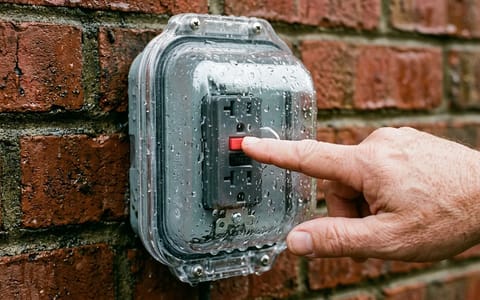
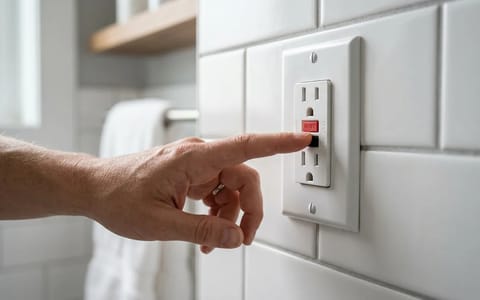
Similar to a short circuit, a ground fault occurs when the hot wire touches a grounded object—like the metal electrical box, a grounded appliance casing, or even water. If your home has Ground Fault Circuit Interrupter (GFCI) outlets or breakers, they are designed to detect this specific imbalance and cut power in milliseconds to prevent electrocution.
How to Diagnose an Outlet That Keeps Tripping the Breaker?
Troubleshooting electrical issues is a process of elimination. You want to isolate the problem to figure out if the issue is the device you are plugging in, the receptacle itself, or the wiring hidden in the walls.
- Turn off the affected breaker. Go to your panel and ensure the breaker is completely pushed to the "Off" position. A tripped breaker sits in the middle; you must push it firmly off before it will reset.
- Unplug everything on the circuit. This is crucial. Unplug every single device, lamp, and appliance from the affected outlet, and any other outlets on the same circuit. Turn off all light switches connected to that breaker.
- Reset the breaker. Push the breaker switch to the "On" position. Stand back and observe.
- Test with a single, known-good device. If the breaker stays on, plug a simple device (like a small LED lamp you know works perfectly) into the suspect outlet. Turn it on.
- Add loads one by one. If the lamp works, leave it on. Plug your original devices back in one at a time. If the breaker trips the moment you plug in your window AC unit or hair dryer, you have found your problem: an overloaded circuit or a faulty appliance.
Never force a circuit breaker to stay in the ON position. If it refuses to reset, it is actively protecting your home from a fire.
If you perform step three and the breaker trips instantly with absolutely nothing plugged in, stop immediately. You have a hard short in your wiring, a melted receptacle, or a faulty breaker. It is time to inspect the outlet itself.
Visual Inspection: Checking Behind the Faceplate
If the outlet feels loose when you plug things in, or if the plugs fall out easily, the internal metal contacts are worn out. Worn contacts create electrical resistance, which generates heat, which can eventually trip a breaker or start a fire. Replacing a worn receptacle is a standard maintenance task.
Once you are absolutely certain the power is off, use a #2 Phillips screwdriver to remove the plastic faceplate, then remove the two long screws holding the receptacle to the electrical box. Gently pull the outlet forward.
From my experience, when you look closely at the sides and back of the outlet, you are looking for three specific warning signs:
- Scorch marks or melted plastic: Blackened areas around the screw terminals indicate arcing. The outlet must be replaced, and the damaged wire ends must be clipped and stripped fresh.
- Loose wires: Wires should be wrapped tightly clockwise around the side screw terminals. If the wires move easily, they are loose.
- Backstabbed connections: Many older homes feature "backstabbed" outlets, where the straight copper wire is simply pushed into a small hole on the back of the device, held in place by a tiny spring clip. The National Electrical Code (NEC) allows this, but professional electricians hate them. Over time, the heating and cooling of normal electrical use causes these spring clips to fail, resulting in loose connections, arcing, and tripped breakers.
Understanding AFCI Breaker Nuisance Trips
If your home was built or heavily remodeled after 1999, you likely have Arc-Fault Circuit Interrupter (AFCI) breakers in your panel. These breakers usually have a "Test" button on them. While standard breakers protect against heat and overloads, AFCI breakers protect against arcing—the tiny sparks that happen when a wire is loose or damaged.
AFCI breakers are notoriously sensitive. If your outlet keeps tripping an AFCI breaker, it might not be an overload at all. It could be a slightly frayed cord on your vacuum cleaner, a loose wire nut inside the wall, or even an older appliance with a motor that naturally sparks slightly during operation (like a treadmill). If you suspect an AFCI nuisance trip, replacing the outlet and securing the wires firmly to the side screws often solves the problem.
DIY Fixes vs. Calling a Professional
Home maintenance requires knowing exactly where your skills end and when professional danger begins. Replacing a worn-out electrical receptacle is a highly accessible DIY project. A new 15-amp receptacle costs about $2 to $5 at a hardware store, and a commercial-grade version costs around $10. With a screwdriver, wire strippers, and a voltage tester, the job takes 15 minutes.
An electrician will typically charge a service fee of $100 to $150 just to show up, plus an hourly rate. While nobody likes spending money on unexpected repairs, paying a professional to trace a short circuit through your attic or basement is much cheaper than dealing with the aftermath of an electrical fire.
Your home's electrical system is incredibly reliable when treated with respect. By mapping your circuits, understanding the limits of your breakers, and taking the time to investigate nuisance trips instead of just flipping the switch back on, you keep your home and your family safe. The next time the lights go out in the living room, grab your flashlight, unplug your devices, and start your diagnostic process.
- Never repeatedly reset a breaker that immediately trips again; this forces electricity through a fault and can cause an electrical fire.
- Map your circuits to understand exactly which outlets and lights share the same 15-amp or 20-amp load.
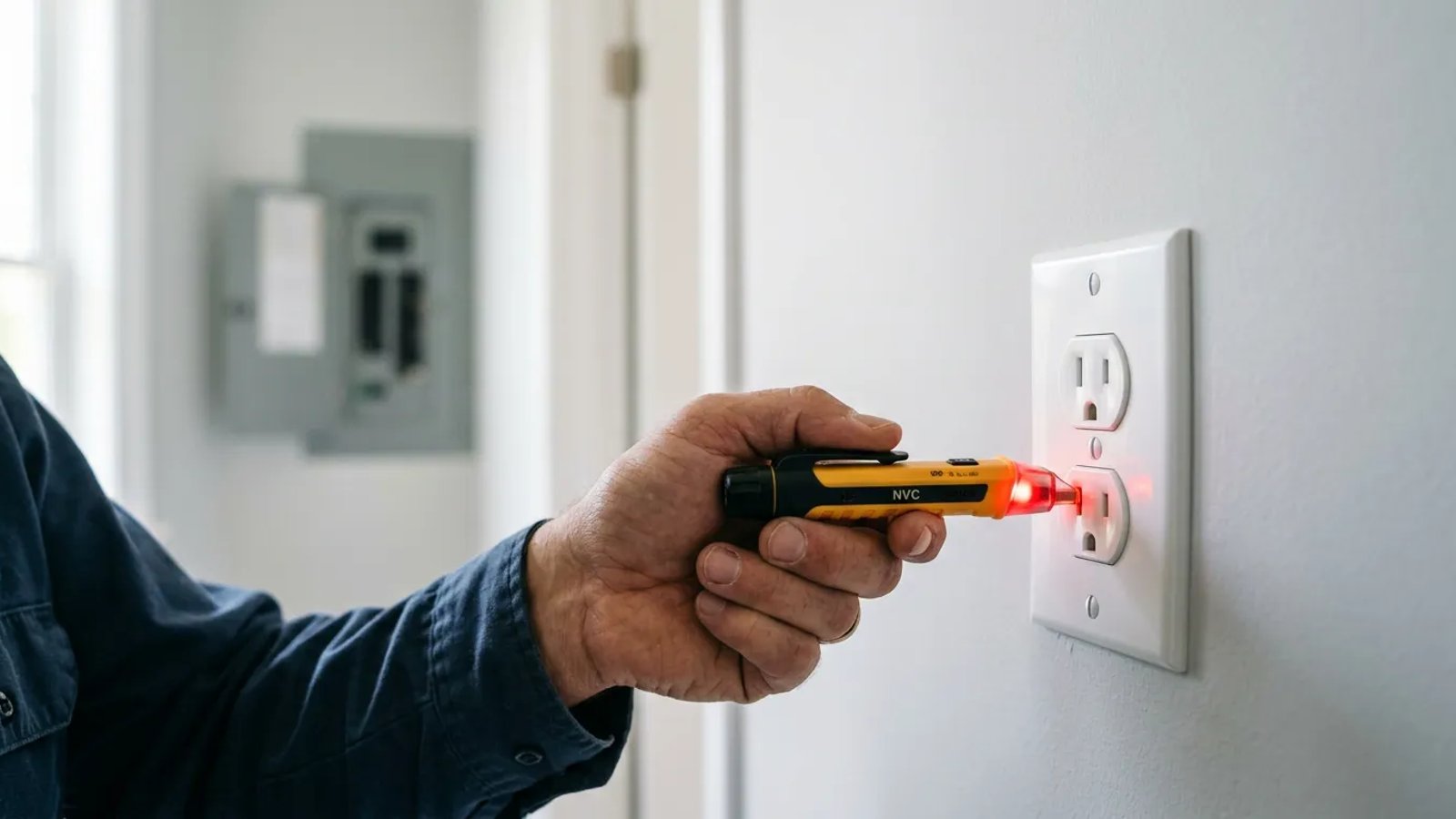
- Always use a non-contact voltage tester to verify power is completely off before removing any outlet covers.
- If the breaker trips with absolutely nothing plugged in, the problem is in the wall wiring or the breaker itself, requiring a professional.