GFCI Outlet Keeps Tripping? How to Find the Hidden Cause

A GFCI outlet that refuses to reset is frustrating, but it is usually doing its job to protect you from electrical shocks. Learn how to safely isolate the problem, check for hidden moisture, and know when it is time to replace a worn-out receptacle.
Full guide Electrical Learn how your home electrical system works and what parts are safe for you to handle.You press the reset button, hear a sharp click, and immediately the power dies again. When a GFCI outlet keeps tripping, it brings your morning routine or weekend yard work to a frustrating halt. Whether you are holding a hairdryer in a dark bathroom or standing next to a silent pressure washer in the driveway, your first instinct is likely annoyance. You might wonder if your expensive appliance is broken or if your home's wiring is suddenly failing.
The truth is usually simpler and far less expensive. A Ground Fault Circuit Interrupter (GFCI) is a highly sensitive safety device. When it refuses to reset, it is doing exactly what it was designed to do: protecting you from a potentially lethal electrical shock. Before you call an electrician or throw away your power tools, you can perform a few safe, simple tests to find the hidden cause of the trip.
Why Your GFCI Outlet Keeps Tripping (And Why That Is Good News)
To troubleshoot the problem, it helps to understand what is happening behind the plastic faceplate. A standard electrical outlet simply delivers power. A GFCI outlet acts as an active monitor. It constantly measures the electrical current flowing out through the "hot" wire and returning through the "neutral" wire.
Under normal conditions, these two measurements match perfectly. However, if water gets into an appliance, or a wire inside your power drill frays and touches the metal casing, some of that electrical current escapes its intended path. It seeks a shortcut to the ground, and if you are holding the tool, that shortcut could be through your body.
Your GFCI is the electrical equivalent of a vigilant bodyguard; when it trips, it is usually saving you from a potentially lethal shock.
The GFCI detects this missing current. If it senses an imbalance as tiny as 4 to 5 milliamps (a fraction of what it takes to power a standard lightbulb), it cuts the power in roughly 1/40th of a second. That is faster than a heartbeat. So, when your GFCI outlet keeps tripping, it is screaming that current is leaking somewhere it shouldn't be.
Step 1: The "Unplug Everything" Isolation Test
A faulty appliance, not a faulty outlet, is the most common reason for a tripped GFCI. Before you open any electrical boxes, you need to isolate the variable. This requires a systematic approach to clear the circuit.
- Unplug every single device. Remove all cords from the GFCI outlet itself.
- Check for downstream outlets. GFCIs are often wired to protect standard outlets further down the same circuit. Unplug everything from nearby standard outlets in the same room, or even on the other side of the wall.
- Reset the GFCI. Press the reset button firmly. You should feel it click and lock into place.
- Test with a known working item. Plug a simple, dry appliance, like a basic desk lamp or a nightlight, into the GFCI. Turn it on.
- Plug your original items back in one by one. If the lamp stays on, the outlet is fine. Begin plugging your other devices back in, one at a time. The moment you plug in the faulty appliance, the GFCI will snap off. You have found your culprit.
Step 2: Hunting for Hidden Moisture
If you unplugged everything and the outlet still refuses to reset, your next suspect is moisture. Water and electricity are a notorious combination, and because GFCIs are legally required in "wet zones" (kitchens, bathrooms, garages, and outdoors), they are constantly exposed to humidity.
In the bathroom, heavy steam from a shower can condense inside the receptacle box. In the kitchen, a splash from the sink or a leaking pipe inside the cabinet can introduce water to the wiring. Outdoors, heavy summer storms or aggressive pressure washing can easily defeat an aging weatherproof cover.
Never use a hairdryer on a hot setting to blast water out of an outlet. The intense heat can melt the plastic faceplate or the wire insulation inside the box, creating a severe fire hazard. If you must speed up the drying process, use a fan or a hairdryer set exclusively to the "cool" setting.
Step 3: The Mystery of "Downstream" Wiring
One of the most confusing scenarios for homeowners is when a GFCI outlet trips because of an issue in an entirely different room. To save money, builders often wire multiple standard outlets to run "downstream" from a single GFCI. The GFCI is installed at the beginning of the circuit, and its internal sensors protect every standard outlet connected to its "Load" terminals.
For example, you might have a GFCI in your garage that protects the standard outlets on your front porch and back patio. If a rainstorm soaks the standard outlet on your porch, the GFCI in the garage will trip. You might spend hours staring at a perfectly dry garage outlet, wondering why it won't reset, completely unaware that the actual fault is outside.
The 2026 Electrical Code: Why More Outlets Are Tripping
As of 2026, the National Electrical Code (NEC) has expanded GFCI requirements to cover virtually all 120-volt and 250-volt receptacles in kitchens, basements, and laundry areas, regardless of their distance from a sink. If you live in a newly built or recently renovated home, you have far more GFCIs than older properties. This expanded protection means a higher likelihood of experiencing a tripped circuit, simply because there are more active monitors guarding your home's wiring.
The Hidden Truth: GFCI Outlets Actually Expire
If you have unplugged everything, completely dried the area, and checked all downstream outlets, but the GFCI still instantly trips when you press reset, you are likely dealing with a dead receptacle. Most homeowners assume electrical outlets last forever, but GFCIs are mechanical devices with tiny internal circuit boards. They wear out.
The average lifespan of a GFCI outlet is about 10 to 15 years. Every time they trip, every time there is a minor power surge, and simply through years of passive monitoring, the internal components degrade. Modern GFCIs are built with a "self-test" feature. If the internal circuitry fails and can no longer provide shock protection, the unit permanently locks itself out. It will refuse to reset, rendering the outlet dead.
This isn't a flaw; it is a critical safety feature. A failed GFCI that continues to provide power without shock protection is incredibly dangerous. When they die, they die in the safe position.
When to Replace It Yourself vs. Calling an Electrician
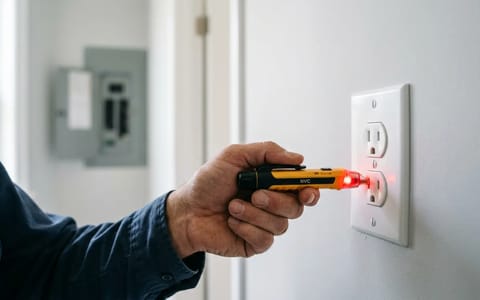
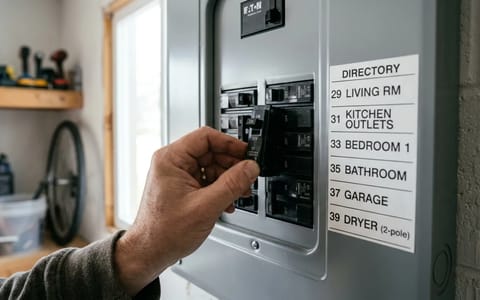
Replacing a worn-out GFCI is a very common DIY project. As of 2026, a new standard GFCI receptacle typically costs between $20 and $35 at any local hardware store. If you are comfortable turning off the main breaker, using a reliable non-contact voltage tester (which runs about $15 to $25 in 2026), and moving wires from the old unit to the exact same terminals on the new unit, it is a 30-minute job.
However, electrical work is not the place for guesswork. A GFCI has specific "Line" (incoming power) and "Load" (outgoing power to other outlets) terminals. If you reverse these wires, the outlet might provide power, but it will not provide shock protection.
Dealing with an outlet that refuses to cooperate is a test of patience, but a methodical approach will almost always reveal the culprit. By isolating your appliances, hunting down hidden moisture, and recognizing when a receptacle has simply reached the end of its lifespan, you can restore power safely and confidently.