Signs Your Gutters Need Cleaning (Before They Overflow)
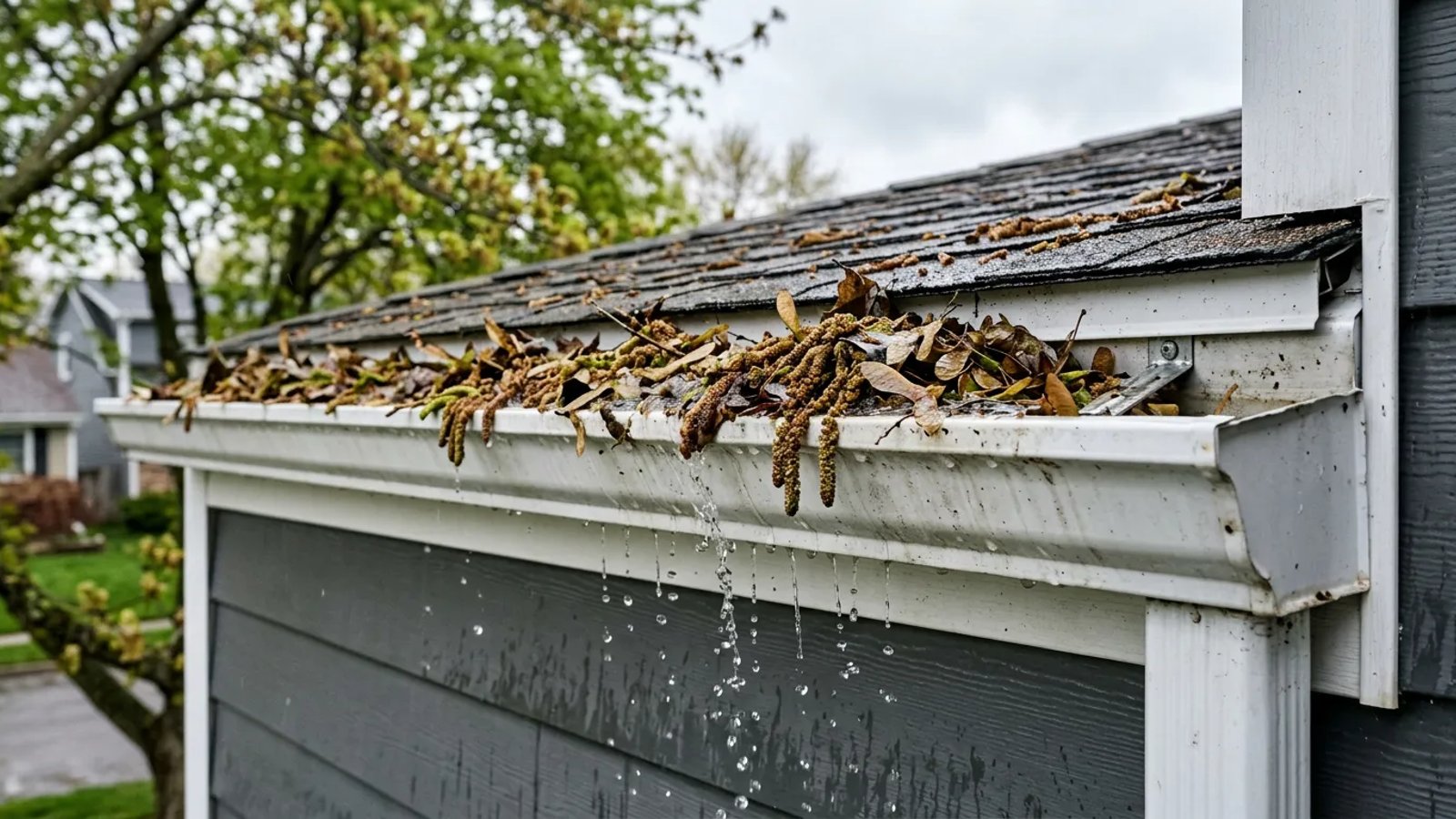
Stop blindly following the twice-a-year gutter cleaning rule. Learn how to spot the subtle physical signs that your gutters are clogged with spring debris before the next heavy storm hits.
Full guide Roofing Learn how long shingles last, how to spot leaks early, and how to decide between a quick repair and a full roof replacement.Most homeowner manuals tell you to clean your gutters twice a year—once in the spring and once in the fall. But knowing the true signs gutters need cleaning is far more important than a rigid schedule. If you live in a house surrounded by mature trees, you already know that rule is practically useless. If you live in a new development with bare yards, doing it twice a year is just wasting a perfectly good Saturday. The truth is, your cleaning schedule depends entirely on your specific tree canopy and local weather patterns.
When we bought our current house, it came with a massive silver maple in the front yard. I quickly learned that the standard fall cleaning schedule was a joke. Every May, that single tree drops thousands of helicopter seeds. If I don't get up there by the first week of June, the first heavy summer thunderstorm sends water cascading right over the front door. You do not need a calendar to tell you when to do this chore. You just need to know the physical signs gutters need cleaning before a heavy rainstorm turns a minor clog into an expensive foundation repair.
The Problem with the Twice-a-Year Myth
Home maintenance schedules love simple rules. Change your HVAC filter every 90 days. Flush your water heater once a year. Clean your gutters in April and October. But generic schedules ignore the reality of your specific property. A house sitting under a canopy of white oaks and white pines is going to face a completely different volume of debris than a house sitting on an open, windy hill.
Blindly following a calendar leads to two bad outcomes. Either you drag out a heavy 24-foot extension ladder and risk your neck to clean completely empty gutters, or you wait for your scheduled October cleaning while a massive clog rots your fascia board all through August. The goal of home maintenance is to prevent damage efficiently. That means learning how to read your house. Your home will always tell you when something is wrong long before it fails completely; you just have to know what to look for.
Why Spring Debris Causes Sudden Blockages
Fall leaves get all the blame for gutter problems, but spring debris is the real killer. In early spring, trees drop a massive volume of reproductive material. Maple "helicopters" (samaras), oak tassels, elm seeds, and thick coatings of sticky yellow pollen wash off your roof during light spring showers and slide straight into your channels.
Unlike dry autumn leaves that might blow away in a stiff breeze or stay fluffy enough to let water trickle past, spring debris behaves differently. It mixes with the fine asphalt grit washing off your shingles and creates a dense, papier-mâché-like sludge. Once that sludge dries out in the sun, it hardens into a solid dam right over your downspout openings.
By the time those heavy early-summer thunderstorms roll in, your drainage system is completely choked off. The water has nowhere to go but over the edge, down your siding, and straight into your foundation. This is why inspecting your system in late May or early June is critical for preventing serious water damage.
What Are the Subtle Signs Gutters Need Cleaning?
Do not wait for water to cascade over the front edge like a waterfall. By the time you see a waterfall, water is likely already backing up under your roof shingles and rotting your roof deck. In my experience, these four early warning indicators can save you hundreds of dollars in potential repairs if caught promptly.
1. Water Staining Behind the Downspouts
Water always takes the path of least resistance. When a downspout is clogged at the top, water will often pool and slowly seep over the back edge of the gutter, running down the exterior of the downspout pipe or the fascia board. Take a walk around your house on a dry day and look closely at the siding directly behind your downspouts.
You are looking for dirty, vertical streak marks. On white aluminum or vinyl siding, this looks like a faint brown or gray smear. On painted wood, you might notice the paint starting to bubble or peel in a vertical line. This happens because the overflowing water carries dirt and asphalt grit from the roof, leaving a visible trail once it dries. If you see streaks, you have a blockage.
2. Sagging Aluminum or Gaps at the Fascia
Gutters are designed to channel water, not hold it. A standard 5-inch K-style gutter holds about 1.2 gallons of water per foot. If a 20-foot section gets backed up because of a clog, you are looking at roughly 24 gallons of standing water.
A single gallon of trapped rainwater weighs over eight pounds, quietly pulling your gutters away from the fascia board until the nails finally give out.
That means a clogged 20-foot section can easily weigh 200 pounds. The long aluminum spikes or hidden brackets holding the system to your house are not engineered to support that kind of dead weight. Stand back from your house and look at the roofline. If the horizontal line of the gutter dips in the middle, or if you can see a visible gap between the back of the gutter and the wooden fascia board, it is full of wet, heavy debris.
3. Washed-Out Landscaping and Trenching
You can often tell what is happening on your roof by looking at the ground. Your gutters are supposed to catch the water and direct it safely away from the foundation through the downspout extensions. When they fail, the water spills over the edge and hits the ground with significant force.
Walk around the perimeter of your foundation. Look for spots where the mulch has been washed away, exposing the bare dirt underneath. You might see a distinct line or a shallow trench dug into the soil directly below the roofline. You might also notice that the small plants or shrubs in that specific area look battered or have exposed roots. This localized erosion is a clear sign that water is overshooting the system.
4. Unexpected Pest Activity
A clogged gutter is essentially a stagnant, elevated pond—which is the perfect habitat for pests. Mosquitoes need only a half-inch of standing water to breed. If you notice a sudden swarm of mosquitoes near your front door or back patio, but your yard is otherwise dry, look up. They are likely breeding in the sludge trapped above you.
Birds and squirrels also love neglected gutters. Dry leaves and twigs make excellent nesting materials, while the pooled water provides a convenient drinking source. If you see birds frequently landing on the edge of your roof and pecking at the interior of the channel, they are foraging for insects living in the damp debris. Any persistent animal activity at the roofline is a strong indicator that it is time to clean.
The 5-Minute Ground-Level Inspection Guide
You do not need to climb a ladder just to check if your gutters are dirty. You can perform a highly accurate assessment entirely from the ground using tools you probably already have in your garage. I recommend doing this quick check right after the trees in your yard finish dropping their spring seeds.
- Grab a pair of binoculars. Stand about 20 feet back from your house. Use the binoculars to scan the top edge of the gutters. You are looking for little tufts of green or brown sticking up over the edge. If you see grass or weeds actually sprouting and growing out of the aluminum, you have a severe soil buildup that needs immediate attention.
- Inspect the downspout exits. Go to where the downspouts empty onto your splash blocks or into your yard. Look inside the bottom opening. If you see a thick plug of black sludge or rotting leaves at the exit, the entire vertical pipe is likely backed up.
- Tap the downspout with a screwdriver. Take a standard screwdriver with a hard plastic handle. Starting at the bottom of the downspout, tap the metal lightly with the handle. It should produce a sharp, hollow, metallic ring. Work your way up as high as you can reach. If the sound suddenly changes from a hollow ring to a dull, solid thud, you have located a dense clog of wet debris inside the pipe.
- Check the ground clearance. Ensure your downspout extensions are firmly attached and directing water at least four to six feet away from your foundation walls. If they have fallen off or are pointing back toward the house, fix them immediately.
How to Determine Your True Gutter Schedule?
Stop guessing and start observing. Your specific cleaning schedule should be dictated entirely by the trees within a 50-foot radius of your roof. If you have no trees, you might only need to inspect them once every two years to clear out asphalt shingle grit and the occasional stray leaf.
If you have mature deciduous trees, you will likely need to clean them in late fall after all the leaves have dropped. If you have pine trees, you might need to clean them every three months, as pine needles shed continuously and easily slip through standard gutter guards.
The secret to low-stress home maintenance is paying attention to the small changes. Water stains, sagging metal, and displaced mulch are all clear signs gutters need cleaning. By learning to read these subtle indicators, you can keep your ladder safely stored in the garage until the exact moment it is actually needed, saving yourself time while perfectly protecting your foundation from water damage.
- Watch for maple seeds and oak tassels in early spring—they form a thick paste that completely seals off downspout openings.
- A 20-foot section of clogged gutter holds over 200 pounds of water, which will eventually rip the fasteners out of your fascia board.
- Tap your downspouts lightly with a screwdriver; a dull thud means you have a solid clog of wet debris.
- Ditch the twice-a-year rule and clean your gutters only when your specific tree canopy dictates it.