The Best Time to Pump a Septic Tank (And Why Spring is Ideal)
Scheduling your septic tank pumping in mid-spring prevents summer backups, avoids winter frozen-ground fees, and protects your drain field during heavy rains.
Full guide Plumbing Learn how your home plumbing works and how to stop leaks before they ruin your house.You probably know that your home's septic system requires regular maintenance, but you might not realize that the calendar matters just as much as the clock. Homeowners frequently track the years between service calls, yet they completely overlook the actual season they schedule the truck to arrive. Choosing the right month can mean the difference between a routine $300 service call and a stressful $1,500 holiday emergency. If you are due—or slightly overdue—for maintenance, the absolute best time to pump a septic tank is mid-spring. The reasons come down to basic soil science, shifting weather patterns, and plain old economics.
Right now, as we move through April and into May, the environment around your home is transitioning. The ground is thawing, the local water table is beginning to normalize after the heavy snowmelt, and your yard is waking up. It is the perfect window of opportunity to handle heavy underground maintenance before the intense heat of summer and long before the deep freeze of winter returns. Let's break down exactly why scheduling your septic service this spring is the smartest move you can make for your plumbing and your wallet.
Why Mid-Spring is the Optimal Time of Year
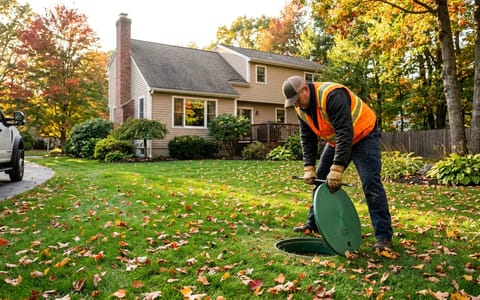
When you call a septic company, their first hurdle is physically accessing the tank. Most residential septic tanks have concrete access lids buried anywhere from six inches to three feet underground. In mid-spring, the frost line has completely retreated. The soil is soft, loamy, and incredibly easy to dig through. A technician with a standard steel spade can uncover a shallow lid in less than five minutes.
Beyond the ease of digging, spring offers a biological reset for your system. A septic tank relies on a delicate balance of anaerobic bacteria to break down solid waste into liquid effluent. During the cold winter months, this bacterial action slows down significantly due to the drop in soil temperature. By pumping the tank in the spring, you remove the accumulated, undecomposed winter sludge. This gives the tank a fresh start just as the warming soil temperatures naturally boost bacterial reproduction, ensuring your system operates at peak efficiency for the rest of the year.
Spring maintenance also perfectly prepares your home for the heavy usage of summer. Once school lets out, kids are home all day flushing toilets, taking showers, and generating extra laundry. Summer also brings backyard barbecues and houseguests. A tank that is already sitting at 80% capacity in April will easily be pushed past its limit by July's increased water load. Emptying it now guarantees you have maximum capacity when you need it most.
How Heavy Spring Rains Threaten a Full Tank
To understand why spring timing is critical, you have to understand where the water goes. A septic tank does not just hold waste indefinitely; it acts as a separator. Solids sink to the bottom as sludge, oils float to the top as scum, and the relatively clear liquid in the middle—the effluent—flows out into your drain field (also called a leach field). The drain field consists of perforated pipes buried in trenches filled with gravel, allowing the liquid to slowly percolate into the surrounding soil.
A septic system doesn't just hold waste; it relies entirely on the surrounding soil to absorb and filter liquid. When that soil is waterlogged, the entire process grinds to a halt.
During heavy April and May rainstorms, the ground in your yard becomes highly saturated. The soil's pores fill with rainwater, drastically reducing its ability to absorb the effluent flowing out of your septic tank. If your tank is already overdue for a pumping, the sludge layer at the bottom is likely too thick, reducing the overall liquid capacity of the tank. This forces effluent out into the drain field faster than it can be absorbed. The result? The liquid has nowhere to go but backward, straight up your main sewer line and into your ground-floor bathtubs and floor drains.
The Financial Risks of Waiting Until Winter
Human nature dictates that we ignore our plumbing until it breaks. For septic systems, this procrastination often pushes the inevitable failure into the late fall or dead of winter. Waiting until November or December to pump your tank is a massive financial gamble. I once spent four hours helping a neighbor chip through frozen December clay just to find his tank lid—a miserable, back-breaking lesson I will never forget.
When the ground freezes solid, septic technicians cannot just use a shovel. They have to bring out heavy breaker bars, electric jackhammers, or ground-thawing heat blankets. Almost all septic companies will pass this extra labor onto you in the form of a "frozen ground fee," which can easily add $150 to $300 to your standard bill.
Winter also brings the holidays. Thanksgiving and Christmas are the undisputed busiest days of the year for emergency plumbers and septic companies. You have a house full of relatives, the dishwasher is running non-stop, and massive amounts of cooking grease and heavy food waste are being washed down the sink. If your system is already near capacity, this sudden spike in water and solid waste will cause a backup right in the middle of your holiday dinner. Paying triple-time for an emergency truck on Thanksgiving Day is a headache you can entirely avoid by booking a routine spring appointment.
How Often Should You Actually Pump?
Now that you know the best time to pump a septic tank is mid-spring, you need to verify if you are actually due. The Environmental Protection Agency (EPA) generally recommends pumping a residential septic system every three to five years, but that is a wide margin. Your specific frequency is dictated by a simple math equation: the size of your tank divided by the number of people living in your home.
For example, a standard 1,000-gallon tank serving a family of four will need to be pumped roughly every 2.6 years. If you have that same 1,000-gallon tank but only two people live in the home, you can safely stretch that interval to 5.9 years. Conversely, if you have a smaller 750-gallon tank and a family of five, you will be calling the truck every 1.5 years. Garbage disposals also change the math; if you frequently use a garbage disposal, you are adding significantly more suspended solids to the tank, meaning you should increase your pumping frequency by at least 20 percent.
What Happens During a Spring Septic Service?
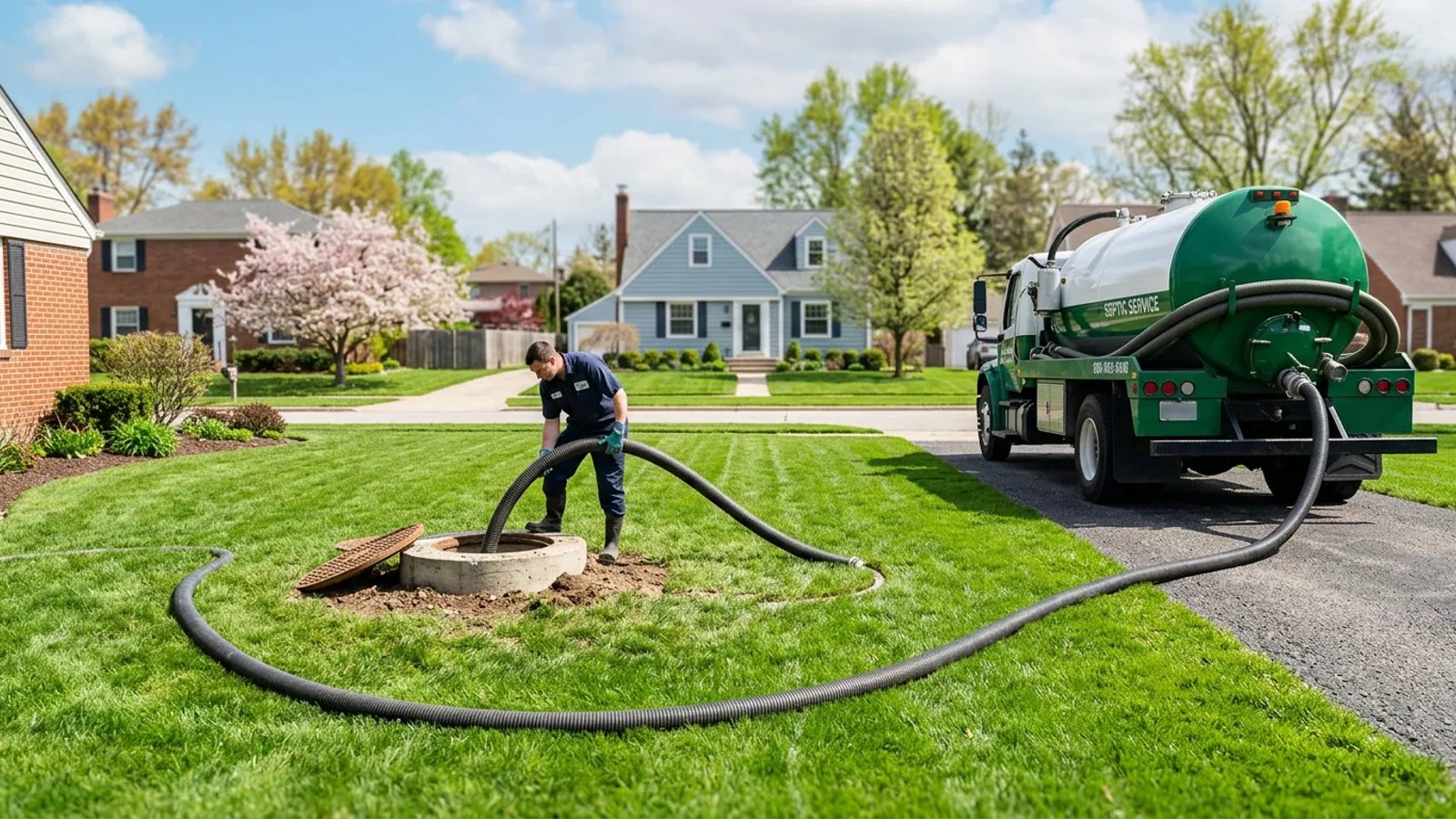
If you have never been present for a septic pumping, the process is straightforward but fascinating. A professional service takes about 45 to 60 minutes from the moment the truck backs into your driveway. Here is exactly what you can expect the technician to do during a proper spring maintenance visit.
- Locating and Uncovering. The technician will use a probe rod to find the edges of the concrete tank and locate the access lid. They will carefully dig back the spring grass and soil to expose the cover.
- Measuring the Layers. Before dropping the hose, a good technician uses a long measuring stick (often called a "sludge judge") to measure the thickness of the bottom sludge layer and the top scum layer. This tells them exactly how the system is performing.
- Pumping and Agitating. The heavy vacuum hose is lowered into the tank. As it sucks out the liquid, the technician will use a tool (or the hose itself) to agitate the remaining solids, ensuring the heavy sludge at the bottom is entirely broken up and removed.
- Inspecting the Baffles. Once the tank is empty, they will shine a high-powered flashlight inside to inspect the inlet and outlet baffles. These crucial T-shaped pipes prevent solid waste from flowing out into the drain field. If a concrete baffle is crumbling, it must be replaced.
- Closing and Reseeding. The lid is securely fastened, and the soil is replaced. Since it is spring, this is the perfect time for you to sprinkle a handful of grass seed over the disturbed dirt so it heals quickly.
Protecting Your System for the Year Ahead
Once your tank is empty and the lid is buried, your job shifts to preventative maintenance. The way you treat your plumbing during the summer dictates how healthy your tank will be next spring. The golden rule of septic ownership is simple: if it is not toilet paper or human waste, it does not go down the drain.
Flushable wipes are the number one enemy of a septic system. Despite the marketing on the package, these wipes do not break down in the tank. They wrap around the baffles, clog the pump impellers (if you have an active system), and rapidly fill up the physical space inside the tank. Cooking grease is just as bad; it solidifies in the cool underground temperatures and creates an impenetrable scum layer at the top of the tank.
Don't let your home's most vital plumbing system become a summer emergency or a winter nightmare. Take advantage of the soft soil, the mild weather, and the pre-summer calm. Call your local septic company this week while their schedules are still relatively open, and get your tank pumped. It is a small chore that pays massive dividends for the health of your home.