Spring Lawn Prep: How to Get Your Grass Ready for Summer
Rushing to fertilize or mow too early can damage your lawn's root system. Learn the correct order of operations for spring yard prep to build a resilient, green foundation.
Full guide Landscaping, Drainage & Outdoor Master your yard with simple tips for proper drainage, healthy lawns, and safe trees.After a long, dormant winter, the first warm April weekend usually triggers a neighborhood-wide race to the garden center. Homeowners eagerly drag out heavy bags of fertilizer, fire up their mowers, and get to work. But rushing to force your lawn into overdrive too early can actually shock the grass and severely damage its root system right before the brutal stress of summer heat arrives.
Proper spring lawn prep is not about dumping expensive chemicals onto the dirt. It is about waking up your soil gently, assessing the winter damage, and setting a strong foundation. Taking the time to execute these steps in the correct order will save you money, reduce your summer watering bills, and result in a far more resilient yard.
The Gentle Wake-Up: Raking and Aeration
Your very first task of the season is a thorough, but gentle, raking. Over the winter, dead grass leaves, fallen twigs, and snow mold can mat down and suffocate your lawn. This layer of dead organic matter is called thatch. If thatch gets thicker than half an inch, it blocks sunlight, water, and oxygen from reaching the soil.
For this early spring cleanup, leave the heavy, rigid metal bow rake in the shed. Instead, use a flexible spring-tine leaf rake. Gently comb through the grass to lift the matted areas. This process separates the grass blades, allowing air to circulate and dry out the soil surface, which naturally prevents spring fungal diseases.
If you notice that water constantly pools in certain areas, or if a screwdriver is difficult to push into the dirt, your soil is compacted. This is the time to plan for core aeration. Aeration pulls small plugs of dirt out of the ground, instantly relieving compaction and allowing roots to stretch out before the hot summer months.
Test Before You Treat: Understanding Soil pH
Many homeowners skip straight to buying the most expensive, high-nitrogen fertilizer they can find. This is a massive mistake. If your soil chemistry is off, your grass physically cannot absorb the nutrients you are putting down.
I once spent nearly $100 on premium spring fertilizer, only to watch my lawn remain a sickly, pale yellow for weeks. I finally did a soil test and discovered my dirt was highly acidic. The grass roots were locked out of absorbing the nitrogen. A simple test would have saved me a lot of frustration.
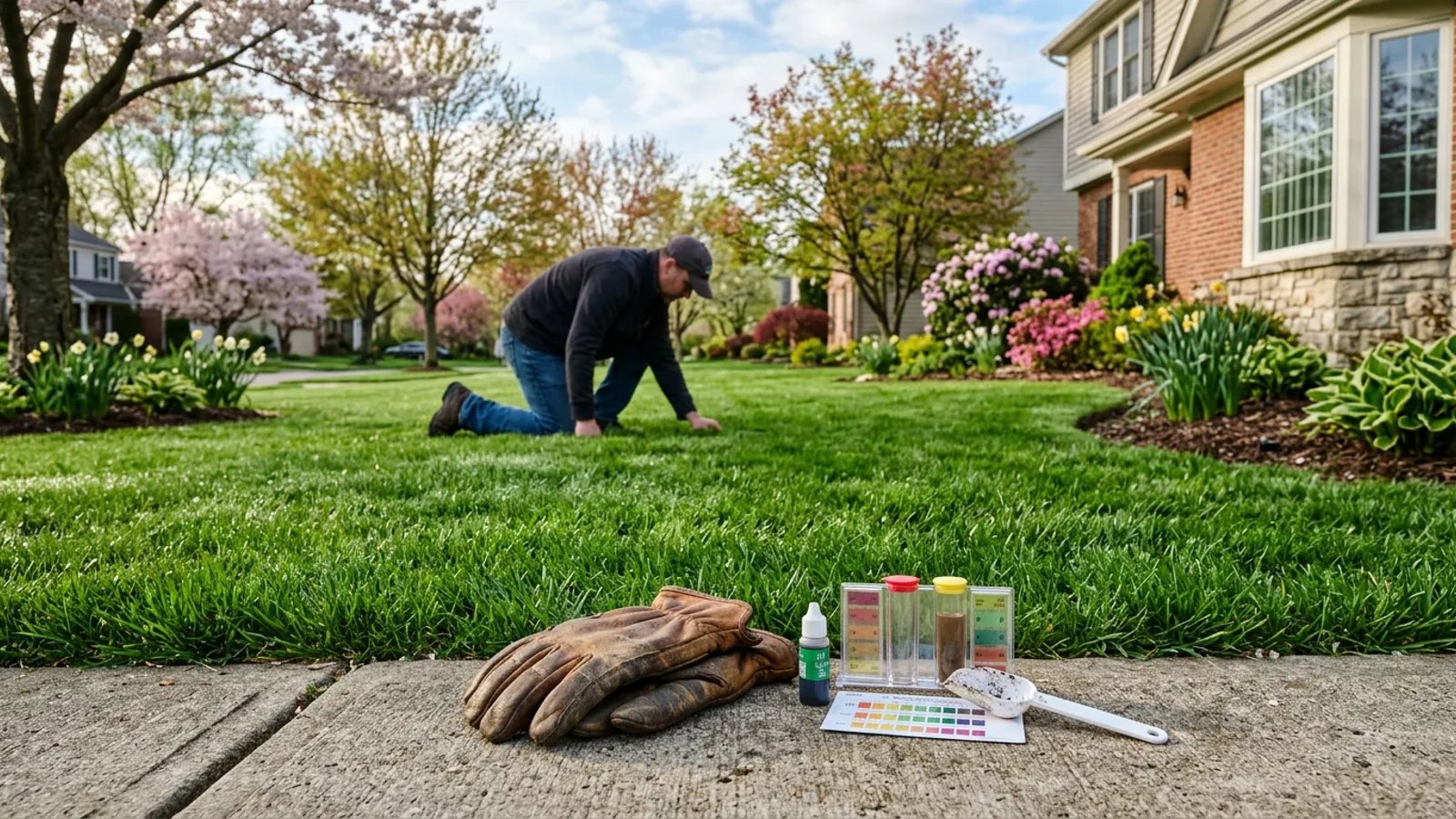
Head to your local hardware store or garden center and pick up a basic soil pH test kit. They typically cost between $15 and $25. Most common turf grasses thrive in a slightly acidic to neutral pH range of 6.0 to 7.0.
- If your soil pH is below 6.0 (too acidic), you will need to apply fast-acting lime to raise the pH.
- If your soil pH is above 7.2 (too alkaline), you will need to apply elemental sulfur to lower it.
Once you have corrected the pH, you can confidently apply a slow-release granular fertilizer in late spring, knowing the roots will actually be able to use it.
Mower Maintenance: Tune-Ups and Sharp Blades
Before you make the first cut of the year, your lawnmower needs attention. Running a mower with old oil and a dull blade is one of the fastest ways to ruin your spring lawn prep.
A dull mower blade doesn't cut your grass; it tears it, leaving ragged edges that invite disease and dry out rapidly.
When grass blades are torn rather than cleanly sliced, the frayed tips quickly turn brown, giving your entire lawn a dull, dried-out appearance even if it is perfectly watered. To prevent this, give your mower a basic tune-up.
- Disconnect the spark plug. Always do this first to prevent accidental engine starts while your hands are near the blade.
- Drain and replace the oil. Run the mower for two minutes to warm the oil, then drain it into a pan. Refill with fresh SAE 30 oil (or whatever weight your manual specifies).
- Replace the air filter and spark plug. A clogged paper filter starves the engine of oxygen, making it run hot and burn more gas.
- Sharpen the blade. Remove the central bolt holding the blade. Clamp the blade in a vise and use a 10-inch bastard cut mill file to follow the factory angle, filing from the inside of the blade toward the outer edge. Balance the blade on a nail before reinstalling it.
Overseeding the Winter Casualties
Winter takes a toll on grass. Snow plows scrape the edges of driveways, road salt washes into the soil, and pets tend to use the same spot repeatedly when the snow is deep. Spring is the perfect time to patch these bare spots before summer weeds like crabgrass can claim the empty real estate.
Successful overseeding requires direct seed-to-soil contact. Tossing seed onto dead grass will yield zero results.
Start by aggressively raking the dead spot until you see bare dirt. If the spot was caused by dog urine or road salt, flood the area with a hose for several minutes to wash away the accumulated salts. Next, spread a 1/4-inch layer of rich compost over the patch. Sprinkle a grass seed blend that matches your existing lawn, and gently step on the seed to press it into the dirt.
Watering Best Practices for the Spring-to-Summer Transition
As the mild, rainy days of mid-spring give way to the hotter temperatures of approaching summer, you will need to take control of your watering schedule. The way you water in May dictates how well your grass survives in July.
The golden rule of lawn watering is deep and infrequent. You want to provide about 1 to 1.5 inches of water per week, including rainfall. If you water lightly every single day, the grass roots have no reason to grow downward. They stay near the surface, where they will quickly bake and die when a summer drought hits. By watering deeply just once or twice a week, you force the roots to drive deep into the soil searching for moisture.
To measure your sprinkler output, place a few empty tuna cans around your yard. Turn on the sprinkler and time how long it takes to fill the cans to the one-inch mark. That is exactly how long you need to run your system each week.
Always water early in the morning, ideally between 4 AM and 8 AM. Watering in the afternoon wastes water to evaporation, and watering late at night leaves the grass blades wet in the dark, which is a guaranteed recipe for fungal diseases.
Taking a measured, step-by-step approach to your yard this spring ensures you are building a healthy ecosystem from the soil up. By focusing on aeration, sharp blades, and deep root growth now, your lawn will be fully equipped to handle whatever the summer heat brings.