Fridge Warm but Freezer Cold? The Free Fix Most People Miss
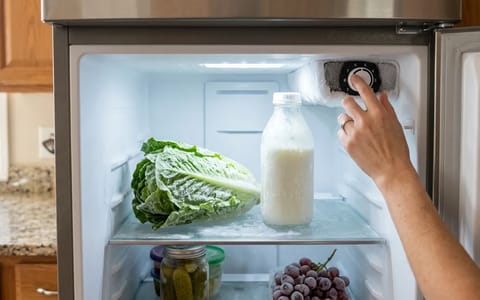
Is your freezer freezing hard but your fresh food section feels suspiciously warm? Before calling a repair pro, check for a blocked refrigerator air vent.
Full guide Appliances Learn how long your home appliances will last and when to repair or replace them.You open the refrigerator door to grab a drink, and the air inside feels suspiciously close to room temperature. You check the freezer, and your ice cream is still rock solid. Panic sets in. A warm fridge means spoiled milk, ruined meat, and the looming threat of an expensive appliance repair bill.
Before you start pricing out new appliances or searching for a local technician, look for the most frequent offender: a blocked refrigerator air vent. In many households, a simple reorganization of frozen groceries fixes the entire problem in under five minutes.
Warm Fridge, Cold Freezer: How Your Refrigerator Airflow Works
To understand why your fridge is warm while your freezer is practically arctic, you have to understand how the appliance cools. Most standard residential refrigerators do not have two separate cooling systems. They rely on a single compressor and a single set of evaporator coils, which are almost always located behind the back panel of the freezer compartment.
The freezer does all the heavy lifting. It generates the freezing air required to keep foods at 0°F. The fresh food compartment, on the other hand, is just a well-insulated box that borrows that cold air. A small fan inside the freezer pushes sub-zero air through a channel and out through a vent into the refrigerator side.
If something interrupts that airflow, the freezer stays perfectly cold, but the refrigerator compartment is completely cut off from its only source of cooling. The temperature inside the fresh food section will steadily climb until your groceries go bad.
How to Locate Your Air Vents
Every make and model is slightly different, but finding the vents only takes a few seconds. You need to locate the source vent in the freezer and the return/intake vent in the fresh food compartment.
In a traditional top-freezer model, the vent is usually located on the back wall or the floor of the freezer. In a side-by-side unit, look along the shared middle wall dividing the two compartments. You will typically see a plastic grille with slats. In the fresh food compartment, look up near the ceiling or along the top rear wall for the corresponding vent where the cold air blows in.
A few years ago, I tested a side-by-side fridge that was sitting at a dangerous 52°F while the freezer was reading -2°F. The owners were convinced the compressor was failing. The real issue? A massive frozen turkey was wedged aggressively against the back wall grille in the freezer. The fan was spinning, but the air had nowhere to go.
The 1-Inch Clearance Rule for Freezer Organization
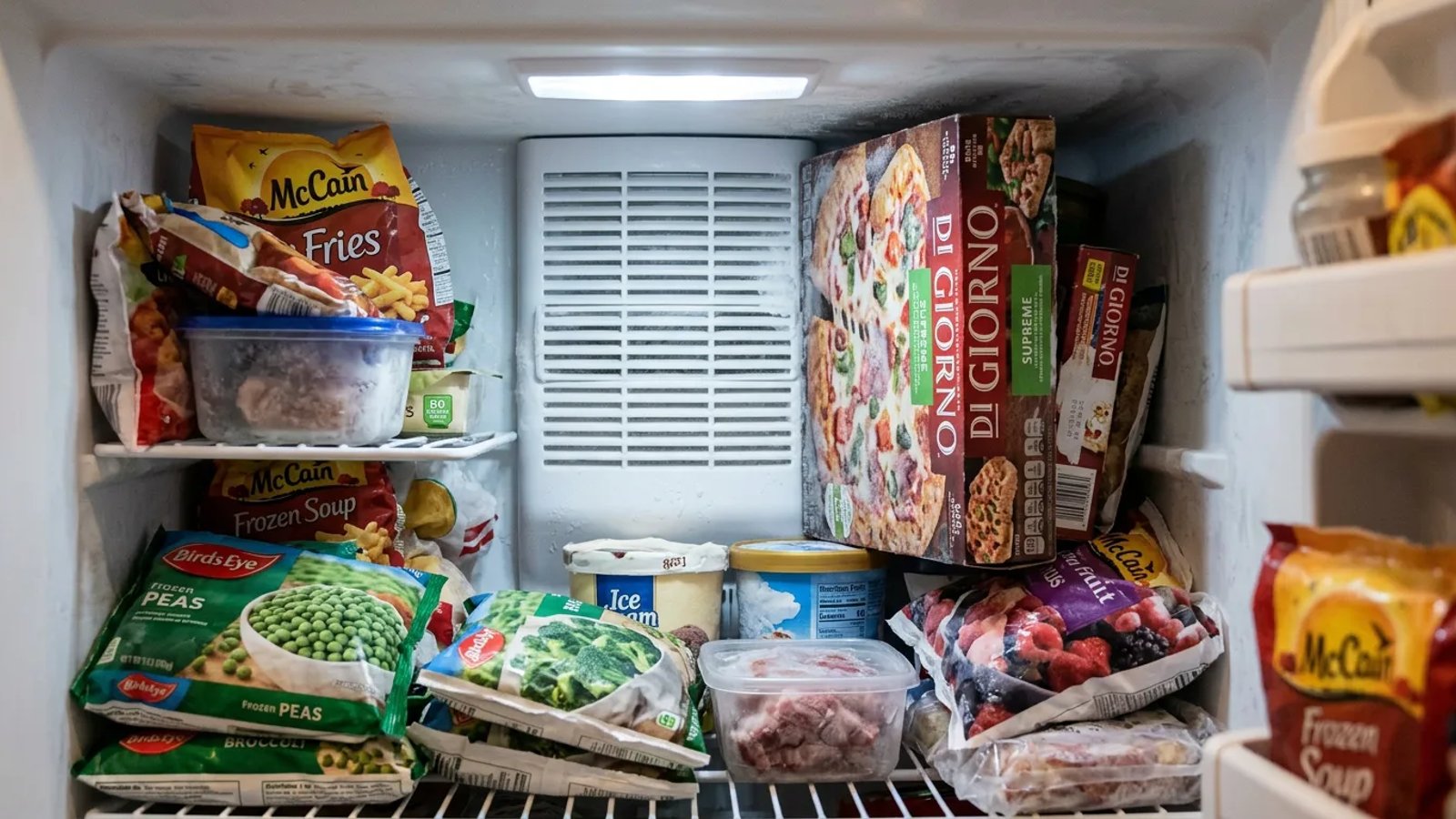
Overpacking is the number one cause of a blocked refrigerator air vent. When you return from a large grocery run, it is tempting to shove boxes of frozen pizza, bags of ice, and frozen vegetables into every available square inch of the freezer.
When a flat object like a box is pushed flush against the vent grille, it acts like a closed door. The cold air bounces off the box and stays in the freezer. To prevent this, you must follow the 1-inch clearance rule. Always leave at least one inch of empty space between your food and the interior walls of the freezer, especially around the vents.
Your refrigerator doesn't make cold air; it just borrows it from the freezer. Block the path, and you cut off the supply.
According to the FDA, your refrigerator should be kept at or below 40°F to prevent dangerous bacterial growth. Blocking the airflow for even 12 hours can push the internal temperature well past this safety threshold.
What If the Vent Is Frozen Shut?
Sometimes you check the freezer and realize there are no boxes blocking the grille. Instead, the grille itself is completely caked in solid ice, often an inch or more thick. A frozen vent has the exact same effect as a blocked vent: no air gets through.
Ice buildup happens when warm, humid air enters the freezer and condenses on the cold surfaces. This is incredibly common during humid summer months if someone leaves the freezer door cracked open overnight. It can also happen if the rubber door gasket is torn, allowing a constant slow leak of humid room air into the compartment.
If you see a thick layer of frost or solid ice covering the back panel or the vent slats, you have an airflow blockage that rearranging food will not fix. You have to remove the ice.
How to Safely Thaw a Frozen Air Vent
Melting the ice blocking your vent requires patience. Many homeowners damage their appliances by trying to rush this process with sharp tools or high heat.
- Unplug the refrigerator. Safety comes first; disconnect the power before dealing with melting ice and water near electrical components.
- Empty the compartments. Move your perishable food to a cooler packed with ice so it stays below 40°F while you work.
- Leave the doors open. The safest way to melt the ice is to simply leave the freezer and fridge doors wide open for 12 to 24 hours.
- Use warm water for a faster thaw. If you cannot wait a full day, you can use a turkey baster to squirt warm (not boiling) water directly onto the ice block to speed up the melting process.
- Clean up the moisture. Place thick towels at the bottom of the freezer to catch the water as the ice melts, and dry the compartment thoroughly before plugging it back in.
When to Stop Troubleshooting and Call a Pro
If you have verified that the vents are completely clear of food, and there is absolutely no ice buildup on the back wall, but your fridge is still sitting at 50°F, you likely have a mechanical failure.
The next component to suspect is the evaporator fan. Open the freezer door and press the door switch with your finger (this tricks the fridge into thinking the door is closed). You should immediately hear the hum of a fan kicking on. If it is dead silent, the fan motor has likely failed and is no longer pushing air into the fridge.
Alternatively, the damper door between the two compartments might be stuck closed, or the thermistor that reads the fridge temperature might be broken.
Keeping your refrigerator running efficiently mostly comes down to basic organization. By respecting the space around your vents and keeping the door seals clean, you ensure the cold air keeps flowing exactly where it needs to go.
- Locate the air vents in both your freezer and fresh food compartments before rearranging food.
- Never push boxes or bags directly against the back or side walls of the freezer.
- If the vent is covered in heavy frost, you must manually thaw it with warm water or a 24-hour unplug.
- A fridge temperature above 40°F puts your groceries at risk of rapid spoilage and bacterial growth.