Why Your Fridge Is Freezing Food (And How to Fix It Fast)
Opening your refrigerator to find frozen groceries is frustrating and expensive. Learn four simple, DIY troubleshooting steps to stop your fridge from overcooling before you pay for a service call.
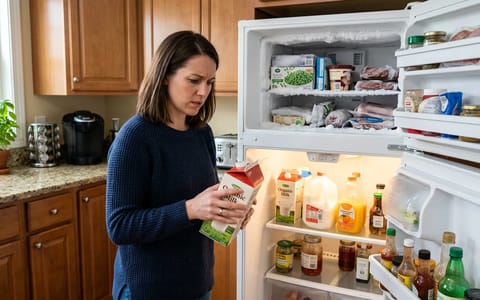
Full guide Appliances Learn how long your home appliances will last and when to repair or replace them.You open the refrigerator door expecting crisp greens for a salad and perfectly chilled milk for your morning coffee. Instead, you find a block of icy spinach and milk that requires an ice pick to pour. Discovering your fridge freezing food is an incredibly frustrating experience. It ruins expensive groceries, disrupts your meal planning, and immediately sends your mind racing toward the prospect of a massive appliance repair bill.
Before you panic and dial a technician, take a breath. A refrigerator that is overcooling is rarely suffering from a catastrophic system failure. Your appliance has not suddenly forgotten how to work. Rather, it is likely receiving the wrong signals or struggling to move air correctly. More often than not, the root cause is a simple airflow blockage, a bumped control dial, or a dirty component that you can resolve yourself in under an hour.
We are going to walk through the mechanical reasons why a refrigerator gets too cold, starting with the easiest fixes. By ruling out these common culprits, you can save your groceries and keep your hard-earned money in your wallet.
1. Check the Temperature Settings First
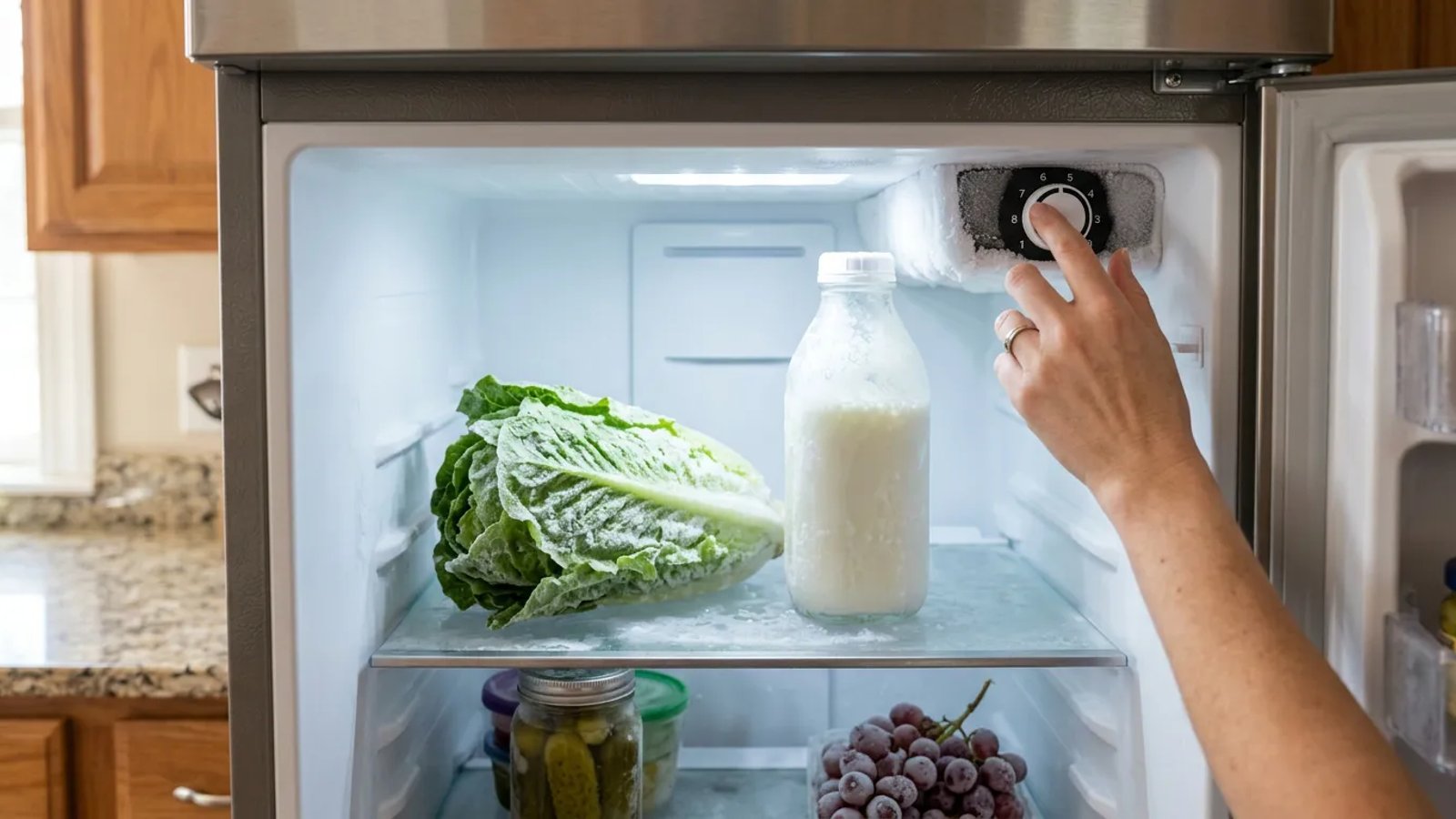
The simplest explanation is often the correct one. Before dismantling anything or pulling the appliance away from the wall, check the internal temperature controls. It is incredibly common for a temperature dial to get accidentally bumped when you are shoving a large pizza box, a heavy turkey, or a gallon of milk onto the top shelf.
Modern refrigerators generally have digital keypads or touchscreen interfaces, but many reliable models still use a classic numbered dial ranging from 1 to 7 or 1 to 9. A common point of confusion with these dials is understanding what the numbers actually mean. In most cases, the numbers represent cooling power, not degrees. A setting of "7" means maximum cold, while "1" is the warmest setting. If your dial was bumped up to the highest number, the compressor will run far longer than necessary.
The ideal temperature for a fresh food compartment is between 37°F and 40°F (3°C to 4°C). The freezer should sit right at 0°F (-18°C). If you do not already own one, purchase a basic appliance thermometer for a typical 2026 range of $6 to $10 at any hardware store. Place it in a glass of water on the middle shelf and leave it for 24 hours to get an accurate reading of the ambient liquid temperature, which fluctuates less than the air when you open the door.
2. Unblock the Air Vents (The Most Common Offender)
To understand why a fridge freezes food, you have to understand how it gets cold in the first place. Most refrigerators do not have separate cooling systems for the freezer and the fresh food compartment. Instead, all the cooling happens in the freezer. A small fan then blows that sub-zero air through a passageway, called a damper, into the refrigerator section.
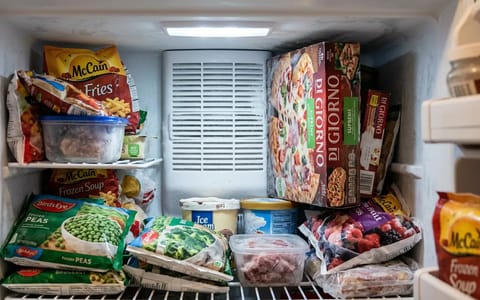
If you pack your refrigerator too tightly, you can inadvertently block this air damper. When a tall container of leftovers or a bulky head of cabbage is shoved directly against the vent, it receives a concentrated, continuous blast of sub-zero air. That specific item will freeze solid, while the rest of the refrigerator might actually feel too warm because the cold air cannot circulate properly.
A few years ago, I packed my fridge so full after a massive bulk grocery run that I completely blocked the top-center vent with a stack of deli meats. The next morning, I had a dozen frozen eggs and a solid block of celery, while the milk on the bottom door shelf was lukewarm. It is a mistake you only make once.
- Locate the vents. Look for small slatted plastic grilles inside your fridge. They are typically located at the top center, the top rear, or along the back wall.
- Clear a perimeter. Move all food items at least two to three inches away from these vents.
- Check the return vents. There are also lower vents that allow warmer air to return to the freezer to be cooled again. Ensure these bottom vents are also clear of plastic bags or low-sitting produce.
- Reorganize for airflow. Avoid cramming the shelves edge-to-edge. Cold air is heavy and needs pathways to fall from the top shelves down to the crisper drawers.
3. Inspect the Door Seals for Sneaky Leaks
It sounds completely counterintuitive. Why would warm air leaking into the refrigerator cause it to freeze your food? The answer lies in the appliance's thermostat.
Your refrigerator has a temperature sensor that monitors the interior climate. If your door seal (also called a gasket) is cracked, torn, or coated in sticky residue, it will not form an airtight seal against the metal cabinet. Warm, humid air from your kitchen constantly seeps inside. The sensor detects this warm air and tells the compressor to turn on and cool things down.
A leaky gasket tricks your refrigerator into working overtime, blasting cold air until your fresh food turns to ice.
Because the warm air is localized near the door leak, the back of the fridge gets excessively cold as the compressor runs non-stop trying to satisfy the thermostat. Furthermore, the humidity from the room air enters the fridge and condenses, leading to frost buildup on your food and the interior walls.
You can test your door seals in about thirty seconds using nothing but a dollar bill.
Repeat this test all the way around the perimeter of both the fridge and freezer doors. If the seal is just dirty, scrub it with warm water and a drop of dish soap. If it is torn or permanently flattened, a replacement gasket typically costs between $50 and $95 as of 2026 and can be pressed into place by hand.
4. Clean the Condenser Coils
Every refrigerator has a set of condenser coils. On older models, they are the black, grid-like tubes mounted on the back. On most modern units, they are hidden underneath the appliance behind a removable base grille or kickplate. These coils are responsible for releasing the heat that the refrigerant absorbs from the inside of the fridge.
Because they sit close to the floor, condenser coils act like a magnet for pet hair, dust bunnies, and kitchen grease. When the coils are blanketed in grime, they cannot release heat efficiently. The compressor has to run longer and harder to achieve the target temperature. This overworking can lead to erratic temperature swings inside the cabin, sometimes resulting in a fridge freezing food.
Cleaning the coils is a maintenance task that should be done every six months, regardless of whether your fridge is acting up. It takes about 30 minutes and can significantly extend the lifespan of your appliance.
Unplug the refrigerator before you begin. Remove the base grille (it usually snaps off, though some require a Phillips-head screwdriver). Use a specialized coil-cleaning brush, available for roughly $15 to $20 as of 2026 at any hardware store, to gently loosen the compacted dust. Then, use the crevice attachment on your vacuum cleaner to suck away the debris. If your coils are on the back of the fridge, simply pull the unit away from the wall and brush them down.
5. Check for Smart Fridge Firmware Updates
As of 2026, a significant portion of homes feature Wi-Fi-connected smart refrigerators. While these appliances offer excellent convenience, they occasionally experience software glitches that disrupt temperature regulation. If your smart fridge is suddenly freezing fresh food, open your manufacturer's companion app on your smartphone. Look for any pending firmware updates or active error codes. Sometimes, simply updating the appliance software or performing a hard reset (unplugging the unit for five minutes and plugging it back in) recalibrates the digital sensors and resolves the overcooling issue entirely.
6. When It's Time to Check the Mechanical Parts
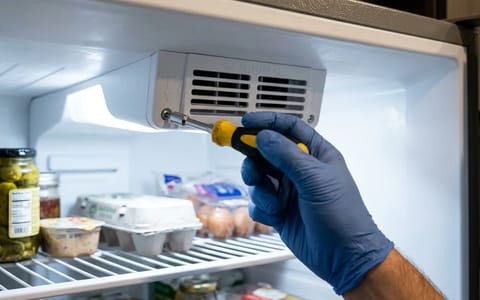
If you have adjusted the temperature, cleared the air vents, tested the door seals, cleaned the condenser coils, and checked for software updates, but your lettuce is still turning to ice, you are likely dealing with a mechanical failure. At this point, the issue is usually one of two parts: the air damper control assembly or the temperature control thermostat.
The damper, as mentioned earlier, is the door that opens and closes to let cold air in from the freezer. If the motor that operates the damper fails, the door can get stuck in the wide-open position. This allows a continuous, unregulated flow of freezing air into the fresh food section. You can sometimes diagnose this by listening closely to the vent. If the fridge is too cold but you constantly hear air rushing through, the damper is likely stuck.
The other common culprit is the temperature control thermostat (or the thermistor, on digital models). This component acts as the brain for the cooling system. If it breaks, it fails to read the internal temperature correctly and never sends the signal to shut the compressor off.
Dealing with frozen produce is annoying, but it rarely spells the end of your appliance's life. By working through these simple troubleshooting steps systematically, you can usually identify the problem, restore proper airflow, and get your kitchen back to normal without spending a dime on labor.