How to Test a Refrigerator Damper Control (Step by Step)
Freezer perfectly cold but your fridge is warm? The hidden culprit is often a stuck or broken refrigerator damper control. Here is how to test and fix it yourself.
Full guide Appliances Learn how long your home appliances will last and when to repair or replace them.You reach into the fridge for a carton of milk, and the plastic feels suspiciously lukewarm. You check the freezer, and your ice cream is rock solid. This specific combination: a perfectly cold freezer and a warm fresh food compartment, is one of the most common appliance headaches. Your first instinct might be to panic and assume the compressor is failing, but the reality is usually much simpler.
When your fridge starves for cold air while the freezer works fine, the primary suspect is a small, hidden component called the refrigerator damper control. Whether you call it an air damper, a damper door, or a fridge air damper, this tiny part is responsible for regulating your appliance's climate. Before you throw away hundreds of dollars on groceries or a professional service call, you can diagnose and often fix this issue yourself with basic hand tools.
How Does a Refrigerator Damper Control Work?
To fix the problem, you need to understand how your refrigerator cools your food. Most standard refrigerators only have one set of cooling coils (the evaporator), and they are located entirely inside the freezer compartment. The refrigerator section does not have its own cooling system.
Your fridge doesn't actually make cold air for the fresh food section; it borrows it from the freezer.
The damper control is the gatekeeper. It is a small, motorized plastic vent that sits in the wall separating the freezer and the fresh food compartment. When the thermostat senses the fridge is getting too warm, it sends a signal to the damper motor. The small air damper door swings open, allowing a fan to blow sub-zero air from the freezer into the fridge. Once the fridge reaches the target temperature (which the FDA guidelines state should be 40°F or below), the damper closes to prevent your lettuce from freezing solid.
If that door gets stuck closed, the freezer keeps humming along at 0°F, but the fridge slowly rises to room temperature.
Symptoms of a Stuck Air Damper in Your Fridge
Before you take anything apart, your refrigerator will usually give you clear warning signs of a stuck air damper. Because the damper door controls the flow of freezing air, a malfunction creates severe temperature extremes. You can often diagnose the position of the stuck door just by looking at your food:
- Stuck closed: This is the most common failure. Your freezer will remain perfectly frozen, but your fresh food section will slowly climb into the 50s or 60s. Your milk spoils fast, but your ice cream stays hard.
- Stuck open: If the air damper in the fridge breaks while fully open, the freezer will constantly dump sub-zero air into the refrigerator compartment. You will find frozen eggs, solid lettuce, and cracked beverage cans on the top shelf.
If you experience either of these specific symptoms, you need to locate and check the damper door immediately.
Where Is the Damper Located?
Finding the damper is your first step to a successful repair. If you are searching for where the air damper on a fridge is located, know that it depends entirely on the style of your refrigerator:
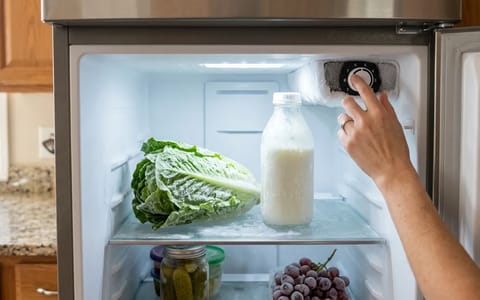
- Top-Freezer Models: Look at the ceiling of the fresh food compartment, usually dead center toward the back wall. You will see a plastic housing with air vents pointing downward.
- Side-by-Side Models: Check the top left corner of the fresh food section. The damper is almost always located at the very top of the dividing wall between the two compartments, pulling air directly from the freezer side.
- French Door Models: These can be trickier. The damper is often located at the top center of the back wall, sometimes hidden behind a large plastic air tower that runs down the middle of the fridge.
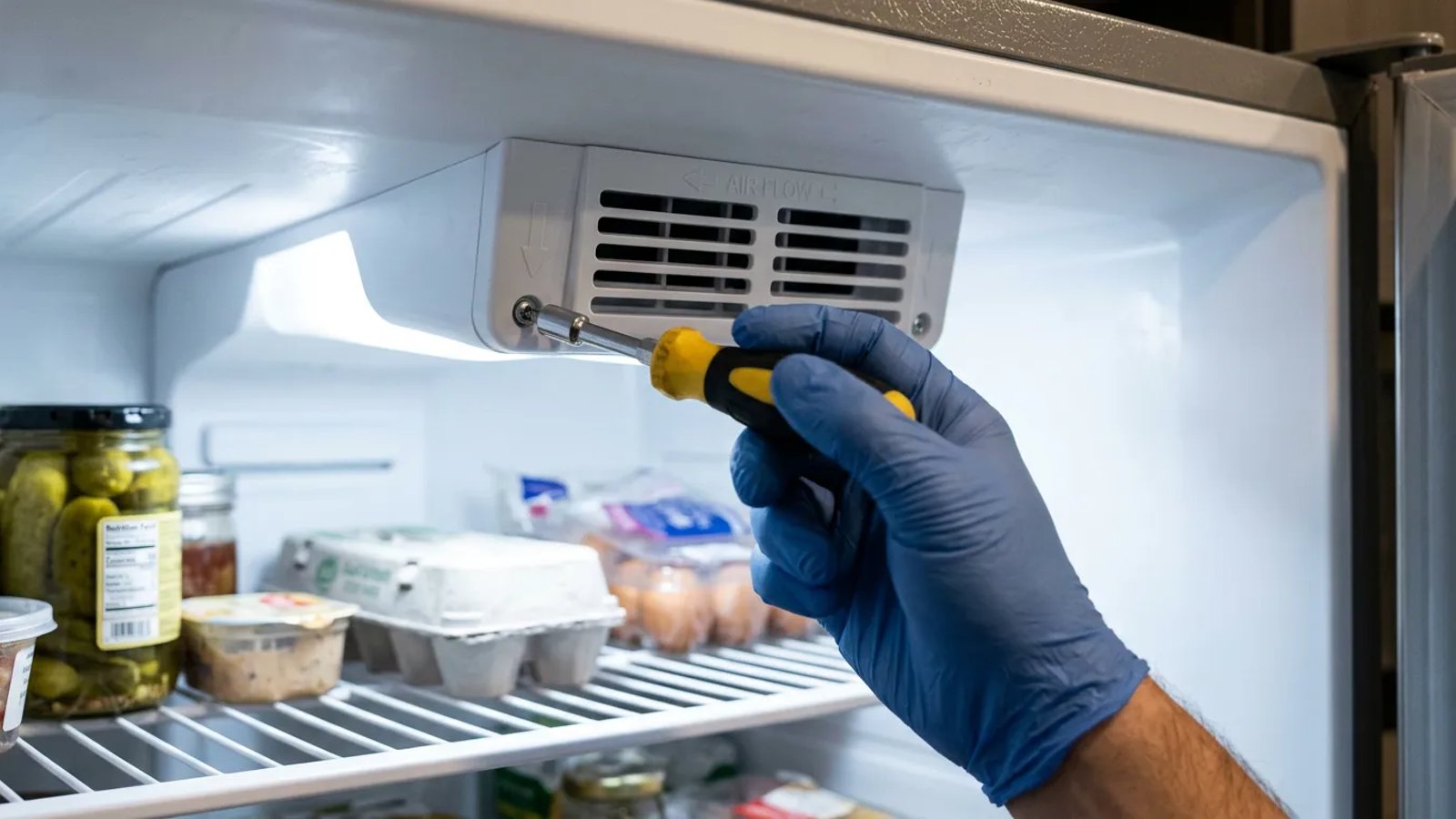
Once you locate the vented plastic cover, you will typically need a 1/4-inch nut driver or a Phillips-head screwdriver to remove the 2-3 screws holding it in place. Then, shine a flashlight inside to perform a visual check. Sometimes, the problem is immediately obvious: a solid block of white frost completely covering the vent.
What Is This Part? Identifying the Damper Control
If you have taken apart your fridge and are staring at a strange component wondering, "What is this?" (or "este que es?" if Spanish is your primary language), you are not alone. The damper control assembly does not look like a typical appliance part, which often confuses DIYers.
It usually resembles a small, rectangular plastic box or tube, roughly the size of a deck of cards or a small brick. Because it handles freezing air on one side and warmer air on the other, it requires heavy insulation. If you are holding a part and trying to identify it, look for these four distinct physical traits:
- White Styrofoam encasing: Almost all damper controls are heavily wrapped in or lined with molded Styrofoam to prevent condensation and freezing.
- A small plastic flap: Look inside the center tube for a plastic door (often called a flapper or louver) about the size of a matchbox.
- A micro-motor attached to the side: This is a tiny metal or plastic cylinder that mechanically drives the flap open and closed.
- A short wire harness: You will see a small plastic plug with two to four wires extending from the motor housing.
If the part you are holding matches this description and came from the wall between your fridge and freezer, you have confidently found the damper control.
Why Is My Refrigerator Damper Control Not Opening?
A damper fails to open for three main reasons. First, ice buildup can physically freeze the plastic door shut. This usually happens if someone leaves the fridge door cracked open overnight, allowing humid summer air to rush in and freeze upon contact with the cold vent. Second, the small electric motor that drives the door can burn out from age or power surges. Third, the fragile plastic hinge connecting the motor to the door can snap, meaning the motor turns but the door stays put.
How to Test the Refrigerator Damper Control
You can perform a quick diagnostic test to see if the damper is trying to function mechanically. You will need a piece of masking tape and a few minutes of patience.
- Locate the door switch. Find the small push-button switch along the inner frame of the fridge that turns the interior light off when you close the door.
- Tape the switch down. Use masking tape to hold the switch in the "closed" position. The interior lights should turn off. This tricks the refrigerator into thinking the door is shut, which allows the cooling fans to kick on.
- Turn down the thermostat. Lower the fridge temperature setting to its coldest option to force the system to call for cooling.
- Wait for the delay. Modern refrigerators built in the 2020s often have a built-in motherboard delay. You might need to wait 3 to 5 minutes after taping the switch before the control board signals the fan and damper to turn on.
- Feel for airflow. Place your hand directly in front of the damper vent. You should feel a strong, steady stream of freezing air. If you feel nothing, and you can hear the freezer fan running on the other side of the wall, the damper is closed.
If you do not feel air, you need to remove the plastic cover. This usually requires a 1/4-inch nut driver or a Phillips-head screwdriver. Remove the two or three screws holding the cover in place and pull it away. Look at the damper door. If it is packed with ice, you need to thaw it. If it is clean but firmly closed, the motor has likely failed.
Brand-Specific Checks: Frigidaire Refrigerator Damper Test
While the manual tape test works for most brands, some manufacturers have specific diagnostic tools built in. A very common search is for a Frigidaire refrigerator damper test. On many modern Frigidaire Gallery or Professional models built up to 2026, the air damper is notorious for getting stuck due to frost buildup if the freezer door seal is even slightly loose.
To test a Frigidaire damper specifically, you can often enter the refrigerator's diagnostic mode by pressing and holding a specific combination of buttons on the front display panel. Typically, holding the "Freezer Up" and "Freezer Down" buttons simultaneously will enter this mode, though you should verify this with your specific model's tech sheet. Once in diagnostic mode, you can manually command the damper to open and close. If you hear the control board click but the damper door does not move, the motor is likely dead or frozen solid.
Testing the Damper Motor with a Multimeter
To be 100% certain the motor is dead before buying a replacement part, you should test it electrically. This is the most accurate way to test a refrigerator damper control and will save you from buying parts you do not need.
- Unplug the refrigerator. Never test internal electrical components with the power connected.
- Remove the damper assembly. Unplug the small wire harness connecting the damper to the fridge wall and pull the unit out.
- Set your multimeter. Turn your digital multimeter to the Ohms (resistance) setting.
- Probe the motor terminals. Touch your multimeter probes to the metal pins inside the damper motor's wire plug. If your harness has more than two wires, consult your fridge's wiring diagram to find the two power wires for the motor. As of 2026, many newer refrigerators use 12V DC step-motors with four wires, which require testing specific pairs of wires to check the internal coils.
- Read the results. A healthy standard 120V AC damper motor will typically show a resistance reading between 400 and 1,500 ohms, depending on the specific brand and model. A newer 12V DC stepper motor might read between 200 and 400 ohms per coil pair. If your multimeter reads "OL" (Open Line) or shows infinite resistance, the motor coil has burned out and the entire assembly must be replaced.
What if the Motor Tests Fine? Checking the Thermistor
If your damper motor shows proper resistance, the damper itself might not be the problem. The refrigerator damper control relies on a temperature sensor (called a thermistor) to know when to open. If the sensor is broken, the damper never gets the signal to move.
- Locate the thermistor. This is a small plastic bulb usually hidden behind a slotted plastic cover in the fresh food section, often near the top shelf.
- Test the resistance. Unplug the sensor and test its pins with your multimeter set to Ohms.
- Compare to a temperature chart. A typical refrigerator thermistor might read exactly 10,000 ohms at 77 degrees Fahrenheit, but the resistance changes drastically as the temperature drops. You will need to check your specific refrigerator's tech sheet (often tucked under the front toe kick or behind the top hinge cover) to verify the correct resistance for your model's current internal temperature.
Safely Thawing a Frozen Damper
If ice is the culprit, you have to melt it away carefully. A few years ago, I tested a frozen damper in a neighbor's side-by-side Whirlpool. I got impatient and used a heat gun on the lowest setting to speed up the process. Big mistake. The thin plastic louver warped in about three seconds, turning a free thawing job into an expensive parts replacement.
Instead, use a standard hairdryer set to the "cool" or "warm" setting. Keep the nozzle at least six inches away from the plastic and keep it moving. Alternatively, you can place a large bowl of steaming hot water on the top shelf directly under the vent, close the fridge door, and let the trapped steam melt the ice over 20 to 30 minutes.
Replacing a Failed Damper Motor
If there is no ice, but the door refuses to open, or if you manually push the door open and it just flops around loosely, you need to replace the assembly. This is a very approachable DIY repair.
First, always unplug the refrigerator from the wall before touching any electrical components. Once the power is cut, remove the screws holding the damper assembly to the fridge wall. Carefully pull the unit out. You will see a small wire harness connecting the damper motor to the fridge. Squeeze the locking tab on the plastic connector and pull it apart.
You can buy an exact replacement part by searching your refrigerator's model number (found on a sticker inside the fridge wall) on an appliance parts website. The new damper simply plugs into the wire harness and screws back into the wall. It takes about 15 minutes from start to finish.
As of 2026, replacement parts and labor rates have shifted slightly, but doing this repair yourself remains highly cost-effective. A replacement fridge damper control typically costs between $60 and $140, depending on the manufacturer and technology.
Once you install the new damper or clear the ice blockage, plug the fridge back in. Tape the door switch down one more time to verify that the new damper opens and cold air flows freely. Keep an eye on your temperatures for the next 24 hours. Avoid packing the top shelf completely full of groceries, as you need clear space around that vent for the cold air to circulate properly and keep your food safe.
- Check your fridge temperature. The FDA recommends keeping the fresh food section at or below 40°F to prevent bacterial growth.
- Locate the damper vent, usually at the top rear or side of the fresh food compartment, and check for visible frost or ice blockage.
- Never use a heat gun to melt ice in a fridge. The thin plastic components will warp almost instantly.
- A simple multimeter test can tell you if the damper motor has electrical continuity or if it needs to be completely replaced.
- Buying an OEM (Original Equipment Manufacturer) replacement damper costs around $40 to $90, compared to a $250+ professional repair bill.