Freezer Works But Refrigerator Not Cold? How to Fix It
Is your freezer freezing but your fridge feels warm? Discover the common airflow and defrost issues causing this problem and how to troubleshoot them before calling a pro.
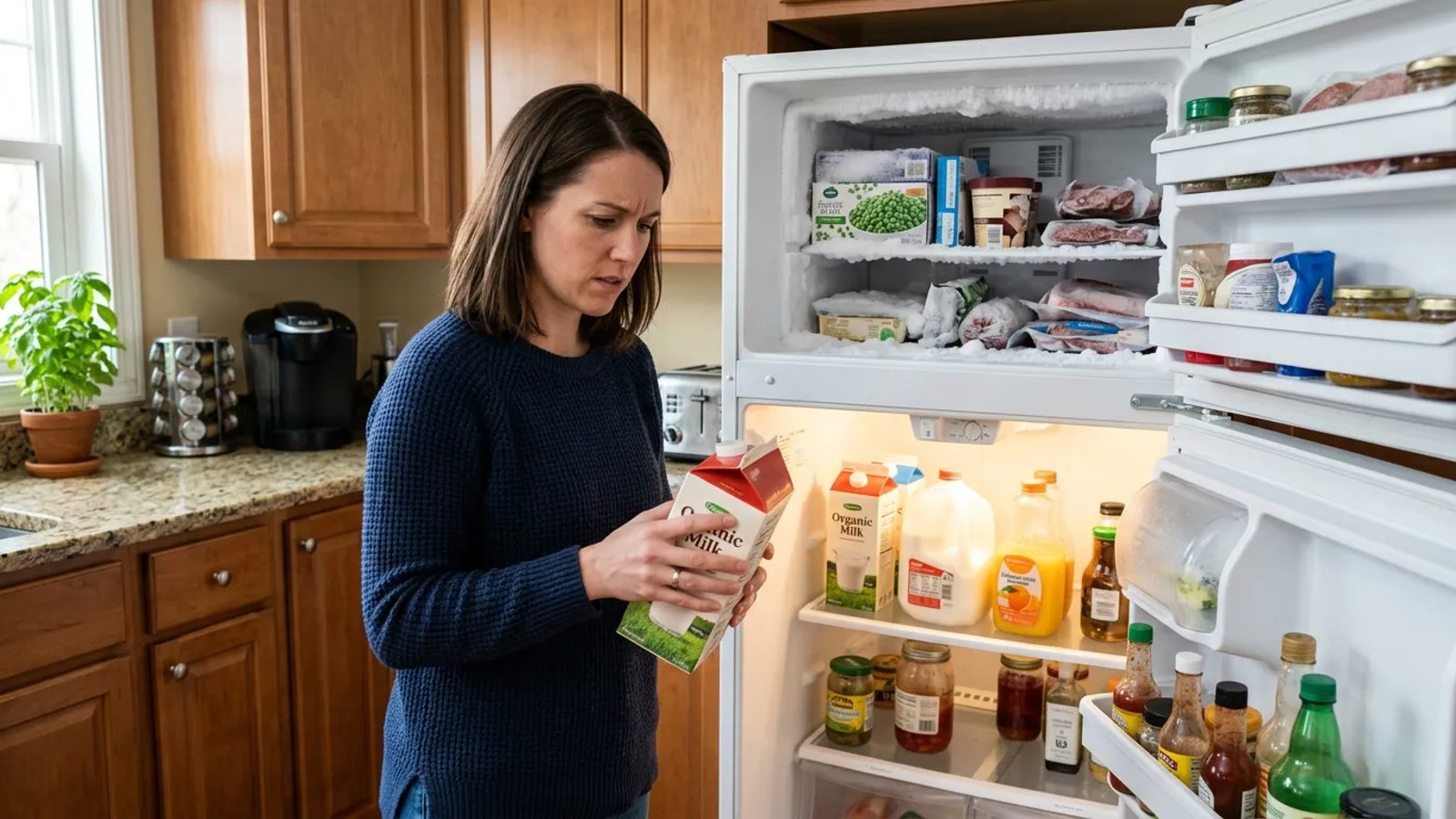
Full guide Appliances Learn how long your home appliances will last and when to repair or replace them.You open the fridge door for a splash of milk, only to find the carton lukewarm and the cheese sweating. Panic sets in. You immediately check the freezer, fully expecting a melted disaster, but your ice cream is still rock solid. If you are currently searching for why your refrigerator not cold while the freezer works perfectly, take a deep breath. You are experiencing one of the most common and frustrating appliance issues in homeownership.
Before you start throwing away bags of expensive groceries or dialing an emergency repair service, it is important to understand what is actually happening behind those plastic walls. In many cases, the fix is incredibly simple and requires no tools at all. In others, you might need a simple part that costs around $25 in 2026 and a screwdriver.
The Secret Airflow: How Your Fridge Actually Cools
Most people do not realize that standard refrigerators lack two separate cooling systems. All the heavy lifting, the actual chilling of the air, happens entirely inside the freezer compartment. The cold air is generated by the evaporator coils hidden behind the freezer's back panel.
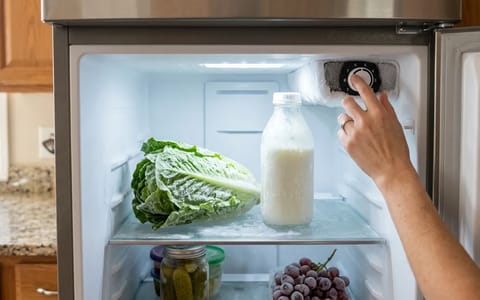
So, how does the fresh food compartment get cold? It relies on a motorized fan (the evaporator fan) to physically blow that freezing air through a small passageway called an air damper. The damper is essentially a small vent with a mechanical or motorized door that opens and closes to regulate the fridge's temperature, keeping it ideally around 37°F to 40°F.
If the freezer is cold but the fridge is warm, the cooling system isn't broken. The delivery system is.
When this delivery system fails, the freezer stays perfectly frosty, but the lower compartment slowly creeps up to room temperature. Understanding this airflow is the key to diagnosing the problem.
Triage: Save Your Food First
Before you pull the appliance away from the wall or grab your toolbox, you need to secure your perishables. Bacteria multiply rapidly when food sits in the "danger zone" above 40°F.
Grab a digital meat thermometer and place it inside a glass of water in the fridge (or just check the ambient temperature if you have an appliance thermometer). If the temperature is hovering above 40°F, immediately relocate your raw meats, dairy products, eggs, and leftovers to a cooler packed with ice, or ask a neighbor if you can borrow some shelf space.
The Easiest Fix: Check for Blocked Air Vents
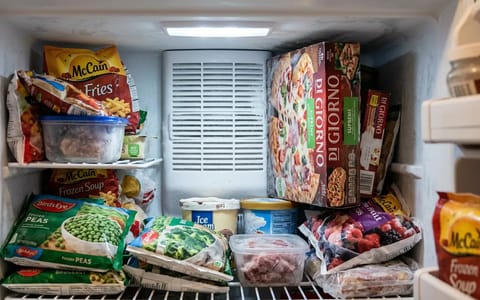
I once spent an entire Saturday afternoon convinced my compressor was dead, only to realize a family-size box of frozen waffles was completely blocking the air vent in the freezer. It is the most common cause of this specific problem and the easiest to fix.
Because the fridge relies entirely on air circulating from the freezer, any obstruction in that pathway will stop the cooling process dead in its tracks. Overpacking your freezer or shoving tall items to the very top shelf of your refrigerator can easily block the damper.
- Locate the damper vent. In the refrigerator compartment, look at the top center or the top back wall. You will see a plastic grate or vent.
- Clear the area. Ensure there is at least a 2-inch gap between your food items and the vent. Move tall jars or wide containers to lower shelves.
- Check the freezer side. Open the freezer and locate where the air pushes down. Ensure no bags of frozen vegetables or large boxes are shoved tightly against the back or bottom vents.
- Wait 24 hours. Once cleared, give the appliance time to circulate the air and bring the temperature back down.
The Frost Issue: Inspecting for a Frozen Evaporator Coil
If your vents are completely clear but the fresh food compartment is still warm, the next most likely culprit is a failure in the automatic defrost system. Modern refrigerators run a defrost cycle a few times a day to melt away any condensation that freezes on the evaporator coils.
If the defrost heater, the defrost thermostat, or the control board fails, frost will continue to build up unchecked. Eventually, the ice becomes so thick that it completely encases the coils and blocks the internal air passages. The fan might still be spinning, but no air can get through the solid wall of ice.
Open your freezer and look closely at the back wall. Do you see a thick layer of white frost or solid ice building up on the plastic panel? If it looks like an arctic tundra back there, you have a defrost problem.
The Fan Test: Is the Evaporator Fan Running?
If there is no frost buildup and the vents are clear, the evaporator fan might be dead. This fan sits just above the evaporator coils in the freezer. Its entire job is to pull air over the cold coils and push it down into the refrigerator.
You can usually hear this fan running when the compressor kicks on. It produces a gentle, consistent hum. However, many models are designed to shut the fan off when you open the door to prevent blowing cold air out into the kitchen.
To test it, open the freezer door. Locate the door switch (usually a small plastic button along the door frame) and press it in manually. Keep your ear close to the back wall. If you hear the fan spin up, the motor is fine. If the compressor is running (you can feel a slight vibration and hear a low hum from the bottom back of the fridge) but the fan never kicks on even with the switch depressed, the fan motor has likely burned out and needs to be replaced.
The 2026 Refrigerant Shift: Why Sealed Systems Are Pro-Only
If you discover that your compressor is running but neither compartment is cooling properly, you might have a refrigerant leak. As of 2026, almost all new refrigerators use R600a (isobutane) instead of older chemical refrigerants. Because R600a is highly flammable, federal regulations and modern safety standards strictly dictate how these sealed systems must be serviced. You should never attempt to recharge or repair a modern sealed system yourself.
Troubleshooting a Refrigerator Not Cold: DIY vs. Pro Repairs
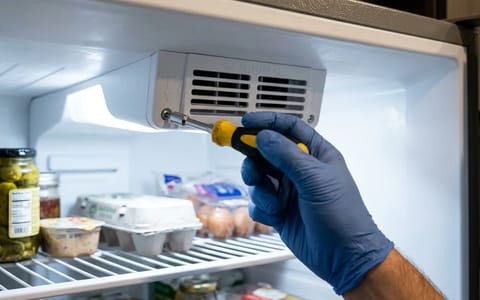
Deciding whether to tackle a refrigerator repair yourself or call in a professional usually comes down to your comfort level with basic hand tools and a multimeter. Replacing an evaporator fan or a defrost thermostat is highly doable for a motivated homeowner. These parts are usually accessible by removing a few 1/4-inch hex screws on the freezer's back panel.
If you own a multimeter, you can easily test the defrost heater and thermostat for continuity. If the multimeter reads "OL" (open loop) on a digital meter when touching the thermostat's terminals while it is freezing cold, the part lacks continuity and is dead. Replacing it will solve your problem.
Dealing with a warm refrigerator is incredibly stressful, but methodical troubleshooting can usually isolate the issue quickly. Start with the simplest solutions first, like rearranging your shelves and checking for frost. More often than not, you can get the cold air flowing again without having to replace the entire appliance.