Basement Musty Smell Won't Go Away? 4 Hidden Causes
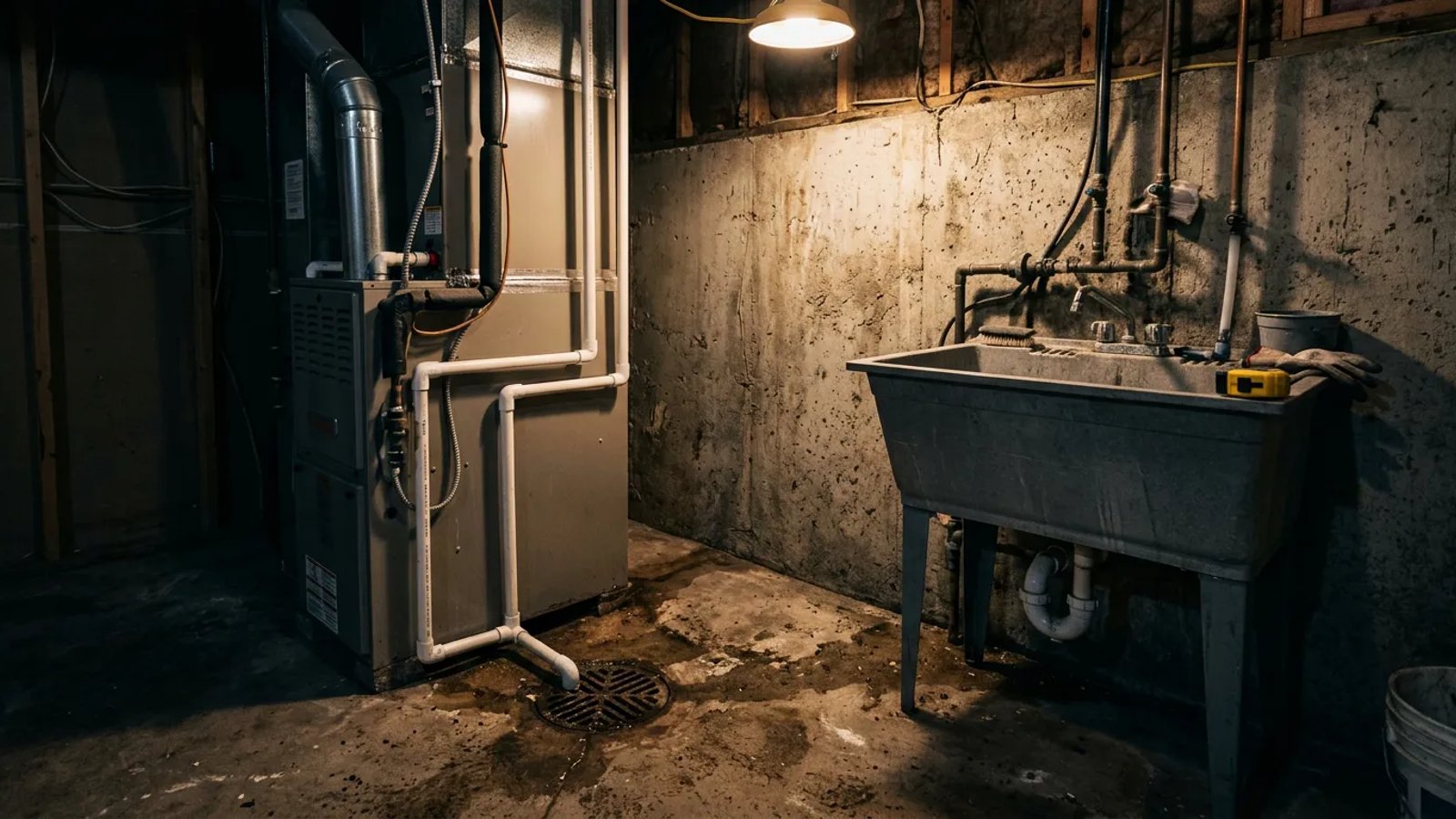
Running a dehumidifier around the clock but still dealing with a basement musty smell? Discover four hidden sources of localized moisture and how to eliminate them for good.
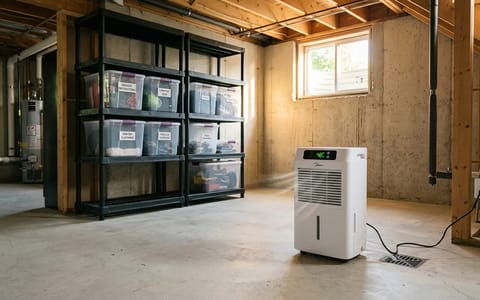
Full guide Foundation & Structure Learn how to spot dangerous foundation cracks and protect your home from costly structural damage.You bought the heavy-duty dehumidifier. You set the digital humidistat to a crisp 45 percent. It has hummed away in the corner for weeks, dutifully pulling gallons of water out of the air and pumping it away. Yet, every time you walk down the stairs, that distinct basement musty smell hits you right in the face.
Investing time and money into moisture control only to battle an invisible swamp is incredibly frustrating. The truth is, a room dehumidifier is fantastic at managing ambient humidity, but it is completely powerless against localized, hidden moisture. If your basement still smells like old wet socks, the odor is not coming from the air itself. It is emanating from a specific, hidden micro-environment where water is trapped, stagnant, or slowly dripping.
Particularly during the autumn months, as changing weather and heavy rains increase the moisture load in the surrounding soil, these hidden vulnerabilities reveal themselves. To banish the odor for good, you have to stop relying solely on the dehumidifier and start playing home detective. Here are the four most common hidden causes of a persistent basement musty smell and exactly how to fix them.
1. The Dry Floor Drain: The Free Fix
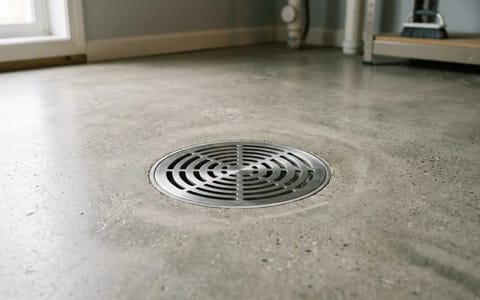
If you have an unfinished utility area, you likely have a concrete floor drain near your furnace or water heater. This drain connects directly to your home's main sewer line. To prevent foul odors from backing up into your house, the plumbing beneath the concrete features a curved pipe called a P-trap. This trap is designed to hold a small pool of water at all times, creating an airtight seal against the sewer system.
During the long, dry months when your HVAC system runs constantly, the ambient air in the basement becomes incredibly dry. Slowly, day by day, the water sitting in that P-trap evaporates. Once the water level drops below the curve of the pipe, the seal is broken. Damp, stagnant sewer gases, which often smell indistinguishable from a severe mold problem, begin to drift silently into your basement.
The fix for this is instant and completely free. Take a one-gallon bucket of water and pour it directly down the floor grate. You will likely hear a hollow echoing sound at first, followed by the normal sound of water resting in a pipe. If a dry trap was the source of your basement musty smell, the odor will dissipate entirely within 24 hours as the fresh air circulates.
2. HVAC Condensate Systems: The Hidden Swamp
Your heating and cooling system handles a massive amount of water. During the summer, your air conditioner acts as a giant dehumidifier for the whole house. The moisture it extracts from the air drips off the evaporator coil, falls into a drain pan, and flows out through a 3/4-inch PVC pipe. In many basements, this pipe empties into a small plastic box sitting on the floor called a condensate pump.
This pump collects the water until a float switch triggers, pumping the water up and out of the house. However, these pumps almost never drain completely dry. A half-inch of stagnant water usually sits at the bottom of the plastic reservoir year-round. Over time, dust, pet hair, and airborne bacteria find their way into the pump, turning that stagnant water into a thick, scummy layer of algae and mold.
Because the HVAC system is constantly pulling air from the basement and pushing it through the house, a foul condensate pump can easily distribute a musty smell throughout your entire lower level.
- Disconnect the power. Unplug the condensate pump from the wall outlet and ensure the HVAC system is turned off at the thermostat.
- Remove the reservoir. Disconnect the clear vinyl discharge tube. Unsnap the plastic clips or remove the screws holding the motor assembly to the bottom plastic tank.
- Clean the sludge. Take the plastic tank to a utility sink. Use an old toothbrush and warm, soapy water to scrub away all the brown or pink slime. Pay special attention to the plastic float switch to ensure it moves up and down freely without sticking.
- Flush the lines. Pour a mixture of one cup of white vinegar and one cup of warm water down the clear vinyl discharge tube to kill any algae clinging to the inside walls. Reassemble the pump and plug it back in.
3. Uninsulated Rim Joists: The Perimeter Condensation Trap
Walk to the edge of your basement and look up at the ceiling where the wooden framing of your house rests on top of the concrete foundation block. This perimeter area is called the rim joist. In many older homes, builders simply took scraps of pink fiberglass batting and stuffed them into these cavities to provide a bit of insulation.
This is a structural nightmare for indoor air quality. Fiberglass insulation is highly permeable: it acts like an air filter, not an air blocker. Warm, humid basement air easily passes through the fiberglass. When that warm air hits the cold wooden rim joist or the cold concrete foundation behind the insulation, it instantly condenses into water droplets.
Fiberglass batting stuffed into a rim joist doesn't stop moisture; it simply hides the rot until it's too late.
Because the thick fiberglass blocks the ambient air of the room from reaching the wet wood, the moisture cannot dry out. It sits there, hidden in the dark, feeding black mold and slowly rotting the structural framing of your home. Recently, I helped a neighbor track down a persistent odor in their 1960s split-level. We pulled back a single batt of fiberglass in the rim joist and found the wood behind it completely saturated and black with mold.
To fix this, you must stop the warm air from reaching the cold surface. Pull out the old fiberglass (wear a mask and gloves). Measure the cavity and cut a piece of 2-inch thick rigid foam board (XPS) to fit the space, leaving about a 1/4-inch gap around the edges. Press the foam board into place, and then use canned expanding spray foam, like Great Stuff Pro, to fill the gap around the perimeter. This completely seals the cavity, creating both a thermal break and a vapor barrier.
4. Appliance Micro-Leaks: The Silent Drippers
We tend to think of plumbing leaks as catastrophic events, like a burst pipe spraying water across the room. But the most damaging leaks are often the ones you cannot see or hear. A micro-leak is a slow drip, perhaps one drop of water every thirty seconds. Over a month, that single drop adds up to gallons of water.
The two most common culprits in a basement are the washing machine supply valves and the utility sink plumbing. If a washing machine is pushed tightly against a finished drywall partition, you might never notice a slow drip coming from the hot water supply valve. The water drips down the back of the drywall, soaking into the paper facing and the gypsum core. Drywall acts like a giant sponge, wicking the moisture upward.
Because the leak is slow, no water ever pools on the floor for you to step in. Instead, the wall simply stays perpetually damp, creating a massive, invisible breeding ground for mold. Your dehumidifier will run constantly trying to dry the air, but it cannot pull the moisture out of the saturated wall faster than the pipe is leaking into it.
If your washing machine is still using standard black rubber hoses, replace them immediately with stainless steel braided hoses. Rubber hoses degrade from the inside out and are notorious for developing pinhole leaks as they age. A pair of braided hoses, typically around $25 to $35 as of 2026, is the cheapest flood insurance you can buy.
Bonus: Smart Leak Detectors for 2026
If you want to stop micro-leaks before they cause a permanent musty smell, modern technology offers an inexpensive safeguard. As of 2026, Wi-Fi-enabled smart water leak detectors have become a standard recommendation for basements. Placing a small, battery-operated sensor behind your washing machine or under the utility sink ensures you get an instant smartphone alert the moment a rogue drop of water hits the floor, long before mold can take hold.
Tracking down a basement musty smell requires patience and a willingness to look in the dark, dirty corners of your home. By checking your floor drains, servicing your HVAC condensate pump, sealing your rim joists, and hunting down micro-leaks, you can eliminate the hidden moisture sources. Once the source is gone, your dehumidifier can finally finish the job, leaving your lower level smelling fresh and clean.