Sudden High Electric Bill? How to Find the Hidden Cause
Did your electricity bill inexplicably double this month? Learn how to track down failing appliances, HVAC issues, and hidden energy vampires without paying for a pro.
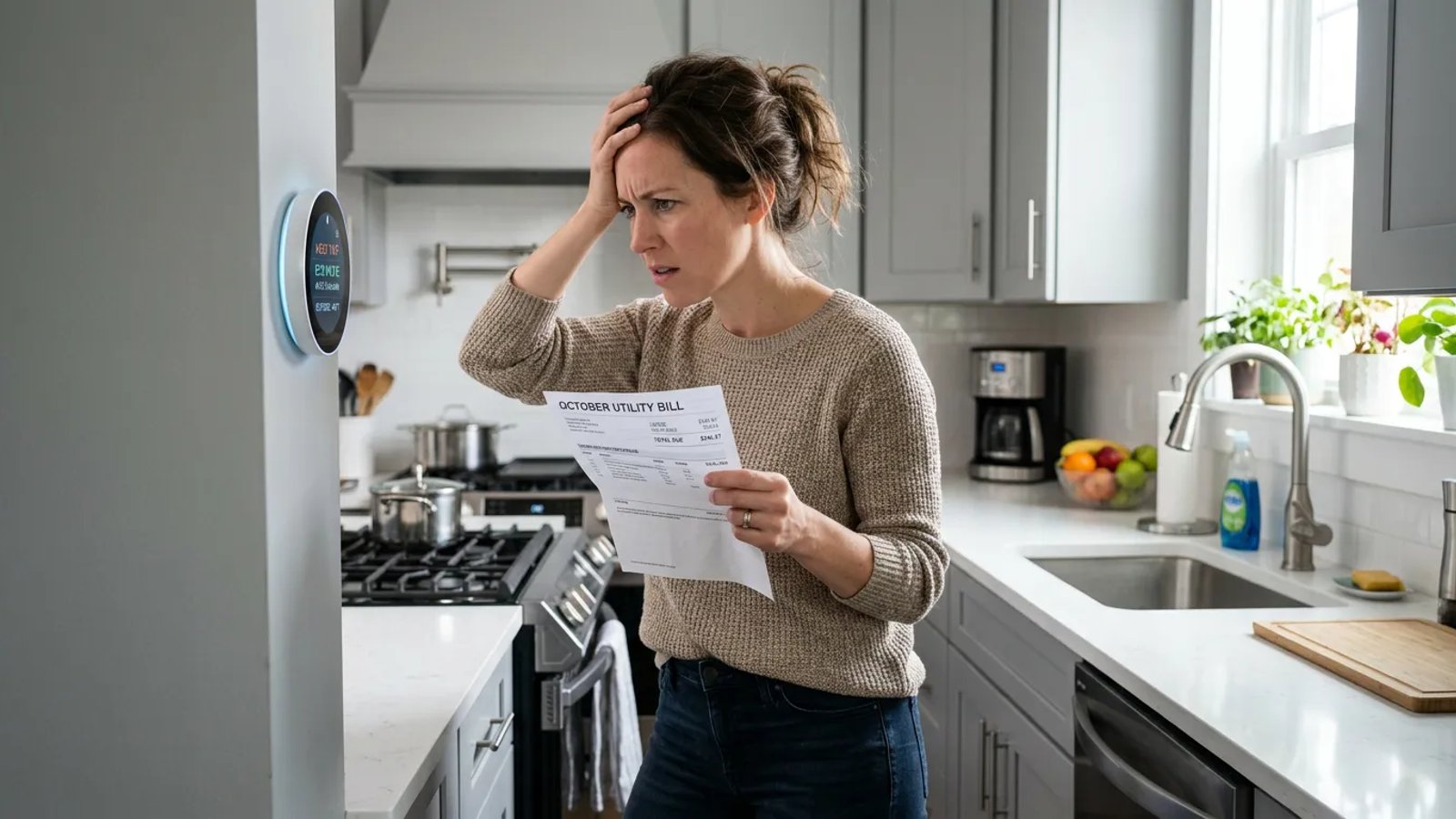
You open your utility bill and your jaw drops. You have a sudden high electric bill, yet you haven't bought any new appliances, hosted a houseful of guests, or significantly changed your routines. When your daily habits remain identical but the cost doubles, an invisible energy vampire is draining massive amounts of power somewhere in your house.
Before you panic and assume you need to rewire your home or pay for an emergency electrician, take a breath. A single mechanical failure or a billing error almost always causes unexplained energy spikes. By taking a systematic approach to troubleshooting, you can identify the hidden culprit and get your energy usage back to normal.
The Failing Appliance: Silent Power Drainers
When an electric bill spikes by $100 or more in a single billing cycle, the issue rarely stems from leaving a few lights on. You are looking for a heavy-duty appliance that has quietly failed in a way that forces it to run 24 hours a day. Because these appliances are often tucked away in basements, garages, or utility closets, they can run continuously for weeks without you noticing.
The most notorious offender is the electric water heater. A standard electric water heater contains two 4500-watt heating elements: one at the top and one at the bottom. Over time, mineral sediment builds up at the bottom of the tank and buries the lower element, causing it to overheat and burn out. When this happens, the upper element has to take over the job of heating the entire 50-gallon tank by itself. Instead of running for a normal two or three hours a day, that 4500-watt upper element runs almost continuously. At a typical 2026 average rate of $0.19 per kilowatt-hour, a water heater running an extra 10 hours a day will add over $250 to your monthly bill.
Refrigerators and freezers are another common source of massive power drains. I once spent three weeks trying to figure out why my own bill spiked by $80, only to discover a tiny, invisible tear in the chest freezer gasket in my garage. The cold air was constantly escaping, meaning the compressor never cycled off.
Finally, if your home relies on a private well, check your well pump. A half-horsepower submersible pump draws around 1000 watts while running. If there is a hidden leak in the underground line between the pump and your pressure tank, or if the pressure tank itself becomes waterlogged and loses its air charge, the pump will "short-cycle" or run continuously to maintain water pressure. This can easily consume 20 to 25 extra kilowatt-hours per day.
HVAC Inefficiencies: Working Overtime
Your heating, ventilation, and air conditioning (HVAC) system is likely the largest consumer of electricity in your home. Even in mild weather when you aren't running the heat or AC heavily, underlying mechanical issues can cause the system to draw significantly more amperage than it should.
The simplest and most common cause of an HVAC-related sudden high electric bill is a severely clogged air filter. A standard PSC (permanent split capacitor) blower motor uses between 400 and 600 watts of power. If you have installed a dense, high-MERV pleated filter and forgotten to change it for six months, it becomes a solid wall of dust. The system is starved for air, meaning it has to run twice as long to satisfy the thermostat's temperature setting. Changing a $20 filter can instantly drop your system's run time back to normal.
Beyond filters, failing electrical components inside the condenser unit can cause massive power spikes. The run capacitor is a small, cylindrical device that stores energy to help the heavy compressor motor start up and run smoothly. When a capacitor begins to degrade (often swelling at the top), it forces the compressor to pull "locked rotor amps" (a massive surge of electricity) for much longer than normal during every single startup cycle. A replacement capacitor costs just $20 to $35 as of 2026 at a hardware store, but a failing one can waste hundreds of dollars in electricity.
'Phantom' Power Hogs and Degraded Strips
While a massive $150 spike points to a major appliance, a creeping $30 to $50 increase might be the result of cumulative "vampire" or phantom loads. Modern homes are filled with devices that consume power even when they appear to be turned off.
Just because a device is turned off doesn't mean it has stopped pulling power from your panel.
Older audio/visual receivers, plasma televisions, and desktop computers left in "sleep" mode are notorious power hogs. Many modern gaming consoles and smart TVs also ship with "quick start" or "instant on" features enabled by default. This keeps the device's internal network card and processor fully powered at all times so it can boot up in two seconds instead of twenty. Disabling these features in the settings menu can save 10 to 20 watts per device continuously.
Additionally, older surge protectors and power strips can degrade over time. The metal oxide varistors (MOVs) inside them that absorb power surges eventually wear out, and the strip itself can begin to bleed electricity as heat. If you touch an old power strip under your desk and it feels unusually warm, it is wasting electricity and poses a potential fire hazard. Replace it with a modern "smart" power strip that physically cuts power to peripheral devices when the main device is turned off.
Utility Changes and Meter Misreads
Sometimes, the hidden cause of your sudden high electric bill isn't inside your house at all. Before you tear apart your appliances, take a very close look at the physical paper or PDF bill from your utility provider.
First, check to see if your utility company recently transitioned your neighborhood to Time-of-Use (TOU) billing. Under TOU rates, electricity is incredibly cheap during the night but incredibly expensive during peak hours, usually between 4:00 PM and 9:00 PM. If you regularly run your electric dryer, dishwasher, and oven at 6:00 PM, your actual kilowatt-hour usage might be exactly the same as last year, but your bill will be drastically higher due to the new peak pricing.
Second, look for the letters "EST" or "E" next to your meter reading on the bill. Utilities occasionally fail to read your physical meter due to bad weather, a blocked yard gate, or a localized network outage with their smart meters. When this happens, they issue an "estimated" bill based on your historical usage or neighborhood averages. If the estimate was wildly inaccurate, you will see a massive spike. (The utility will eventually correct this with a credit once they get an actual read, but it causes immediate sticker shock).
The 2026 Advantage: Smart Panel Monitoring
If you want to skip the manual breaker testing, modern technology offers a faster solution. As of 2026, many homes are equipped with smart electrical panels or add-on energy monitors that track usage in real-time. These systems use machine learning to identify the specific electrical signatures of individual appliances. You can open a smartphone app and see immediately if your AC compressor is pulling too much power or if your water heater is running non-stop, eliminating the guesswork entirely.
The Action Plan: How to Isolate the Culprit
If you have ruled out a billing error, it is time to hunt down the physical energy drain. You do not need expensive diagnostic equipment to do this; you just need a bit of patience and a systematic approach.
- Turn off all breakers. Go to your main electrical panel and flip every single branch circuit breaker to the "off" position. Leave the main breaker on.
- Check the meter. Walk outside to your electric meter. If it is an older analog model, the metal disk should be completely still. If it is a digital smart meter, the digital pace indicator (usually flashing squares or a moving line) should be static. If the meter is still registering heavy usage with all breakers off, you have a dangerous wiring fault between the meter and the panel, and you must call an electrician immediately.
- Turn on breakers one by one. Go back inside and flip the first breaker on. Wait 30 seconds, then check the meter. Repeat this process for every breaker.
- Identify the spike. When you flip a specific breaker and the meter suddenly starts spinning rapidly or flashing wildly, you have found the circuit containing your energy vampire. Note the label on that breaker to know which room or appliance to investigate.
For 120-volt appliances plugged into standard wall outlets, you can isolate the issue further using a plug-in energy monitor, often sold under brand names like Kill A Watt. These devices cost around $30 to $40 in 2026 at most hardware stores. Simply plug the monitor into the wall, plug your refrigerator, freezer, or computer into the monitor, and leave it for 24 hours. The screen will tell you exactly how many kilowatt-hours the device consumed, allowing you to compare it against the manufacturer's normal ratings.
Getting hit with an enormous utility bill is incredibly frustrating, but it is rarely a mystery that can't be solved. By checking your heavy-duty 240-volt appliances, ensuring your HVAC system can breathe, and systematically testing your breakers, you can track down the rogue appliance. Once you fix that torn gasket or replace that burned-out heating element, your home will stop bleeding power, and your next month's bill will return to normal.