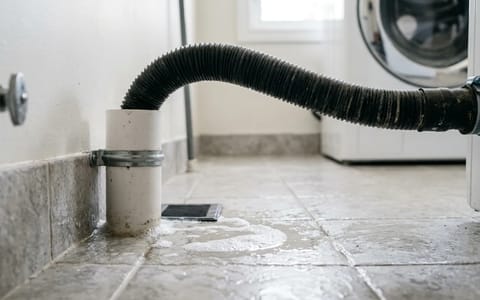
Washer Drain Backing Up? How to Clear the Standpipe Fast
Discovering a puddle behind your washing machine is stressful. Learn how to quickly diagnose a clogged standpipe, clear the blockage safely without harsh chemicals, and prevent future laundry room floods.
Full guide Appliances Learn how long your home appliances will last and when to repair or replace them.You hear the spin cycle wind down, walk into the laundry room to switch your clothes to the dryer, and your socks immediately soak up cold, soapy water. A washer drain backing up is one of the most stressful messes a homeowner can face. Left ignored, that creeping puddle will quickly ruin your drywall, warp your baseboards, and cause expensive structural rot beneath your flooring.
When we replaced the flooring in our laundry room last year, I noticed the old drywall behind the washer was soft and crumbling right at the baseboard. The previous owners had clearly dealt with a backing-up standpipe and simply wiped up the floor, ignoring the water that seeped into the walls. Fixing that hidden water damage was neither cheap nor fun.
The good news is that a localized laundry drain clog is usually straightforward to fix. You do not need to be a master plumber, and you rarely need expensive tools. By understanding how the drain works and taking a calm, step-by-step approach, you can clear the blockage and get your laundry routine back on track today.
Triage: Stop the Machine and Manage the Mess
Before you start diagnosing the plumbing, you need to stop the active flood and protect your home from water damage. Washing machines pump out water fast. If the standpipe is completely blocked, a standard cycle can dump 10 to 15 gallons of water directly onto your floor.
First, immediately pause or cancel the washing machine cycle. Most modern machines will stop pumping water the second you hit the pause button. Next, unplug the washing machine from the electrical outlet. Water and electricity are a dangerous combination, so keep your hands dry and avoid stepping in the puddle while handling the plug.
Grab a wet/dry shop vacuum and suck up the standing water. If you do not own a shop vacuum, grab every old towel you can find and soak up the mess. Pay special attention to the gap between the baseboards and the floor, as water loves to hide there. Set up a box fan pointing directly at the wet area for at least 24-48 hours to speed up the drying process and prevent mold growth.
Why Is My Washer Drain Backing Up?
To fix the problem, it helps to understand what is happening inside the wall. Your washing machine discharges water through a corrugated plastic hose. This hose slides loosely into a vertical pipe called a standpipe. According to the International Residential Code (IRC), a modern washer standpipe must be at least 2 inches in diameter to handle the 15 to 20 gallons per minute that newer machines pump out.
At the bottom of this vertical standpipe is a U-shaped bend called a P-trap. The P-trap holds a small amount of water at all times to block foul sewer gases from floating up into your laundry room. Unfortunately, this curved section of pipe is also a prime location for clogs to form.
Every time you wash a load of laundry, the machine pumps out lint, dirt, soap scum, and hair. Over months and years, synthetic clothing fibers and sticky liquid fabric softener bind together. They form a thick, sludgy bottleneck right at the P-trap. Eventually, the pipe narrows so much that it can no longer handle the sheer volume of water exiting the machine, causing it to shoot back up and overflow onto your floor.
How to Clear the Standpipe Fast
When faced with a stubborn clog, many people reach for a bottle of liquid drain cleaner. Put the bottle down. Chemical cleaners rely on harsh acids or lye to generate intense heat. This heat can warp or melt older PVC pipes and ruin the rubber gaskets holding your plumbing together. Worse, chemicals rarely dissolve the synthetic fibers and pet hair that make up laundry clogs. Instead, they just sit in the pipe, creating a toxic hazard for whoever has to fix the pipe later.
The most reliable way to clear a washer drain backing up is with physical force. You need a manual plumbing snake, also known as a drain auger. You can pick up a 25-foot manual snake for about $15 to $25 at any local hardware store. It is one of the most useful tools you can keep in your garage.
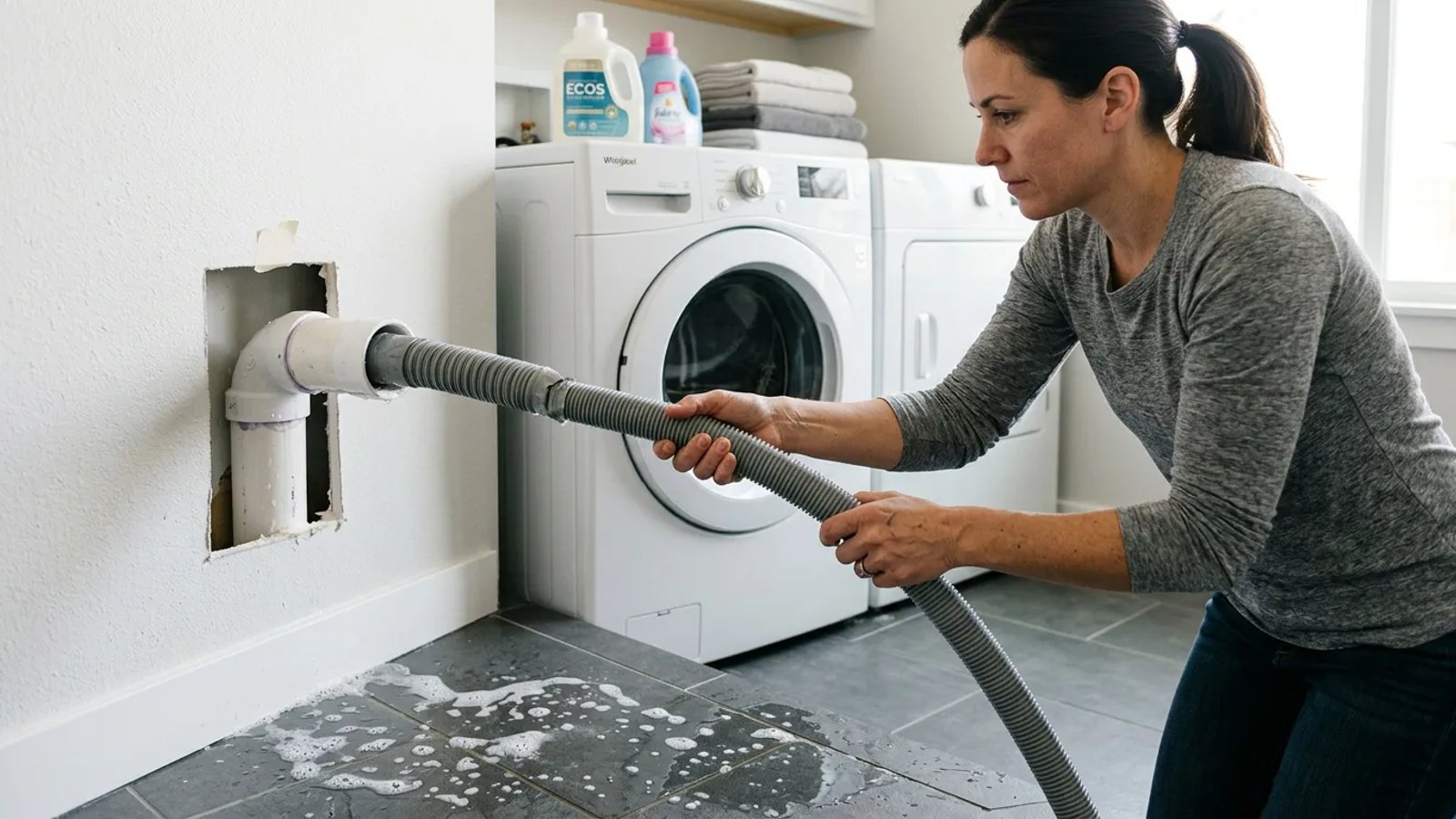
- Remove the discharge hose. Carefully pull the washing machine's corrugated drain hose out of the standpipe. Keep a bucket handy, as a little bit of water might drip out of the hose.
- Feed the snake cable. Loosen the thumbscrew on the manual snake and feed the metal auger tip down into the standpipe. Push the cable down by hand until you feel resistance. This is usually about 2 to 4 feet down, right where the P-trap sits.
- Break the clog. Once you hit the blockage, tighten the thumbscrew on the snake handle. Turn the handle clockwise while applying firm downward pressure. You are trying to bore the metal corkscrew tip directly into the matted lint and hair.
- Retrieve the debris. After twisting the handle a few times, slowly pull the cable back up. You will likely pull up a disgusting, gray clump of sludge. Wipe the cable clean with an old rag or paper towel.
- Repeat and test. Repeat the process until the cable moves freely through the P-trap. Once clear, pour a gallon of hot water directly down the standpipe using a pitcher. If it drains quickly without backing up, you have successfully cleared the line.
Preventative Maintenance for Your Washer Drain
Once you have dealt with the mess and cleared the standpipe, you probably never want to do it again. The best way to stop a washer drain from backing up in the future is to catch the debris before it ever enters your wall plumbing.
The cheapest and easiest fix is to install a lint snare. These are small, stainless steel mesh bags that slip over the end of your washing machine's discharge hose. You secure them tightly with a zip tie. As the water pumps out, the mesh catches the lint, hair, and bits of tissue left in pockets, allowing only clean water to flow down the standpipe.
A five-dollar pack of lint snares can save you from a two-hundred-dollar plumbing bill.
You can buy a 12-pack of these mesh snares for about $5 online or at a hardware store. Check the snare once a month. When it looks full and puffy, simply snip the zip tie, throw the snare in the trash, and attach a fresh one. Note that if your discharge hose fits very tightly into your standpipe, a lint snare might not fit. In that case, look into an inline lint filter that attaches directly to the hose itself.
Finally, make it a habit to flush the standpipe with boiling water every few months. The extreme heat helps melt away sticky soap scum and fabric softener residue before it has a chance to solidify and trap stray lint. Just boil a large kettle of water and pour it carefully down the standpipe.
Dealing with a sudden laundry room flood is enough to ruin anyone's weekend. But by keeping a manual snake on hand, skipping the damaging chemical cleaners, and spending a few dollars on mesh lint traps, you can keep your standpipe flowing freely and your floors completely dry.
- Act fast: Cancel the spin cycle and use a wet/dry vac to remove standing water before it soaks into your walls.
- Mechanical removal beats chemicals: A $15 manual drain snake is the safest, most effective way to clear a standpipe clog.
- Prevention is cheap: A $5 pack of mesh lint snares can save you from a $200 plumbing bill down the road.