White Powder on Basement Walls? What It Is and How to Fix It
Discovered a chalky white substance on your basement walls? Learn how to identify harmless efflorescence, clean it safely, and stop the moisture causing it.
Full guide Foundation & Structure Learn how to spot dangerous foundation cracks and protect your home from costly structural damage.You went down to the basement trying to track down a lingering musty smell, only to discover a chalky, fluffy white substance creeping across your cinder block walls. Panic sets in. Is this toxic white mold? Are you looking at thousands of dollars in remediation?
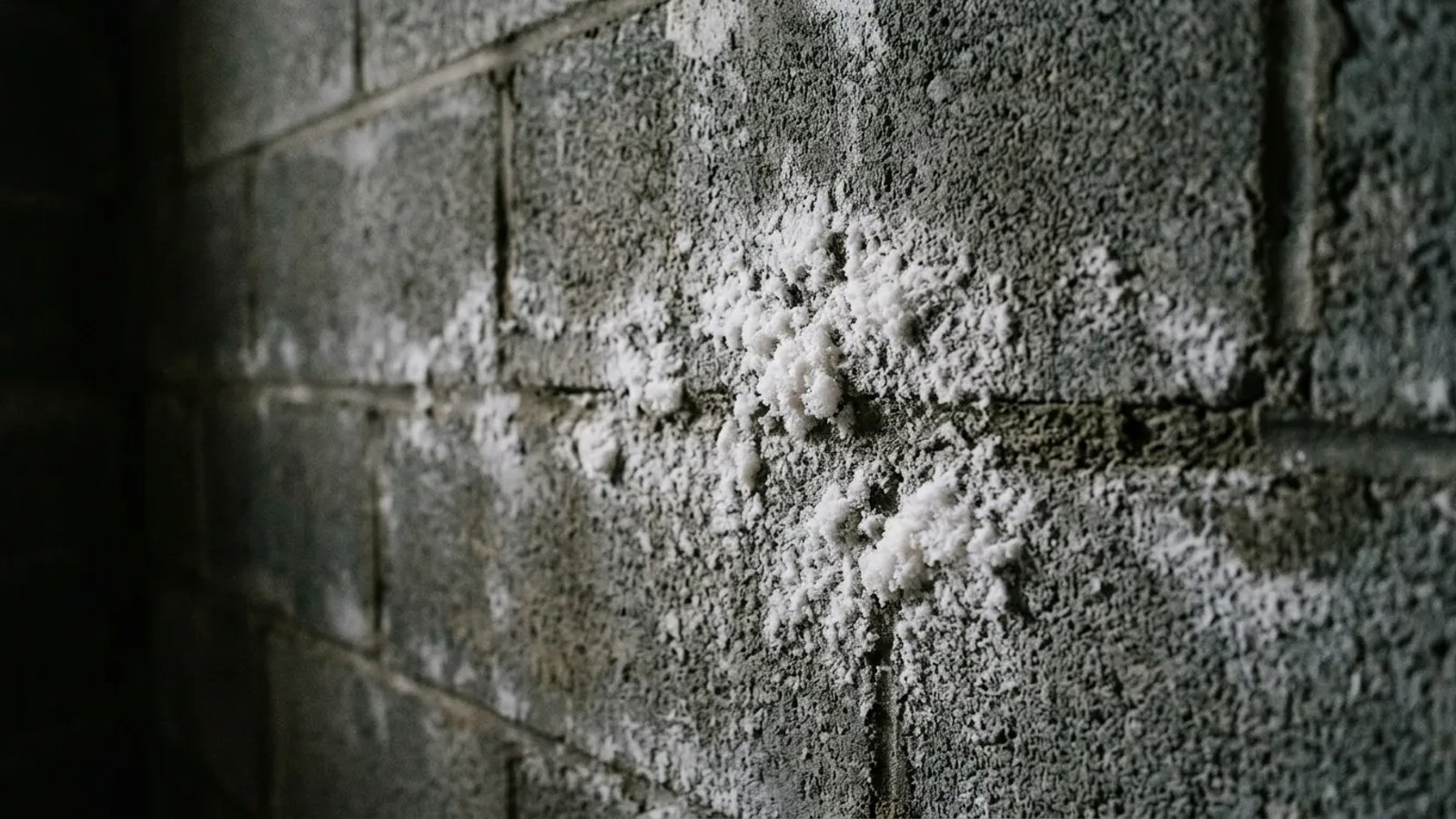
Fortunately, if you are seeing white powder on basement walls, you are almost certainly looking at efflorescence. While the name sounds intimidating, efflorescence is simply a harmless salt deposit left behind by water seepage. It won't harm your lungs, but it is a giant flashing warning sign that your foundation is taking on water.
What Exactly Is That White Powder on Basement Walls?
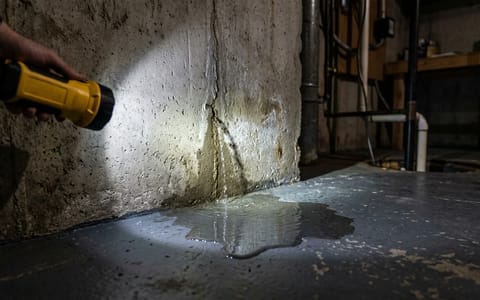
Efflorescence occurs when water infiltrates porous building materials like concrete, brick, or mortar. As groundwater pushes against your foundation (a phenomenon known as hydrostatic pressure), it slowly works its way through the microscopic pores in the concrete. Along the way, this water dissolves naturally occurring salts and minerals inside the masonry.
When that moisture finally reaches the interior surface of your basement wall, the air in the room causes the water to evaporate. The water turns to vapor, leaving the dissolved salts behind on the surface. Over time, these salt crystals build up, creating the fluffy, white, powdery streaks that homeowners often mistake for mold.
While efflorescence often appears during spring thaws, the heavy late-summer thunderstorms typical of August can also trigger severe flare-ups. As intense rains saturate the soil around your home, hydrostatic pressure spikes. Your foundation walls are essentially sitting in a bowl of water, forcing moisture inward. The musty smell you notice is not the white powder itself; instead, it is the dampness in the air and the secondary mildew thriving in that elevated humidity.
The Water Drop Test: Efflorescence vs. White Mold
While efflorescence is harmless, white mold is a biological growth that requires immediate removal. Because they can look nearly identical to the untrained eye, you need a reliable way to tell them apart before you start scrubbing.
The easiest and safest way to identify the substance is the Water Drop Test. Because efflorescence is made of crystallized salt, it is highly water-soluble. Mold, on the other hand, is organic and often water-resistant.
Another key indicator is the texture. If you rub efflorescence between your gloved fingers, it will feel gritty and turn to a fine dust. White mold will feel soft, slimy, or smear against your fingers.
How to Safely Clean Salt Deposits Off Your Foundation
Once you have confirmed that the white powder is just salt, removing it is a straightforward DIY project. However, you cannot simply wash it away with a soaking wet sponge. Adding more water to the porous concrete simply dissolves the salts and pushes them back into the wall, only for them to reappear a few days later.
Here is the most effective method for cleaning efflorescence without triggering a recurrence:
- Dry brush the wall. Using a stiff nylon-bristle brush, vigorously scrub the affected area while it is completely dry. Do not use a wire brush, as microscopic metal fragments can break off, embed in the concrete, and eventually leave permanent rust stains on your walls.
- Vacuum the dust. Use a shop vacuum with a HEPA filter to suck up the powdery salt dust that falls to the floor or clings to the wall.
- Mix a mild acid solution. Because efflorescence is highly alkaline, a mild acid is required to break down any stubborn remaining residue. Mix a 50/50 solution of standard white household vinegar and warm water in a spray bottle.
- Spot treat and wipe. Lightly mist the remaining white stains with the vinegar solution. Let it sit for 3 to 5 minutes to break down the minerals, then scrub again with your nylon brush. Wipe the area completely dry with clean microfiber cloths.
- Force dry the wall. Point a box fan directly at the damp wall and run a dehumidifier in the room for at least 24 hours. The faster the surface dries, the less likely new salt deposits are to form.
The Real Fix: Stopping Exterior Moisture Intrusion
Cleaning the wall only treats the symptom. If you scrub off the efflorescence but do nothing to stop the water from seeping into your foundation, the white powder will return with the very next heavy rainstorm. To permanently banish efflorescence and that lingering musty smell, you must address your home's exterior drainage.
Your goal is to keep the soil immediately surrounding your foundation as dry as possible. When the soil is dry, there is no hydrostatic pressure to force moisture through the concrete pores.
Efflorescence is never the actual problem; it is simply the messenger telling you that your foundation is taking on water.
Start by looking up. Clogged gutters are the number one cause of basement moisture. If your gutters are overflowing, hundreds of gallons of rainwater are dumping directly against your foundation walls. Clean your gutters at least twice a year, ensuring water flows freely to the downspouts.
Next, check where those downspouts empty. A downspout that drops water right at the base of your foundation is actively flooding your basement walls. You need to install downspout extensions that route the water a minimum of 6 feet away from the house. As of 2026, solid corrugated plastic piping typically ranges from $18 to $25 at most home improvement stores and takes less than five minutes to attach.
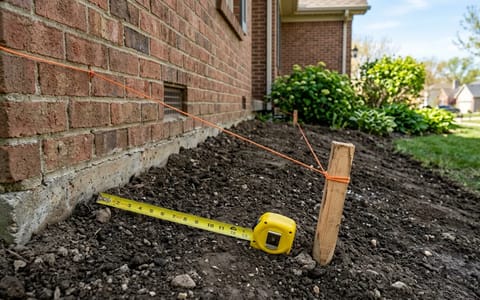
Finally, evaluate your exterior grading. The ground around your home should slope away from the foundation to encourage runoff. The 2026 International Residential Code (IRC) requires a minimum 5% grade, meaning the ground should drop 6 inches over the first 10 feet away from the house. If your soil has settled and is sloping toward the house, you need to build it back up. Use dense clay soil to build the slope. Do not use topsoil or mulch, as these materials act like sponges and hold water against the concrete.
Managing Indoor Humidity and Air Quality
While you are working on the exterior drainage, you also need to manage the interior environment. The musty smell that originally sent you into the basement is caused by high indoor humidity. When moisture seeps through the walls and evaporates, it dramatically raises the relative humidity of your basement.
To combat this, invest in a high-capacity dehumidifier. Under current 2026 Department of Energy capacity standards, a 50-pint dehumidifier is usually sufficient for an average-sized basement. Set the target humidity level between 45% and 50%. This range is dry enough to prevent mold and mildew growth, which stops the musty odors, but not so dry that it wastes electricity.
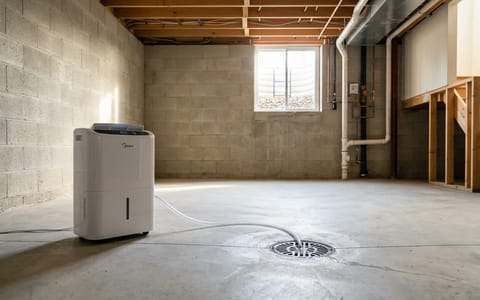
If possible, connect the dehumidifier to a continuous drain hose that empties directly into a floor drain or sump pit. This saves you from having to manually empty the collection bucket every day, ensuring the machine runs continuously to protect your basement environment.
Smart Moisture Monitoring
Because efflorescence is a symptom of hidden moisture, catching leaks early is critical. Today's smart home ecosystems make this easier than ever. Placing Wi-Fi-enabled moisture sensors along your basement baseboards or near your sump pump will send instant alerts to your smartphone at the first sign of water intrusion. Many modern dehumidifiers also feature built-in hygrometers that sync with your phone, allowing you to track humidity spikes remotely and adjust settings before salt deposits have a chance to form.
When to Call a Waterproofing Professional
Most cases of efflorescence can be resolved by the homeowner through a combination of exterior drainage improvements and interior cleaning. However, there are times when the water intrusion is too severe for DIY fixes.
Applying a waterproof masonry paint over efflorescence is never a permanent solution. These paints trap the moisture inside the concrete block. Over time, the trapped water and expanding salt crystals will cause the paint to bubble, peel, and eventually fail, leaving you with a bigger mess than when you started.
Tackling efflorescence is essentially a game of moisture management. By identifying the salt deposits, cleaning them properly with a dry brush and vinegar, and aggressively routing rainwater away from your home's exterior, you can eliminate both the unsightly white powder and the musty smells for good.