Basement Still Smells Musty With Dehumidifier? The Real Fix
Running a dehumidifier but your basement still smells musty? Learn how to troubleshoot lingering odors, from deep-cleaning your machine to finding hidden moisture.
Full guide Foundation & Structure Learn how to spot dangerous foundation cracks and protect your home from costly structural damage.You invested in a heavy-duty dehumidifier, hauled it downstairs, and plugged it in. It runs constantly, pulling gallons of water from the air, yet the problem persists: your basement smells musty with a dehumidifier running full tilt. This is a common and incredibly frustrating scenario for homeowners, especially during the damp mid-spring season when rising water tables and heavy rains put extra pressure on your foundation.
Will a Dehumidifier Get Rid of a Musty Smell in the Basement?
A frequent question from frustrated homeowners is whether a dehumidifier will completely get rid of a musty smell in the basement. The short answer is yes, but only if you remove the active mold source first. Mildew and mold release microbial volatile organic compounds (mVOCs), which cause that signature "wet dog" or "old sock" odor. A dehumidifier stops new mold from growing by dropping the humidity below 50%, but it cannot scrub existing odors from the air, kill established mold colonies, or fix a contaminated machine. You must clean the space and the machine before the dehumidifier can maintain the freshness.
It is easy to assume that a dehumidifier is a cure-all for basement odors. However, these machines are moisture managers, not magic wands. If the machine itself is compromised, or if there is an active, untreated moisture source in the room, the dehumidifier will simply recirculate dry, foul-smelling air. To truly eliminate that stubborn basement odor, you need to look past the machine's control panel and address the root causes of the smell. Here is a four-step troubleshooting guide to get your basement smelling fresh again.
Step 1: Deep Clean the Dehumidifier
It sounds counterintuitive, but the machine designed to fight mold is often the very thing harboring it. If you are wondering why your dehumidifier smells musty, the answer lies in how it operates. Dehumidifiers work by pulling warm, damp air over cold internal coils. This process creates condensation, which drips into a collection bucket. However, the machine also pulls in dust, pet dander, and airborne particles. When organic dust mixes with constant moisture inside a dark plastic chassis, mildew thrives. If your dehumidifier smells like mildew, the fan is literally blowing mold spores back into the room.
To get the musty smell out of your dehumidifier, you need to perform a deep clean of the unit. This should ideally be done every 30 to 60 days during peak operating seasons.
- Unplug and empty the unit. Disconnect the power and remove the water collection bucket. Take the bucket outside or to a utility sink.
- Scrub the collection bucket. Wash the inside of the bucket using warm water, a few drops of mild dish soap, and a soft sponge. For stubborn odors, spray the interior with a 50/50 mixture of white vinegar and water, or use a solution of one cup of hydrogen peroxide per gallon of water for a stronger clean. Let it sit for 15 minutes before rinsing.
- Wash the air filter. Slide out the reusable mesh air filter (usually located on the back or side). Wash it gently under warm running water. Shake off the excess water and let it air dry completely.
- Clean the cooling coils. With the bucket and filter removed, shine a flashlight inside to locate the metal coils. If they are caked in dusty grime, use a soft-bristle brush (like an old toothbrush) to gently sweep the debris away. Be careful not to bend the delicate aluminum fins.
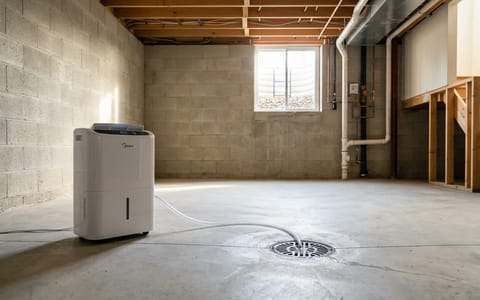
- Flush the continuous drain hose. If you use a gravity drain hose to empty your unit directly into a floor drain, algae and mildew will build up inside the dark, damp tube. Remove the hose and soak it in a bleach and water solution, or replace it entirely for about $10 to $15.
Step 2: The Aluminum Foil Test
If your dehumidifier is spotless but the room still smells like an old wet sock, you likely have active moisture wicking through your foundation. Concrete is highly porous. During the spring thaw and heavy rain seasons, hydrostatic pressure builds up in the soil outside your home, forcing water vapor directly through the microscopic pores in your concrete floor and walls.
To determine if this is happening, you can perform a simple diagnostic check known as the aluminum foil test. You will need a roll of heavy-duty aluminum foil and some quality duct tape.
Cut a 12-inch by 12-inch square of foil. Find a bare spot on your concrete basement floor, preferably near the center of the room or in an area that smells particularly strong. Tape the foil squarely to the floor, ensuring all four edges are completely sealed with duct tape so no air can get underneath. Leave the square undisturbed for 24 to 48 hours.
If you discover wicking moisture, your dehumidifier is fighting a losing battle. The moisture will continue to evaporate off the massive surface area of your floor faster than the machine can collect it. You may need to look into applying a silane-siloxane penetrating concrete sealer, which typically costs about $120 to $180 for a 5-gallon bucket in 2026, to slow down this vapor transmission.
Step 3: Elevate Porous Storage
Take a look around your basement. Are there cardboard boxes sitting directly on the concrete? Are there wooden furniture legs touching the floor? If so, you have inadvertently created a mold buffet. Because concrete constantly wicks trace amounts of moisture, any porous material sitting directly on it acts like a sponge, drawing water upward.
Cardboard is one of the worst offenders. It is made of paper pulp and glue, two things that mold and mildew absolutely love to consume. Even if your dehumidifier keeps the ambient air at a crisp 45% humidity, the micro-climate underneath a cardboard box sitting on a concrete slab can easily reach 80% or 90% humidity.
A dehumidifier is a moisture manager, not a magic wand. If you don't cut off the source, it will run endlessly while the smell lingers.
I once lost an entire box of childhood photos because I thought placing them on a scrap piece of plywood would be enough protection from a damp floor. The moisture wicked right through the wood and into the cardboard. To permanently banish musty odors, you must eliminate these sponges.
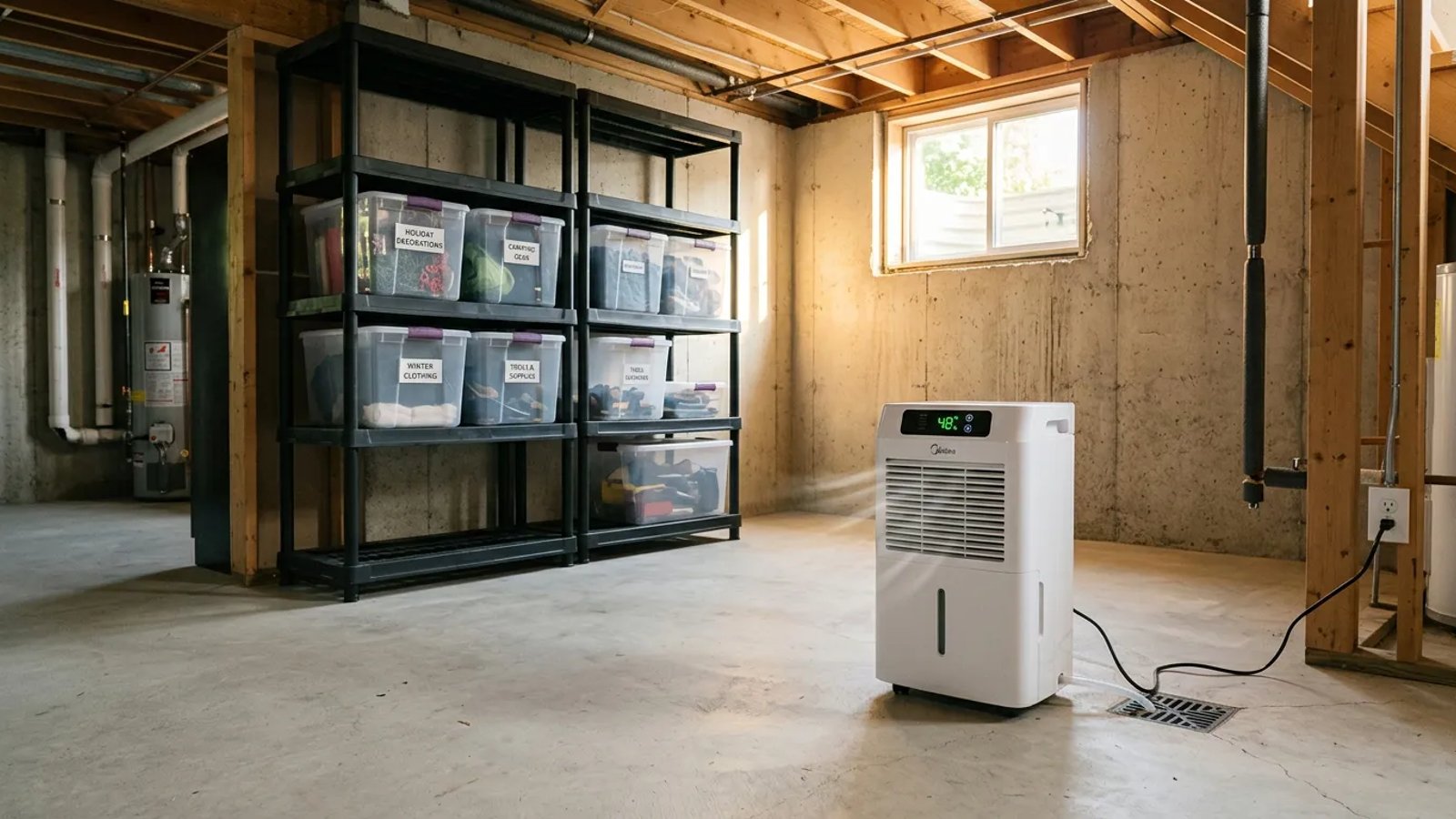
Replace all cardboard boxes with airtight plastic storage totes. Furthermore, ensure that all storage is elevated at least 4 inches off the ground. Heavy-duty plastic shelving units or epoxy-coated wire racks (which cost between $50 and $100 at most hardware stores as of 2026) are ideal because they allow air to circulate freely underneath your belongings, preventing stagnant, damp pockets from forming.
Step 4: Verify Sizing and Settings
Finally, ensure your machine is actually equipped for the job you are asking it to do. A common mistake is buying a small, 20-pint unit meant for a single bedroom and expecting it to manage a 1,500-square-foot open space. When choosing a dehumidifier for a basement, you must verify the sizing. If the machine is undersized, it will run 24/7 without ever bringing the humidity down to a safe level.
For a standard basement between 1,000 and 1,500 square feet, you generally need a 50-pint dehumidifier (based on 2026 Department of Energy sizing standards). If your basement is exceptionally damp or larger than 1,500 square feet, you may need a commercial-grade unit or multiple standard units placed at opposite ends of the space.
Equally important is the humidity setting. You should aim to keep your basement between 45% and 50% relative humidity. If you set the machine to 35%, it will likely never reach its goal, running up your electric bill and wearing out the compressor prematurely. If you set it to 60% or higher, you are leaving enough moisture in the air for mildew to survive and produce those musty odors.
My Basement is Dry But Still Smells Musty
What if your hygrometer shows a perfectly dry 45% humidity, but the room still smells awful? If your basement is dry but still smells musty, you are likely dealing with a non-moisture odor source. The most common culprit is a dried-out floor drain. Floor drains have a P-trap that holds a small amount of water to block sewer gases from entering your home. In a dry basement, this water evaporates, allowing musty-smelling sewer gas to drift into the room. Simply pour a gallon of water down the floor drain to reseal the trap.
If the drain is not the issue, check for hidden problems like a dead rodent in the ductwork or dormant mold colonies hiding behind finished drywall that have not fully dried out.
Musty Basement Smell Every July: Dehumidifier or Waterproofing First?
Many homeowners notice a distinct pattern, experiencing a musty basement smell every July. This leads to a common debate: should you invest in a dehumidifier or professional waterproofing first? Summer odors are usually caused by high ambient humidity and condensation, not the rising spring groundwater that causes active flooding.
Always start with a high-capacity dehumidifier. A quality unit costs around $250 to $300 in 2026 and will instantly solve condensation issues. If you run the dehumidifier, perform the aluminum foil test, and still find active water pooling or heavy wicking through the concrete, then it is time to consider waterproofing. Professional interior waterproofing systems typically cost between $5,000 and $15,000, so it is always wiser to rule out simple humidity first.
When to Look Beyond the Basics
If you have cleaned your machine, elevated your storage, sealed the floor, and dialed in your settings, but the smell remains, it is time to inspect the perimeter. Look for failing gutters, poor grading outside the house that directs water toward the foundation, or hidden leaks behind finished drywall.
Managing basement moisture requires a holistic approach, especially during the wet spring months. By keeping your equipment clean, understanding how moisture moves through your foundation, and storing your belongings smartly, you can finally eliminate that lingering musty smell and reclaim your basement space.