Can You Put New Attic Insulation Over Old? A Quick Guide
Wondering if you can put new attic insulation over old? In most cases, yes. Learn when it's safe to layer, what materials to mix, and when you absolutely must remove the old stuff first.
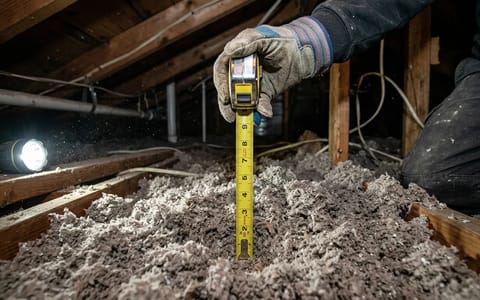
You open your utility bill, wince at the number, and finally decide it is time to check the attic. Poking your head through the access hatch, you find a thin, dusty layer of material barely reaching the tops of the floor joists. You know you need more R-value to stop the drafts and lower your heating and cooling costs. This leads to the immediate next question: Can you put new attic insulation over old, or do you have to haul all that dusty, itchy material out of the house first?
Removing old insulation is a messy, itchy, and surprisingly expensive job, costing between $1,500 and $3,000 as of 2026 if you hire a crew. Fortunately, complete removal is rarely necessary. You can confidently layer new insulation directly on top of the old, provided you follow a few strict rules regarding materials and moisture control.
The Short Answer: When It Is Safe to Layer
As a general rule, you can safely install new attic insulation over old insulation. The existing material, even if it has settled and lost some of its original fluff, still provides valuable thermal resistance (R-value). Throwing it away is literally throwing away money. By leaving the old layer in place, you establish a base level of insulation that you simply build upon to reach the Department of Energy's 2026 recommended R-38 to R-60, depending on your climate zone.
I remember the first time I went up into the attic of my 1970s ranch. I expected thick, fluffy fiberglass but instead found flattened, gray cellulose that looked like dirty snow. My first instinct was to rent a heavy-duty vacuum and suck it all out. Thankfully, a seasoned contractor friend stopped me. He explained that as long as the old material is dry and uncontaminated, it serves as a perfectly good foundation.
3 Signs You Must Remove the Old Insulation First
While layering is the standard approach, specific scenarios exist where leaving the old material in place will cause severe damage to your home or your health. Before buying a single roll of new fiberglass, inspect your attic for these three dealbreakers.
1. Water Damage and Mold
Insulation that has been wet is permanently compromised. Even if a past roof leak has been repaired and the material feels dry now, water compresses the air pockets inside fiberglass and cellulose, destroying its ability to insulate. Worse, old water stains are a prime breeding ground for mold. Covering moldy insulation with a fresh layer just traps the spores and moisture against your ceiling drywall. If you see dark, crusty patches or smell a heavy musty odor, the affected sections must be bagged and removed.
2. Severe Pest Infestations
Attics are warm, quiet, and isolated, making them the perfect real estate for mice, rats, bats, and squirrels. A few old mouse droppings from a decade ago might not require a full tear-out, but heavily soiled insulation is a biological hazard. Rodent urine and feces carry diseases like Hantavirus and leptospirosis. If the existing insulation is matted down with animal waste, smells of ammonia, or contains visible nests and carcasses, layering over it will not solve the odor or the health risk. Complete removal, sanitization, and air sealing are required.
3. The Asbestos Risk
If your home was built before 1990 and has loose-fill insulation resembling small, grayish-brown or silvery pebbles, stop immediately. This is likely vermiculite. A large percentage of vermiculite insulation installed in the 20th century was sourced from a mine in Libby, Montana, which was contaminated with asbestos.
The Crucial Step: Air Sealing Before You Add Layers
Many homeowners make the mistake of buying dozens of rolls of insulation, dragging them upstairs, and immediately rolling them out. They skip the most important step of any attic upgrade: air sealing.
Adding insulation without air sealing is like wearing a thick wool sweater on a windy day without a windbreaker.
Insulation is designed to stop heat transfer (conduction), but it is terrible at stopping air flow (convection). If you have gaps around your ceiling light fixtures, bathroom exhaust fans, plumbing vent pipes, or the holes where electrical wires pass through the top plates of your walls, conditioned air from your living space will blow right through your brand-new insulation.
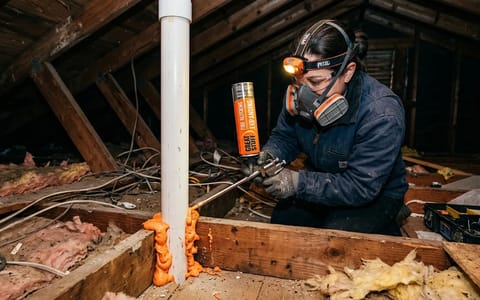
Before you cover the old insulation, push it aside around these penetrations. Use a $6 to $10 can of expanding polyurethane foam (a typical 2026 price for products like Great Stuff) to seal larger gaps around pipes and wire holes. Use high-temperature silicone caulk around the perimeter of chimney flues. Ensure any recessed lighting fixtures are IC-rated (Insulation Contact) before sealing around them or covering them. Spending two hours air sealing will improve your home's efficiency just as much as the insulation itself.
Rules for Mixing Insulation Materials
You do not have to match your new insulation to the old. You can absolutely mix materials, but you must follow the laws of building science regarding moisture.
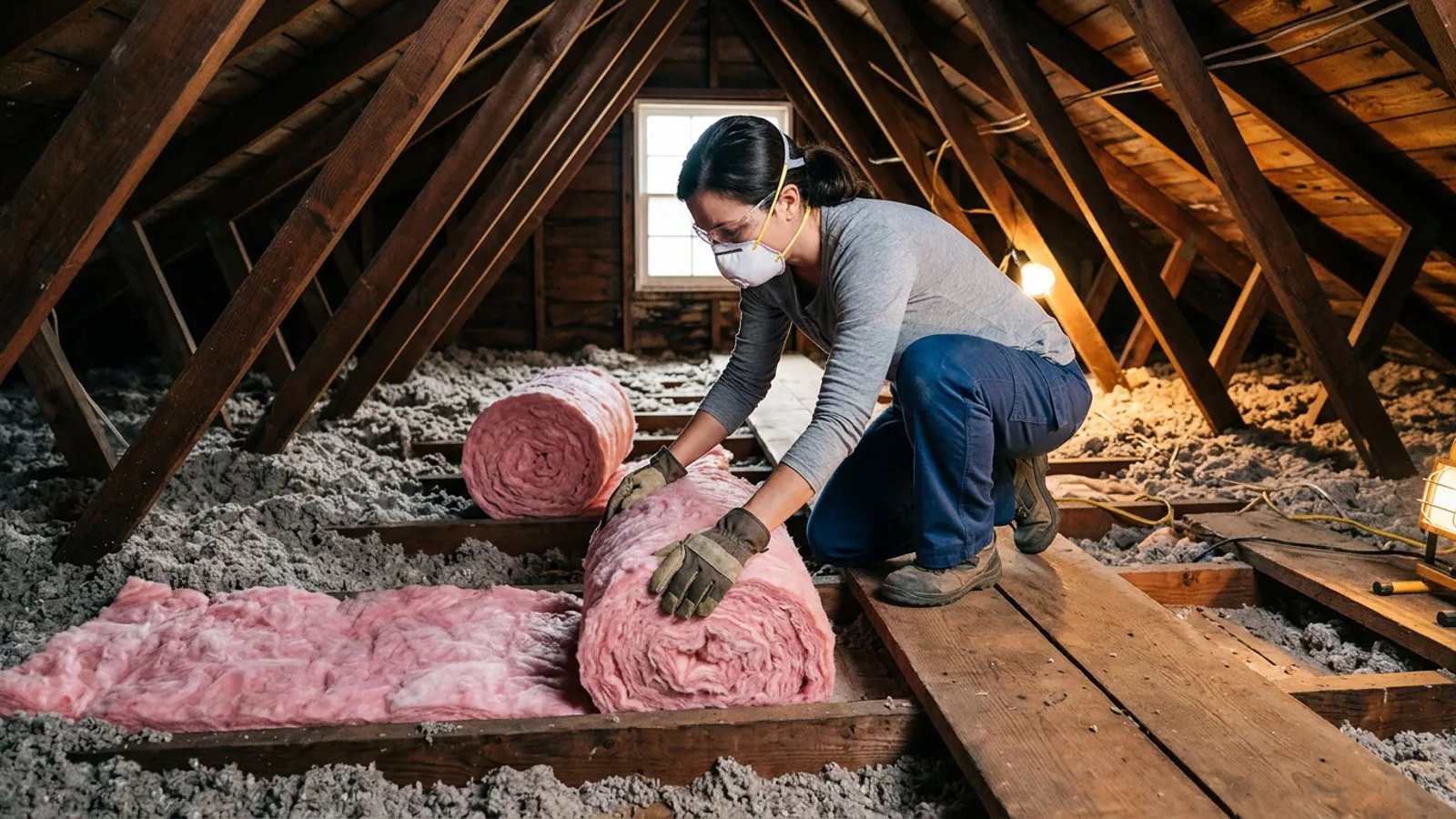
It is perfectly fine to install blown-in cellulose over old fiberglass batts, or lay new fiberglass batts over old blown-in fiberglass. In fact, blowing loose-fill cellulose over old fiberglass batts is an excellent strategy because the heavy cellulose fills in the gaps and air pockets around the edges of the batts.
However, there is one golden rule you can never break: Never install a vapor barrier between layers of insulation.
If you are laying new fiberglass batts over existing insulation, you must buy unfaced batts. Unfaced batts are purely pink or yellow fiberglass with no paper or foil backing. If you install kraft-faced batts (the kind with brown paper on one side) over old insulation, that paper acts as a vapor barrier right in the middle of your attic floor. During the winter, warm, moist air rising from your house will hit that cold paper barrier, condense into liquid water, and rot your ceiling joists.
Take Advantage of 2026 Insulation Tax Credits
Before heading to the home center, remember that upgrading your attic insulation qualifies for federal tax credits. As of 2026, the Energy Efficient Home Improvement Credit allows homeowners to claim 30% of the cost of insulation materials, up to $1,200 per year. This credit applies strictly to the materials if you do the work yourself, making a DIY layering project even more cost-effective. Save your receipts and check for any additional local utility rebates.
Step-by-Step: How to Install New Attic Insulation Over Old
If you have decided to tackle this project yourself using fiberglass batts, the process is straightforward but requires attention to detail. Wear a long-sleeved shirt, pants, gloves, safety goggles, and a high-quality N95 respirator mask to protect your lungs from fiberglass dust.
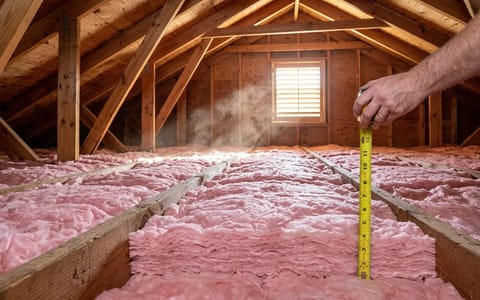
- Measure and prep. Measure your attic square footage to calculate how many rolls of unfaced insulation you need. Bring a utility knife, a tape measure, and a straight edge into the attic.
- Install rafter baffles. Before laying insulation near the edges of the roof, install plastic or foam rafter baffles against the underside of the roof decking. These ensure your new insulation does not block the soffit vents, which are critical for attic ventilation.
- Lay the first run perpendicular. If your old insulation is level with the top of the floor joists, lay your new unfaced batts perpendicular to the joists. This cross-hatching method covers the wooden joists themselves, stopping thermal bridging (heat escaping directly through the wood).
- Butt the edges tightly. Unroll the batts and push the ends tightly against one another. Do not leave any gaps, but do not compress the fiberglass, as compression lowers its R-value.
- Cut around obstacles. When you reach a plumbing stack or an exhaust fan, use your utility knife to cut the batt to fit snugly around the obstacle rather than bunching it up on top.
Upgrading your attic insulation is one of the highest-return home maintenance projects you can undertake. By leaving healthy, dry existing insulation in place and layering over it with unfaced material, you save yourself hours of backbreaking removal work. Take the time to air seal first, lay the new batts cleanly, and enjoy the immediate difference in your home's comfort and your monthly utility bills.