Dryer Taking Two Cycles? Check Your Washer Filter First
Is your dryer taking two cycles to dry a single load? The real culprit might not be the dryer at all. Learn how a clogged washer filter leaves clothes soaking wet.
Full guide Appliances Learn how long your home appliances will last and when to repair or replace them.You pull a load of heavy jeans from the dryer after a full 60-minute run, expecting warm, folded laundry. Instead, you get a dense, damp pile. So, you shut the door and run it again. If you find your dryer taking two cycles to finish a single load, your first instinct is probably to blame the dryer itself. You might meticulously scrub the lint screen, snake the wall vent, or even order a replacement heating element online.
But before you tear your dryer apart and spend money on parts you do not need, you should look at the appliance sitting right next to it. In many cases, a dryer that suddenly struggles to dry clothes is actually the victim of a clogged washing machine.
When a front-load washer cannot drain water efficiently, it sabotages the dryer's job entirely. Fixing this common misdiagnosis requires zero replacement parts, uses basic household items, and takes about 15 minutes.
Why is my dryer taking two cycles to dry?
The secret lies in the washing machine's final spin cycle. Modern front-load washers rely on incredibly high-speed spinning—often reaching 1,200 to 1,400 revolutions per minute—to extract the bulk of the water from your laundry. According to Energy Star guidelines, extracting water mechanically in the washer uses significantly less energy than heating and tumbling that same water out in the dryer.
To achieve those high spin speeds, the washer must rapidly pump water out of the drum. This water passes through a drain pump filter, commonly called a coin trap, which catches physical debris before it can jam the pump impeller. Over months of regular use, this filter fills up with pet hair, tissue paper, lint, bobby pins, and stray coins.
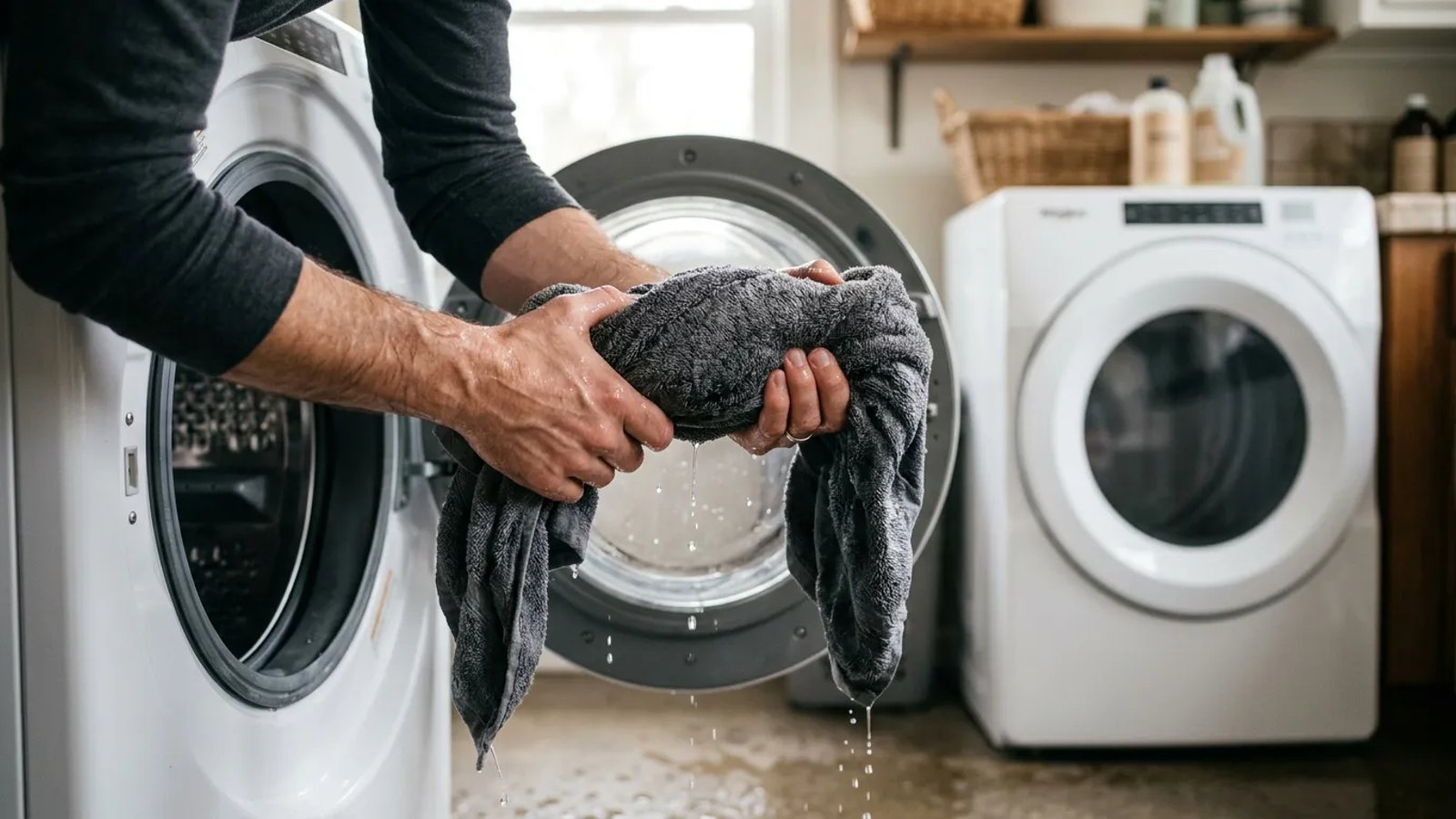
When the filter gets partially clogged, the water drains sluggishly. To protect the motor from burning out under the heavy, unbalanced weight of the retained water, the washing machine's internal computer automatically dials back the final spin speed. The cycle finishes normally, no error codes flash, and the door unlocks. However, your clothes are left soaking wet rather than just damp.
A dryer is designed to remove remaining dampness, not to boil away gallons of standing water.
You transfer that heavy, water-logged laundry to the dryer. The dryer's heating element and blower are completely overwhelmed by the sheer volume of water. As a result, you end up running the machine two or three times just to get the clothes wearable.
Last fall, I spent an entire Saturday snaking my exterior dryer vent and replacing a $15 moisture sensor, only to run a load of towels and find them still damp 90 minutes later. The fix ended up taking 10 minutes and cost absolutely nothing—I just had to clean the washing machine filter. I had completely misdiagnosed the problem because I assumed a drying issue had to be a dryer issue.
Locating the Hidden Washer Drain Pump Filter
To fix this, you need to find the coin trap. If you own a front-load washing machine, the manufacturer intentionally placed this filter in an accessible spot, though it is usually hidden behind a small cosmetic panel so it doesn't ruin the look of the machine.
Look at the bottom front of your washing machine. This access panel is usually located just a few inches above the floor. On the left or right corner, you will typically see a small rectangular or circular plastic door, roughly four inches wide. Some models have a solid kick panel running across the entire bottom that you need to unclip by pressing down on the top edge with a stiff putty knife.
If you have a top-load washing machine, be aware that most do not have an accessible pump filter. They rely on a self-cleaning pump mechanism. If a top-loader is leaving clothes soaking wet, you are more likely dealing with a stretched drive belt, a failing lid switch that interrupts the spin cycle, or a clogged main drain hose behind the unit.
How to Drain and Clean the Washer Filter
Opening the filter housing without preparation is a fast way to flood your laundry room floor. Even if the washer drum looks completely empty, the pump housing holds roughly a quart of residual water. Here is how to handle the job cleanly and safely.
- Gather your supplies. You will need a shallow baking dish or paint tray, a few old towels, and possibly a pair of pliers if the cap is stuck.
- Open the access door. Pop open the small plastic door at the bottom of the washer to reveal the circular filter cap and a small black rubber emergency drain hose.
- Drain the residual water. Pull the rubber hose out slightly, remove its plug, and let the trapped water drain into your shallow dish.
- Unscrew the filter cap. Once the water stops flowing, replace the hose plug and turn the main circular filter cap counterclockwise to pull it out.
- Remove the debris. Pull out any lint, hair, coins, or sludge from the plastic filter cage and rinse it thoroughly under a sink faucet.
- Check the pump housing. Shine a flashlight into the hole where the filter sits and ensure nothing is wrapped around the pump impeller blades at the back.
- Reinstall the filter. Slide the clean filter back in, turn it clockwise until it locks tightly, and secure the emergency drain hose.
Once everything is tightened down, run a quick "Rinse and Spin" cycle with no clothes in the drum just to ensure the filter cap is not leaking onto the floor.
The True Cost of Ignoring Wet Clothes
Forcing your dryer to run multiple cycles does more than just waste your Saturday afternoon. It puts a massive strain on your home's energy consumption. A standard electric dryer uses between 2,000 and 6,000 watts of power while running. Running it for an extra hour for every single load of laundry can easily add $15 to $30 to your monthly electricity bill.
Beyond the utility bill, running the dryer twice as long significantly shortens the lifespan of the appliance. The heating element stays glowing hot for hours on end, increasing the risk of it burning out entirely. The drive belt stretches, the drum rollers wear down faster, and the thermal fuse is pushed closer to its breaking point. A 15-minute filter cleaning protects hundreds of dollars in appliance parts.
What Else Could Cause Slow Drying?
If you clean the washing machine filter, run a test load, and find the clothes are spinning out perfectly but the dryer is still taking multiple cycles, the issue has officially moved back to the dryer. There are a few quick secondary checks you should perform.
First, inspect the dryer vent hose. A crushed flexible foil hose behind the dryer restricts airflow, trapping moist air inside the drum. Pull the dryer away from the wall and ensure the hose has a smooth, unkinked path to the wall duct.
Next, check the exterior wall cap. Go outside while the dryer is running and put your hand near the vent hood. You should feel a strong, steady blast of warm air. If the air feels weak, lint has likely built up inside the wall duct. You will need a rotary vent cleaning brush kit—which costs about $20 at a hardware store—to clear the line from the inside out.
Finally, wipe down the moisture sensors. These are two small curved metal bars located just inside the dryer door. If you use dryer sheets, a thin layer of invisible waxy residue coats these sensors over time. This wax tricks the machine into thinking the clothes are dry and shuts the cycle off prematurely. Wipe them down with a cotton ball dipped in rubbing alcohol.
In my experience, appliance maintenance often requires looking beyond the immediate symptom. By checking your washing machine's drain pump filter every three to six months, you allow the washer to spin at full capacity. This simple habit keeps your clothes from going into the dryer soaking wet, cutting your drying time in half and keeping your utility bills exactly where they belong.
- Always check the weight of your clothes coming out of the washer; if they feel heavier than normal, the washer isn't spinning fast enough.
- Front-load washers have a hidden drain pump filter (coin trap) usually located at the bottom front corner.
- Drain the residual water using the small emergency hose before unscrewing the main filter to prevent a laundry room flood.
- Cleaning this filter every 3 to 6 months saves money on electricity and extends the life of both appliances.