What is a compressor?
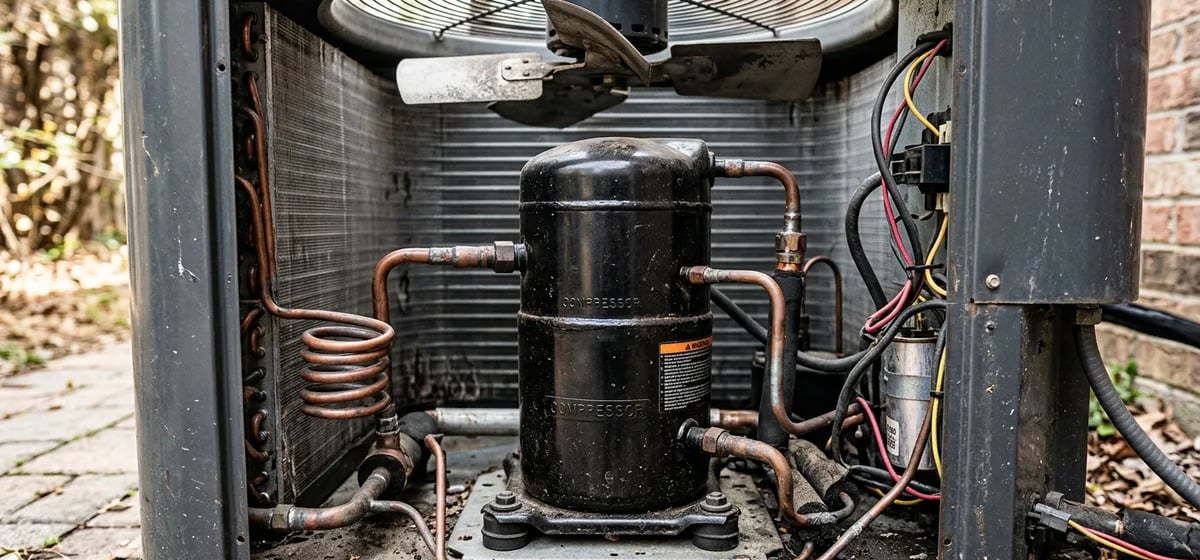
The compressor is the heart of your air conditioning system. It's a heavy, powerful motor located inside the big metal box outside your house. The word comes from the Latin word compressus, which means to press together. In the 19th century, engineers built the first mechanical refrigeration compressors to squeeze gas into a liquid state. Today, the compressor in your yard does the exact same job.
Think of it like a bicycle pump. When you push down on a bicycle pump, the air gets squeezed and heats up. The compressor does this with a special chemical called refrigerant. It takes low pressure gas from inside your house and packs it tightly until it becomes a high pressure, hot gas. This hot gas then flows into the coils outside, where a big fan blows the heat away into your yard. This process pushes the heat out of your house so you stay cool inside.
Why it matters to you
Without a working compressor, your air conditioner is just a giant fan. It'll blow air out of your vents, but that air will be warm. The heat has nowhere to go. Your house gets hot, and you feel sticky and uncomfortable.
The compressor is the most important and most expensive part of your cooling system. It works very hard during the hot summer months. Because it sits outside, it faces rain, dirt, and extreme temperatures. Taking care of it helps your whole HVAC & Climate Control system last longer and keeps your energy bills low.
Signs your compressor is failing
Compressors usually give you a few warning signs before they die completely. You want to catch these issues early. If you ignore them, a failing compressor can ruin other parts of your air conditioner. Look out for these common clues:
- Loud noises: You might hear grinding, clanking, or screeching sounds coming from the outdoor unit.
- Warm air: Your vents blow warm or room temperature air even when the thermostat is set to cool.
- Hard starts: The outside unit shakes violently or struggles to turn on when the cooling cycle begins.
- Tripped breakers: Your air conditioner constantly trips the electrical breaker in your main panel.
What it costs to replace
Replacing a compressor is a major repair. It's not a job you can do yourself because it involves high voltage and dangerous chemicals. You must hire a licensed professional. You can read more about hiring pros in our guide to Hiring Contractors & What Things Cost.
If your compressor breaks, you usually have two choices. You can replace just the compressor, or you can replace the entire outside unit. Sometimes it makes more sense to buy a whole new unit if your system is more than 10 years old. If your air conditioner uses an older type of refrigerant called R22, you'll likely have to replace the entire system. The government phased out R22 because it hurts the environment, making it incredibly expensive and hard to find.
| Repair Type | Estimated Cost |
|---|---|
| Replace compressor only (under warranty) | 600 to 1,200 dollars for labor |
| Replace compressor only (no warranty) | 1,500 to 2,500 dollars |
| Replace entire outdoor unit | 3,000 to 6,000 dollars |
Keep in mind that these prices are just estimates. Costs vary a lot depending on where you live, the brand of your equipment, and the size of your house. Always get at least three quotes from different companies before you make a decision.
How to keep your compressor healthy
You can do a few simple things to protect this expensive motor. First, keep the area around your outdoor unit clean. Trim back bushes, pull weeds, and clear away dead leaves. The compressor needs plenty of airflow to keep itself cool. You should leave at least 2 feet of empty space on all sides of the metal box.
Second, change your indoor air filters regularly. A dirty filter blocks airflow inside your house. This makes the compressor outside work twice as hard to cool your home. Over time, this extra strain will burn out the motor.
Finally, schedule a tune up with a professional once a year. A technician will check the electrical connections and measure the refrigerant levels. If the system is low on refrigerant, the compressor will overheat and fail. Catching a small leak early can save you thousands of dollars.