How Often to Clean Gutters With Guards (And Stop Overflows)
Think gutter guards mean you'll never climb a ladder again? Learn why debris still causes overflows and exactly how to maintain your protected gutters this spring.
Full guide Roofing Learn how long shingles last, how to spot leaks early, and how to decide between a quick repair and a full roof replacement.You paid thousands of dollars for that premium micro-mesh system. The salesperson looked you in the eye and promised you would never have to climb a ladder again. Yet here we are in the middle of spring, a heavy rainstorm rolls through, and water is cascading over the edge of your roof like a miniature waterfall. If you are wondering how to clean gutters with guards—and why you even have to in the first place—you are not alone.
The idea of a truly zero-maintenance gutter system is one of the most pervasive myths in home improvement. Guards are excellent filters, but like the lint trap in your dryer or the air filter in your HVAC system, they eventually need to be cleared. Ignoring them doesn't just lead to annoying drips over your front porch; it can cause severe, hidden water damage to your home's structural wood and foundation.
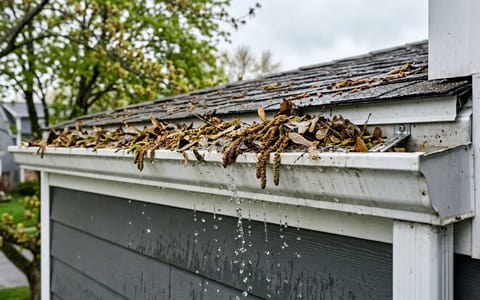
I remember the first time I installed micro-mesh guards on my own house. I smugly threw away my plastic gutter scoop, thinking I had beaten the system. Two springs later, an army of oak tassels formed a perfect, water-repellent blanket over the mesh, and I was right back on the ladder. Let's look at why your protected gutters are overflowing, how to spot hidden damage, and the safest way to get the water flowing again.
The 'Maintenance-Free' Myth and the Physics of Overflow
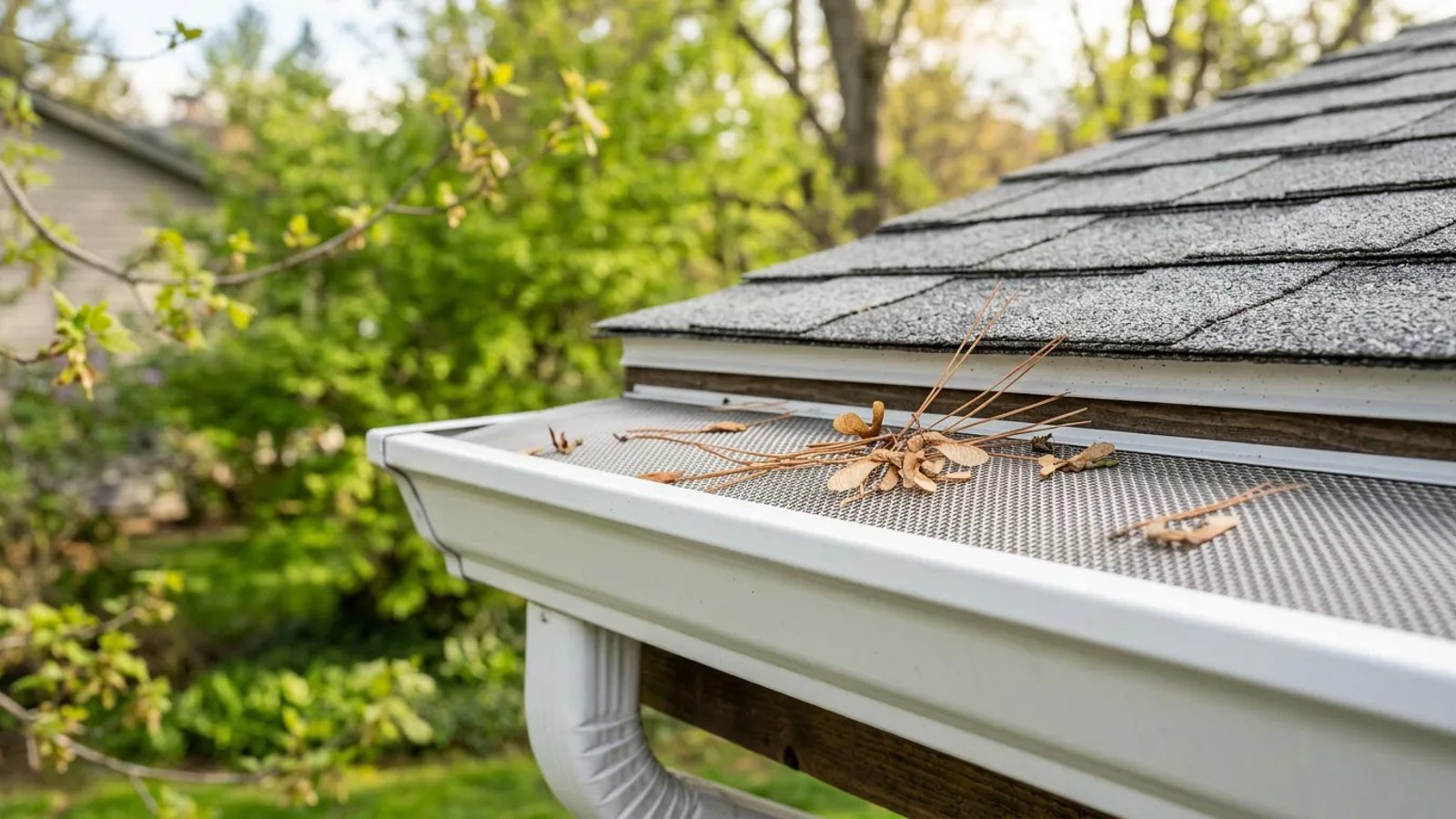
To understand why you still need to clean gutters with guards, you have to understand how they work. Most modern systems rely on surface tension. Water flows down your roof, hits the guard, clings to the metal or mesh, and drops into the trough below. Large leaves and twigs simply blow off the edge. In a perfect, sterile laboratory environment, this works flawlessly.
However, your roof is not a laboratory. It is a battleground of organic material. Mid-spring brings a relentless assault of oak tassels, maple seeds (helicopters), and sticky pollen. Late fall brings pine needles that are perfectly shaped to spear right through perforated aluminum. Meanwhile, your asphalt shingles are constantly shedding fine, sandy grit.
When this smaller debris lands on your gutter guards, it begins to decompose. Pollen and dust mix with morning dew to form a sticky paste. This paste clogs the microscopic holes in the mesh. Once those holes are clogged, the surface tension is broken. Rainwater no longer drops into the trough; instead, it bridges right over the clogged mesh and shoots straight off the edge of your roof. This phenomenon is known as "matting," and it is the number one reason homeowners experience overflows with guarded systems.
Even if the top of the guard looks perfectly clean, fine shingle grit and dirt can wash through the holes over time. Once inside the dark, damp gutter trough, this grit settles at the bottom, creating a heavy sludge. Eventually, this sludge washes toward the downspout, creating a hidden blockage that backs up the entire system.
Signs of Hidden Clogs and Fascia Damage
Water spilling over the front of your gutters is obvious and irritating, but it is actually the lesser of two evils. The real danger of neglected gutter guards is water backing up behind the system.
When a gutter is overwhelmed, water seeks the path of least resistance. Often, that path is backward, sneaking between the back of the gutter and the wooden fascia board it is attached to. The fascia board is the long, straight board that runs along the lower edge of your roof. When water gets trapped behind the gutter, it begins to rot this wood. Worse, it can wick upward under your roof shingles, rotting the edge of your roof deck.
Another clear sign of trouble is "tiger striping." These are dark, vertical dirt streaks running down the outside face of your gutters. Tiger striping occurs when dirty water consistently overflows the front lip of the gutter and dries, leaving a stain. If you have guards installed but your gutters look like they belong on a zebra, you have a matting issue on top of the mesh.
Finally, inspect your foundation. The entire purpose of a gutter system is to carry water away from your home's base. If you notice pooling water, washed-out mulch, or deep trenches in the soil directly beneath your roofline, your guards are failing to capture the runoff. Over time, this pooling water can lead to basement flooding, cracked foundations, and expensive structural repairs.
How Often Do You Actually Need to Clean Them?
The frequency of your maintenance schedule depends almost entirely on the environment immediately surrounding your home. While you may not need to scoop handfuls of rotting leaves every single autumn, you still need a predictable inspection schedule.
For homes heavily shaded by trees—especially pines, oaks, and sweetgums—you should plan to inspect and sweep your guards twice a year. Mid-spring is critical for clearing out the sticky pollen, seed pods, and blossoms that fall as trees wake up. Late fall is necessary to brush away the stubborn pine needles that refuse to blow off in the wind.
If your home has moderate tree coverage, a single annual inspection in late fall is usually sufficient. You are primarily checking for localized matting and ensuring the downspouts are running clear.
Even if you live in a brand-new subdivision with zero mature trees, you are not entirely off the hook. You should still perform a maintenance check every two to three years. The goal here is not to remove leaves, but to flush out the heavy shingle grit that has slowly accumulated in the bottom of the trough.
How to Clean Gutters With Guards (Safely and Effectively)
Cleaning gutters with guards is fundamentally different from cleaning open gutters. You don't need a scoop, and you rarely need to stick your hands into rotting sludge. Instead, the process is about brushing the surface and flushing the interior.
Gutter guards don't eliminate maintenance; they just change the type of maintenance you have to do.
Before you begin, you need the right tools. Leave the heavy-duty scrapers and metal tools in the garage. You will need a sturdy extension ladder, a ladder standoff stabilizer, a soft-bristle brush on a telescoping pole (a car wash brush works perfectly), and a standard garden hose with an adjustable spray nozzle.
- Set up your ladder safely. Ensure your ladder is on firm, level ground. Attach the standoff stabilizer so the weight of the ladder rests on the roof shingles, not the fragile gutter face. Maintain three points of contact while climbing.
- Dry brush the surface. Using your soft-bristle brush on the telescoping pole, gently sweep the top of the gutter guards. Work in sweeping motions to push matted pine needles, oak tassels, and dirt clumps off the edge. Do not scrub aggressively, as this can tear delicate micro-mesh screens.
- Flush the mesh. Once the heavy debris is brushed away, take your garden hose up the ladder. Set the nozzle to a concentrated, but not forceful, stream. Spray directly down into the mesh to clear out the microscopic pollen and dust clogging the pores. You should see the water easily dropping into the trough rather than bouncing off.
- Clear the downspouts. Move to the end of the gutter run where the downspout is located. Spray water generously into the guard above the downspout opening. Have a helper stand on the ground and watch the bottom of the downspout. The water should flow out quickly and forcefully. If it trickles, you have a sludge blockage inside the downspout that needs to be flushed.
If you find a stubborn clog inside the downspout, you may need to temporarily remove the end-cap or the specific section of the guard covering the drop outlet. Most guards are held in place by small zip screws. Carefully back out the screws, lift the guard, and use a plumber's snake or a strong blast from the hose to dislodge the internal clog. Always replace the guard and screws immediately.
The Danger of Pressure Washers and Voided Warranties
When faced with a dirty, clogged gutter guard, it is incredibly tempting to drag out the gas-powered pressure washer. It seems like the fastest way to blast away the grime. However, using a pressure washer is one of the worst mistakes you can make.
First, a pressure washer running at 2,500 to 3,000 PSI is powerful enough to warp thin aluminum frames and instantly shred stainless steel micro-mesh. Even if the mesh survives, the high-pressure stream will force shingle grit and dirt deeper into the microscopic pores, permanently clogging them.
Secondly, the extreme force of the water can easily blow the guards completely off their mounting tracks or rip the securing screws out of the fascia board. You will spend more time repairing the damage than you would have spent gently brushing them.
When to Call a Professional
While brushing and flushing is a relatively straightforward weekend project, it is not for everyone. Ladder work is inherently dangerous, and adding water to the mix makes things slippery and unpredictable.
Additionally, if you have flushed the system but water is still refusing to drain down the downspouts, you likely have a severe internal sludge buildup. In this case, entire sections of the guard may need to be unscrewed and removed to manually scoop out the trough. A professional can handle this dismantling and reassembly without bending the guards out of shape.
Maintaining gutter guards is a critical part of your home's exterior health. By accepting that "maintenance-free" really means "low-maintenance," and by dedicating just an hour or two each spring to a gentle brush and flush, you can keep the water flowing exactly where it belongs. Keeping the surface clean ensures the surface tension works, protecting your fascia, your roof deck, and ultimately, the foundation that holds your home together.