How to Handle Baby Proofing a Rental Without Damage
Keep your crawling infant safe without sacrificing your security deposit. Discover damage-free, renter-friendly strategies for baby-proofing every room in your apartment.
Welcoming a new baby changes your lifestyle completely. Once they start crawling, your apartment suddenly looks like an obstacle course of hazards. Renting parents face a unique challenge: they need to keep their infant safe, but their lease strictly forbids drilling into cabinets, walls, or doors. Figuring out how to baby proof a rental can feel like a tightrope walk between essential infant safety and the desire to get your full security deposit back.
Fortunately, modern child-safety products have evolved far beyond the permanent, screw-in latches of the past. Today, you can secure entirely hazardous zones using heavy-duty adhesives, tension mounts, and clever friction devices. You can protect your child from chemicals, sharp edges, and pinch points without leaving a single permanent mark on your landlord's property. This guide breaks down exactly how to secure each room of your apartment while keeping your lease agreement completely intact.
The Rental Dilemma: Safety vs. The Security Deposit
Every renter knows the anxiety of the move-out inspection. Landlords expect the property to be returned in its original condition, minus standard wear and tear. Traditional baby proofing involved taking a power drill to custom oak kitchen cabinets, driving screws into hollow-core doors, and permanently altering door frames. Doing that today would almost certainly cost you hundreds of dollars in security deposit deductions.
However, an infant's safety cannot be compromised. A crawling baby can open a lower cabinet and access toxic cleaning supplies in seconds. A toddler pulling themselves up on a bookshelf can cause a fatal tip-over event before you can cross the room. You have to secure the environment.
Your child's safety is non-negotiable, but a drill-happy weekend doesn't have to be the answer.
The strategy for renting parents is to rely on high-strength, temporary solutions for 95 percent of the apartment, and learn basic, invisible repair techniques for the 5 percent of hazards that absolutely require structural anchoring. By choosing the right products, you can maintain a pristine apartment and total peace of mind.
Kitchen & Bath: Damage-Free Cabinet Solutions
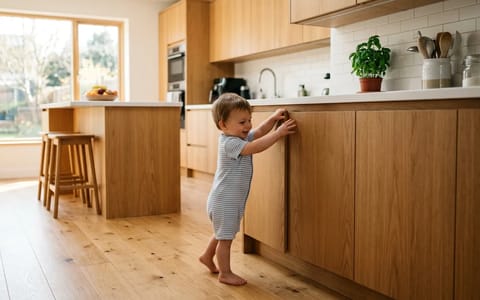
The kitchen and bathroom house the most dangerous items in your home: dishwasher pods, bleach, medications, and sharp utensils. Historically, parents installed plastic hook latches that required driving two to four screws into the inside of every cabinet door and frame. In a rental kitchen with twenty doors, that is a recipe for a ruined deposit.
The modern, renter-friendly solution is the adhesive magnetic cabinet lock. These locks mount entirely to the inside of your cabinets using heavy-duty double-sided tape (usually 3M VHB). The cabinet remains completely locked from the outside. To open it, you simply wave a magnetic key over the face of the wood, which pulls the internal latch down and releases the door.
As of 2026, a pack of eight magnetic locks typically costs between $15 and $30 at major hardware stores. Because the lock sits inside, it does not ruin the aesthetic of your kitchen, and there is no temptation for a toddler to play with a visible plastic latch.
When it is time to move out, do not try to rip the locks off with brute force. Doing so can pull the veneer or paint right off the cabinet interior. Instead, aim a hair dryer on a high heat setting at the lock for 60 seconds. Take a piece of dental floss, pull it taut, and slide it behind the plastic base, sawing back and forth. The lock will detach cleanly, and you can roll any leftover adhesive off the wood with your thumb.
Furniture Anchoring: The One Time You Must Drill
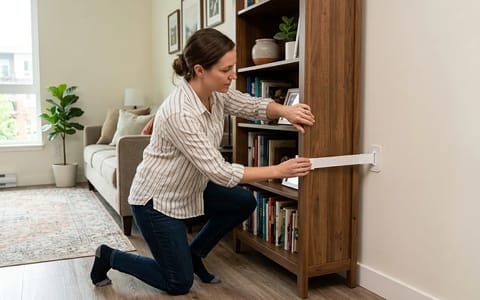
We need to talk about the one exception to the "no drilling" rule. Dressers, bookshelves, and TV stands pose a severe tip-over risk. A 40-pound toddler pulling on an open dresser drawer shifts the center of gravity forward, easily bringing a 150-pound piece of furniture crashing down.
Do not trust adhesive furniture anchors. They degrade over time and cannot withstand the dynamic, jerking force of a falling dresser. You must use metal anti-tip straps or brackets screwed directly into a wall stud. Yes, this means making a hole in your landlord's drywall. Accept this fact, because a 1/4-inch hole is incredibly easy to patch, and your child's life is worth far more than a lease technicality.
When you are preparing to move out, patching these small anchor holes takes less than 30 minutes of active work. Here is how to make the wall look like new:
- Clean the hole. Use the handle of a screwdriver to gently press the frayed paper edges of the drywall hole inward, so nothing protrudes past the flat surface of the wall.
- Apply spackle. Scoop a small amount of lightweight, non-shrinking spackle onto a putty knife. Press it firmly into the hole, then scrape the blade flat across the wall to remove the excess.
- Let it dry. Wait 1-2 hours for the spackle to dry completely. It should feel hard to the touch.
- Sand it smooth. Take a small piece of 120-grit sandpaper and lightly rub the patched area in circular motions until it is perfectly flush with the surrounding wall.
- Touch up the paint. Dab a small amount of matching paint over the patch using a foam brush or a rolled-up paper towel to mimic the wall's texture.
New Window Blind Rules: Securing Older Cords
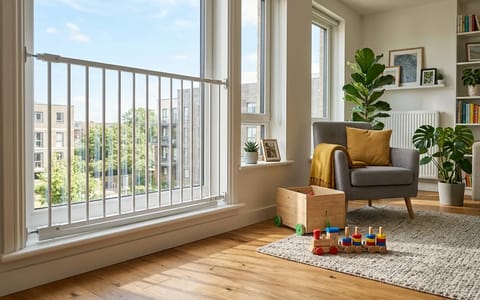
While recent safety regulations strictly require new window coverings to be cordless, older rental units often still feature grandfathered blinds with long pull cords. These present a severe strangulation risk for infants and toddlers. Since you cannot rip out your landlord's property, you must secure the cords. Purchase inexpensive clear cord cleats that adhere to the wall with removable damage-free strips. This allows you to wrap the cords tightly out of reach without leaving a permanent mark on the window frame.
Sharp Edges & Doors: Residue-Free Protection
Coffee tables, TV consoles, and low windowsills have sharp corners at the exact height of a wobbly toddler's forehead. Foam edge bumpers and clear silicone corner guards are essential. Like the cabinet locks, these rely on double-sided tape.
To protect your furniture and baseboards, clean the surface with rubbing alcohol before applying the guards. Dirt and furniture polish prevent the adhesive from sticking, which means your baby will pull the guard off within a day. When moving out, use the same hair-dryer-and-dental-floss trick mentioned earlier to remove the guards without stripping the finish off your coffee table.
Doors present another major hazard: pinched fingers. Heavy solid-core apartment doors can cause severe injuries if they slam shut. Rather than installing permanent door stops or floor wedges that damage the flooring, use simple foam pinch guards. These are thick, C-shaped pieces of high-density foam that slide over the top or side edge of the door. They physically prevent the door from closing entirely, leaving a safe two-inch gap. They cost about $10 to $15 for a multi-pack in 2026, require zero installation, and leave zero residue.
Baby Gates: Securing Doorways Without Scuffs
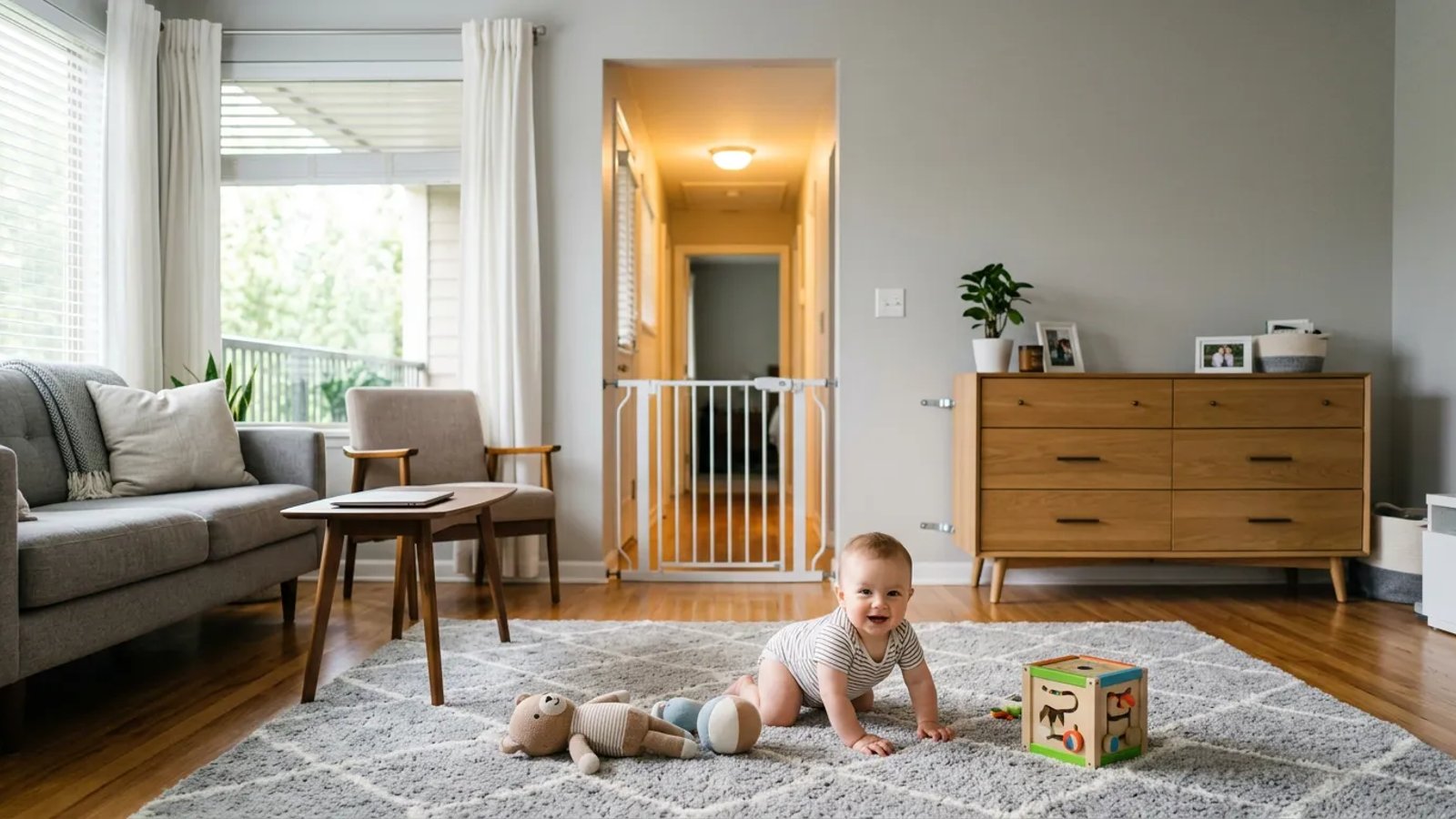
Keeping your baby contained to safe areas usually requires baby gates. In a home you own, you might drill hardware-mounted gates into the door frames for maximum stability. In a rental, pressure-mounted gates are your best friend.
Pressure-mounted gates use threaded tension rods with rubber pads that press outward against the door frame or walls. They are exceptionally sturdy when installed correctly and require no tools. However, the immense pressure required to keep the gate secure can sometimes cause the rubber pads to bond to the wall paint, or the tension can dent the drywall.
To prevent this, purchase a set of silicone "wall cups" or "wall nannies." These are flat, rubberized discs that sit between the gate's tension rod and the wall. They distribute the pressure over a larger surface area, preventing dents, and the soft silicone will not scuff or peel your landlord's paint. They cost around $12 to $15 at 2026 prices and are a massive deposit-saver.
Protecting your child in a rental apartment does not require sacrificing your security deposit or living in constant fear of property damage. By utilizing high-quality adhesives, tension-mounted barriers, and accepting that a few tiny drywall holes are a standard part of responsible parenting, you can create a secure environment. Take a weekend to walk through your apartment at a crawler's eye level, apply these renter-friendly solutions, and enjoy the peace of mind that comes with a truly safe home.