What an Escalation Clause Is
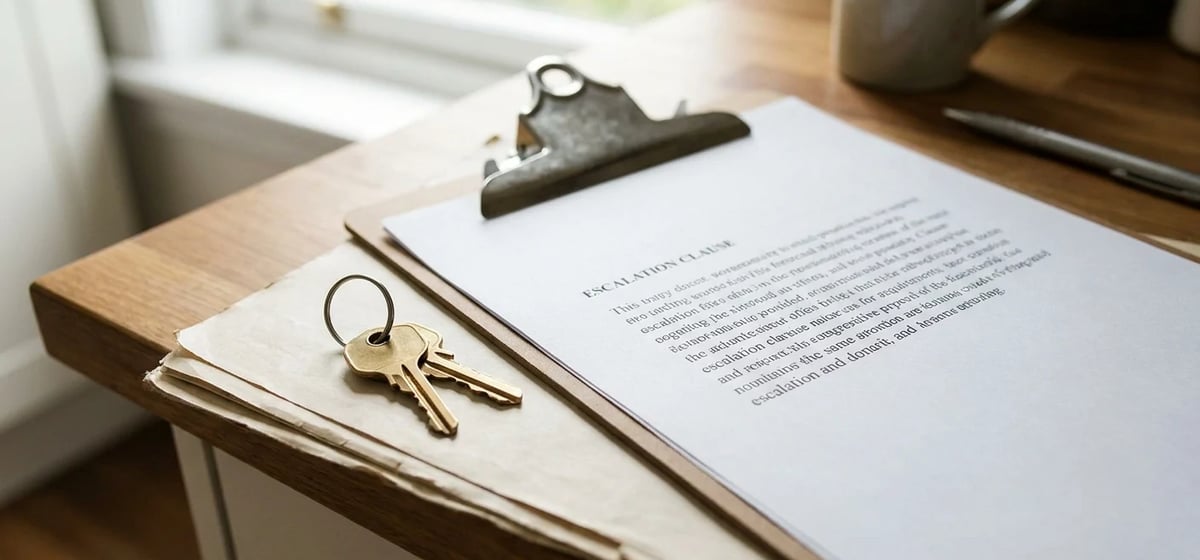
An escalation clause is a special rule you add to your real estate offer. It tells the seller you are willing to pay a starting price, but you will automatically increase your bid if someone else offers more. This keeps you in the game during a bidding war without forcing you to offer your highest price right away. Real estate agents adapted this concept from commercial construction contracts. Builders originally used it to cover rising material costs. Today, it's a very popular tool for regular buyers in hot housing markets.
How the Clause Works
When you're Buying a Home, you might face stiff competition. Instead of guessing how much other people will offer, an escalation clause does the math for you. It relies on three main parts to protect you and keep your offer competitive.
- Base Offer: This is the starting price you want to pay for the house.
- Escalation Step: This is the exact dollar amount you will use to beat a competing offer. Usually, buyers choose a step amount of 1,000 to 3,000 dollars.
- Price Cap: This is the absolute maximum amount you are willing to spend. Once the bidding passes this number, you drop out.
If another buyer submits a valid written offer that is higher than your base offer, your clause activates. Your price automatically increases to beat their offer by your chosen step amount.
Understanding the Math
Seeing the numbers in action makes this strategy much easier to understand. Imagine you find a house listed for 300,000 dollars. You make a base offer of 300,000 dollars with a 2,000 dollar step and a maximum cap of 325,000 dollars. Here's how your final price changes depending on what other buyers do.
| Competing Offer | Your Escalated Offer | Result |
|---|---|---|
| No other offers | 300,000 dollars | You win at your base price. |
| 310,000 dollars | 312,000 dollars | You win and stay under your cap. |
| 324,000 dollars | 325,000 dollars | You hit your cap but still win. |
| 330,000 dollars | 325,000 dollars | You lose the house. |
If someone offers 324,000 dollars, your normal 2,000 dollar step would push you to 326,000 dollars. However, your cap stops you at 325,000 dollars. You still beat the other buyer by 1,000 dollars in this scenario.
Why You Might Want to Use One
The biggest benefit is peace of mind. You don't have to overpay if there are no other offers. If you bid your maximum of 325,000 dollars right away and nobody else makes an offer, you just spent 25,000 dollars more than you needed to. The clause protects your budget while keeping your offer strong. It also shows the seller you are serious and ready to compete.
You also don't have to worry about shady tactics. Sellers must show you proof of a real, written competing offer before they can trigger your escalation clause. They can't just invent a fake buyer to drive up your purchase price.
What to Watch Out For
While this strategy is helpful, it isn't perfect. Some sellers refuse to accept offers with escalation clauses. They prefer buyers to submit their highest and best offer from the start. By setting a cap, you also show the seller exactly how much you can afford. They might just reject your clause and send a counteroffer asking for your maximum price anyway.
You also need to worry about the bank. Lenders base their Mortgages on the appraised value of the home, not the price you agreed to pay. If your clause pushes your purchase price very high, you might run into an appraisal gap. For example, if the home appraises for 310,000 dollars but your escalation clause pushed your price to 325,000 dollars, the bank won't lend you that extra money. You will have to pay that 15,000 dollar difference out of your own pocket in cash.
Always talk to your real estate agent to see if this tactic makes sense for your specific situation. Market conditions range widely, and what works in one neighborhood might fail in another. Make sure you have extra cash saved up just in case your offer goes all the way to your maximum limit.