How to Prevent Hard Water Stains on Your Shower Door
Tired of scrubbing cloudy glass? Learn how to permanently prevent hard water stains on your shower door using hydrophobic sealants and a 15-second daily routine.
Full guide Plumbing Learn how your home plumbing works and how to stop leaks before they ruin your house.Anyone who has spent a Saturday afternoon scrubbing calcified water spots off a glass shower door knows the frustration. You finally get the glass crystal clear, only to watch it turn cloudy after just three showers. While removing these stubborn mineral deposits is a brutal chore, preventing them is surprisingly simple.
To truly prevent hard water stains shower door maintenance must shift from reactive scrubbing to proactive protection. By treating the glass so water cannot stick to it, you can eliminate hours of future cleaning and protect your bathroom's aesthetic.
Why Do Hard Water Spots Form (and Can They Ruin Glass)?
Water contains dissolved minerals, primarily calcium and magnesium. When water droplets dry on your shower glass, the water evaporates, but the heavy minerals, sometimes measuring just a few microns in size, stay behind. Over time, these microscopic deposits build up into a cloudy, crusty layer that bonds tightly to the surface.
The primary culprits are calcium carbonate and magnesium carbonate, which are dissolved in varying concentrations in most municipal and well water supplies. When these minerals are left behind, they don't just sit on the surface; they actually begin to bond with the microscopic pores of the glass. This bond strengthens over time, making the deposits increasingly difficult to remove with simple scrubbing.
According to the USGS Water Science School, nearly 85% of American homes have hard water. That means almost everyone with a glass shower enclosure is fighting this exact battle.
The severity of hard water issues directly correlates with the concentration of these dissolved minerals, often measured in grains per gallon (GPG). Water with a GPG of 7 or higher is generally considered hard, and many regions experience levels significantly higher. This high mineral content means that every shower contributes to the gradual buildup, making diligent prevention even more critical.
The real danger of ignoring these spots is a process called etching. If left sitting for months, alkaline minerals will chemically react with the glass, creating microscopic pits. Once glass is etched, it is permanently ruined. No amount of scrubbing or acid washing will make it clear again, because the glass itself has been eaten away.
Beyond the unsightly appearance, this etching significantly diminishes the clarity and aesthetic appeal of your shower enclosure. It can also make the glass more difficult to clean in the future, as the roughened surface provides more anchor points for new mineral deposits and soap scum to cling to. Early intervention and consistent maintenance are key to preserving the integrity and beauty of your glass.
How to Prevent Hard Water Stains on Your Shower Door: A Comprehensive Guide
To stop the cycle, you need to change how water interacts with the glass. The goal is to make the surface so slick that water simply cannot grip it.
The principle behind this transformation is simple: create a barrier. By applying a hydrophobic (water-repelling) coating, you effectively reduce the surface tension that allows water droplets to flatten out and cling to the glass. Instead, water beads up, much like rain on a freshly waxed car, and is encouraged to roll off, taking the dissolved minerals with it before they can dry and deposit.
When I tested a basic automotive rain repellent on my own master bathroom shower door last year, the results were immediate. Instead of flattening out and clinging to the glass, the water beaded up into tight spheres and rolled straight down the drain. It cut my bathroom cleaning time in half.
Step 1: Apply a Hydrophobic Glass Sealant
You can buy dedicated shower door sealants or use an automotive glass treatment like Rain-X. Both cost around $10 to $15 at hardware stores and use similar polymer technology.
While dedicated shower door sealants are formulated specifically for bathroom environments, many automotive products offer comparable performance due to similar chemical compositions. These products typically contain polymers that create an ultra-smooth, non-porous layer on the glass. This layer not only repels water but also makes it harder for soap scum, body oils, and other grime to adhere, simplifying your regular cleaning routine.
- Deep clean the glass. You must start with a perfectly clean surface. Use a commercial hard water stain remover or a 50/50 mix of white vinegar and dish soap to remove existing spots.
- Dry completely. Use a lint-free microfiber cloth to ensure the glass is bone dry. Any residual moisture will ruin the sealant's bond.
- Apply the coating. Spray a small amount of the sealant onto a dry microfiber cloth. Rub it into the glass using overlapping circular motions, making sure to cover every inch.
- Buff out the haze. Let the product dry for 5 to 10 minutes until a light haze forms on the glass. Buff it away with a clean, dry cloth until the door is perfectly transparent.
- Let it cure. Wait at least 12 hours before running the shower to let the polymers fully bond to the glass surface.
When applying, pay close attention to the edges and corners of the glass, as these are often overlooked but still accumulate water. For best results, consider applying a second, thinner coat after the first has fully cured to ensure maximum coverage and durability. This double application can significantly extend the life of your sealant and enhance its water-repelling properties.
Step 2: Daily Habits to Prevent Hard Water Stains
Even the best commercial sealant needs a little help. To keep your glass pristine between sealant applications, you need to adopt two fast daily habits.
These daily practices are the backbone of long-term hard water stain prevention. They work synergistically with your hydrophobic sealant, ensuring that any residual water or minerals are promptly removed before they have a chance to settle and bond with the glass. Consistency is paramount; even a single missed day can allow mineral deposits to begin forming.
Habit 1: The 15-Second Squeegee
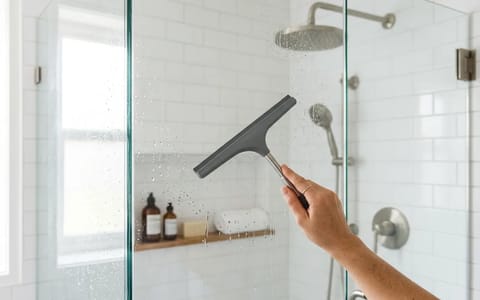
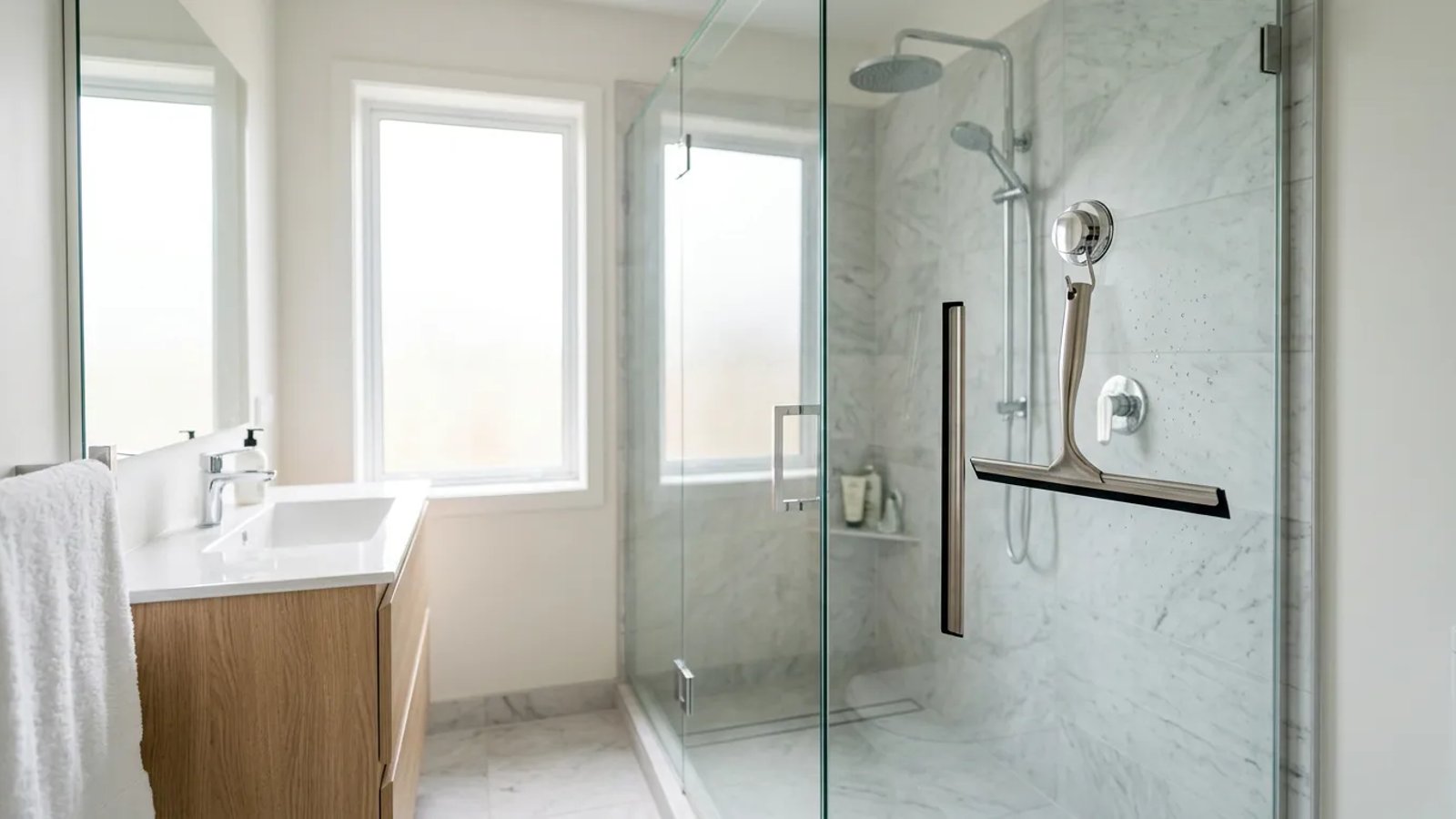
Keep a silicone-blade squeegee hanging inside the shower enclosure. After turning off the water, take 15 seconds to swipe the glass from top to bottom. By physically pushing the water off the glass, you remove the minerals before they have a chance to dry. A silicone blade is vastly superior to hard rubber, as it glides smoother and will not leave black streaks on your tile.
Beyond just mineral removal, squeegeeing also helps to clear away soap scum and body oils, which can otherwise combine with hard water minerals to create a particularly stubborn film. Investing in a high-quality squeegee with a comfortable handle and a durable silicone blade will make this daily task quick and effortless, encouraging consistent use.
Habit 2: DIY Daily Shower Spray
After squeegeeing, lightly mist the door with a daily maintenance spray. You can buy commercial daily sprays, but making your own is incredibly cheap and effective.
Mix 1/2 cup white vinegar, 1/2 cup distilled water, and 1 teaspoon of Dawn dish soap in a spray bottle. The vinegar neutralizes any trace minerals left behind, while the soap breaks down body oils and soap scum. Always use distilled water for this recipe—using tap water just sprays more hard minerals directly back onto your clean glass.
The combination of ingredients in this DIY spray is powerful. White vinegar, being a mild acid, helps to dissolve and neutralize any alkaline mineral residues that might have been left behind. Dawn dish soap acts as a surfactant, breaking down grease, oils, and soap scum, preventing them from clinging to the glass. Using distilled water is crucial because tap water, by definition, contains the very minerals you're trying to prevent, making its use counterproductive.
Understanding Your Home's Water Hardness
Knowing the hardness level of your water is a crucial step in effectively managing and preventing hard water stains. Water hardness is typically measured in grains per gallon (GPG) or milligrams per liter (mg/L). Levels above 7 GPG are generally considered hard, while anything over 10.5 GPG is very hard. You can usually find information about your local water hardness through your municipal water provider’s annual quality report, often available online. Alternatively, inexpensive home test kits are available at hardware stores to give you a quick reading.
If your water tests as moderately or very hard, this knowledge can inform your maintenance strategy. It means you might need to be more diligent with daily squeegeeing, reapply your hydrophobic sealant more frequently, or even consider a whole-home water softener. While a significant investment, a water softener removes minerals from your entire household water supply, offering a comprehensive solution not just for your shower door, but for all appliances and fixtures affected by hard water.
Long-Term Maintenance for Clear Glass
Hydrophobic coatings do not last forever. The friction from water, soap, and your squeegee will eventually wear the polymers down. Depending on how many people use the shower and how hard your water is, you will need to reapply the sealant every three to six months.
Multiple factors influence how long your sealant will last, including the frequency of shower use, the hardness of your water, and the type of cleaning products you use. Harsh abrasive cleaners or strong chemical solvents can prematurely degrade the sealant, so stick to mild, pH-neutral cleaners when necessary. Regularly inspecting the glass for signs of water sheeting instead of beading will give you a clear indication that it's time for reapplication.
You will know it is time for a fresh coat when the water stops forming tight beads and starts sheeting or clinging to the glass again. Simply clean the glass, dry it, and repeat the application process.
Even with regular sealant application and daily habits, an annual deep clean using a gentle, non-abrasive hard water stain remover can help address any minute buildup that might occur over time. This ensures that you're always starting with a perfectly clean canvas before reapplying your protective coating, maximizing its effectiveness and longevity.
A few minutes of prep work and a 15-second daily routine will save you hours of back-breaking scrubbing. Protect the glass, keep the squeegee handy, and enjoy a shower that actually looks clean day after day.
- Clean your shower glass perfectly before applying any sealant, as trapping minerals under the coating will ruin the finish.
- Use a hydrophobic glass sealant or automotive rain repellent every 3 to 6 months to keep water from gripping the glass.
- Keep a silicone squeegee in the shower and use it after every wash to physically remove standing water.
- Always use distilled water in your DIY daily shower sprays to avoid adding more minerals to the glass.