Removing Hard Water Stains in Toilet Bowl (The Easy Way)
Frustrated by a stubborn brown ring in your toilet that bleach won't touch? Learn how to permanently dissolve hard water stains using safe, damage-free methods.
Full guide Plumbing Learn how your home plumbing works and how to stop leaks before they ruin your house.You scrub, you bleach, and you scrub some more. Yet, that stubborn brown or grey ring around your toilet bowl water line refuses to budge. If you are frustrated by a bathroom that always looks dirty despite your best efforts, you aren't alone. In my experience, the secret to removing hard water stains in toilet bowl porcelain isn't elbow grease—it is basic chemistry.
Many homeowners assume a dark ring in the toilet means the bowl is unsanitary. In reality, you are looking at a geological formation right inside your plumbing. When water containing high levels of dissolved minerals sits in the bowl, slight evaporation occurs at the surface line. This leaves behind a microscopic crust of calcium carbonate and magnesium.
Because this mineral scale is highly porous, it acts like a sponge. It absorbs rust from your pipes, dirt, and bacteria, eventually taking on a crusty brown, yellow, or grey appearance. To get rid of it for good, we have to stop treating it like a normal bathroom stain and start treating it like a mineral deposit.
Why Standard Cleaners Fail on Hard Water Stains
If you have been relying on traditional blue liquids or thick gel cleaners, you have probably noticed they don't make a dent in a severe hard water ring. Most common bathroom cleaners rely heavily on bleach (sodium hypochlorite) as their active ingredient, which has a high pH (typically 11-13) and is ineffective against alkaline mineral deposits.
Bleach is excellent for disinfecting and removing organic stains, but it does absolutely nothing to dissolve mineral scale.
When you apply bleach to a hard water ring, the chemical oxidizes the organic dirt and bacteria trapped inside the calcium. The stain temporarily turns white and seems to disappear. However, the actual calcium deposit remains firmly glued to the porcelain. Within a few days, that invisible porous crust absorbs new dirt, and the dark ring magically reappears. According to the USGS definitions of water hardness, a large portion of homes deal with these dissolved minerals daily, meaning this cycle will repeat endlessly unless you change your approach.
To actually remove the ring, you need an acid to break down the alkaline minerals, or a specialized abrasive to scrape them away safely. Let's look at the best ways to do exactly that.
Method 1: The Overnight Vinegar Soak
In my experience testing different bathroom cleaning hacks, a simple overnight vinegar soak is the most hands-off way to break down moderate scale. Standard white household vinegar contains about 5% acetic acid. When acetic acid meets calcium carbonate, a chemical reaction occurs that converts the hard crust into carbon dioxide gas and water-soluble calcium acetate.
The trick is concentration. If you just pour a cup of vinegar into a full toilet bowl, the water dilutes the acid to the point of being useless. You have to remove the water first.
- Turn off the water supply. Locate the silver valve on the wall behind the toilet and turn it clockwise until it stops.
- Empty the bowl. Flush the toilet and hold the handle down to drain as much water as possible. For the remaining water at the bottom, force it down the trap by vigorously plunging with a standard toilet plunger.
- Apply the vinegar. Pour two to three cups of white vinegar directly into the bowl, ensuring it covers the stained areas completely.
- Let it soak. Close the lid and walk away. Let the acid work for at least 8 hours, or ideally overnight.
- Scrub and flush. The next morning, turn the water valve back on. Scrub the softened ring with a stiff-bristled nylon toilet brush, then flush away the debris.
Method 2: The Borax and Vinegar Paste
Sometimes, the hard water stains aren't just at the water line. They creep up the sides of the bowl or form crusty tracks under the rim jets where the water flows down. Liquid vinegar runs off these vertical surfaces too fast to be effective.
For these areas, you need a clinging paste. Borax (sodium tetraborate) is an alkaline mineral salt that acts as an excellent water softener and mild abrasive. When combined with vinegar, it creates a thick, highly effective scouring paste.
Mix half a cup of Borax powder with just enough white vinegar to form a paste the consistency of toothpaste. Using a gloved hand or a sponge, smear this paste directly onto the stains under the rim and along the sides of the bowl. Let it sit for 30 to 60 minutes. The mixture will dry and cling to the porcelain, keeping the active ingredients in direct contact with the scale. Afterward, take your nylon toilet brush, scrub the paste directly into the stains, and flush.
Method 3: The Pumice Stone (For Severe Scale)
If you recently moved into a home where the previous owners neglected the plumbing, vinegar might not be strong enough to cut through years of calcified buildup. When chemical soaking fails, you need mechanical removal. Enter the pumice stone.
A pumice scouring stick is the secret weapon of professional house cleaners and plumbers. Pumice is a lightweight volcanic rock. On the Mohs scale of mineral hardness, pumice is harder than calcium and magnesium scale, but it is softer than the fired porcelain glaze of your toilet bowl. This means it can scrape off the hard water ring without leaving scratches behind.
You can buy a cleaning-specific pumice stone with a plastic handle for about $10 at any hardware store like Home Depot or Lowe's. Do not use a cosmetic pumice stone meant for foot care, as those often contain lotions or are the wrong density.
To use it, submerge the pumice stone in water for about a minute until it is completely saturated. Gently rub the wet stone back and forth directly over the hard water ring. Do not press too hard; let the abrasive texture do the work. As you scrub, the stone will slowly wear down and create a grey paste on the porcelain. This paste actually helps polish the bowl. Once the ring is gone, simply flush the toilet to rinse away the paste and the loose minerals.
What Cleaning Products Should You Avoid?
When dealing with severe stains, it is tempting to reach for the strongest industrial chemicals available. However, a toilet is connected to a complex system of rubber seals, wax rings, and PVC or cast-iron pipes. Harsh chemicals can cause thousands of dollars in hidden damage.
Never use muriatic acid to clean a toilet. While it will dissolve calcium instantly, it is a highly corrosive industrial acid used for etching concrete and balancing pool pH. It releases dangerous fumes that can damage your lungs in a small, unventilated bathroom. It can also strip the shiny glaze right off your porcelain, leaving a rough surface that will attract stains twice as fast in the future.
Additionally, avoid drop-in bleach tablets that sit inside the toilet tank. While they claim to keep the bowl clean with every flush, major toilet manufacturers explicitly state that these tablets void their warranties. The constant high concentration of chlorine in the tank degrades the rubber flapper valve and the plastic flush valve components, inevitably leading to a running toilet and wasted water.
How Do I Prevent Hard Water Rings from Returning?
Once you put in the effort to restore your toilet bowl to a sparkling white finish, you want to keep it that way. If your home has hard water, the minerals will start building up again immediately after your next flush. Prevention requires a mix of routine maintenance and addressing the root cause.
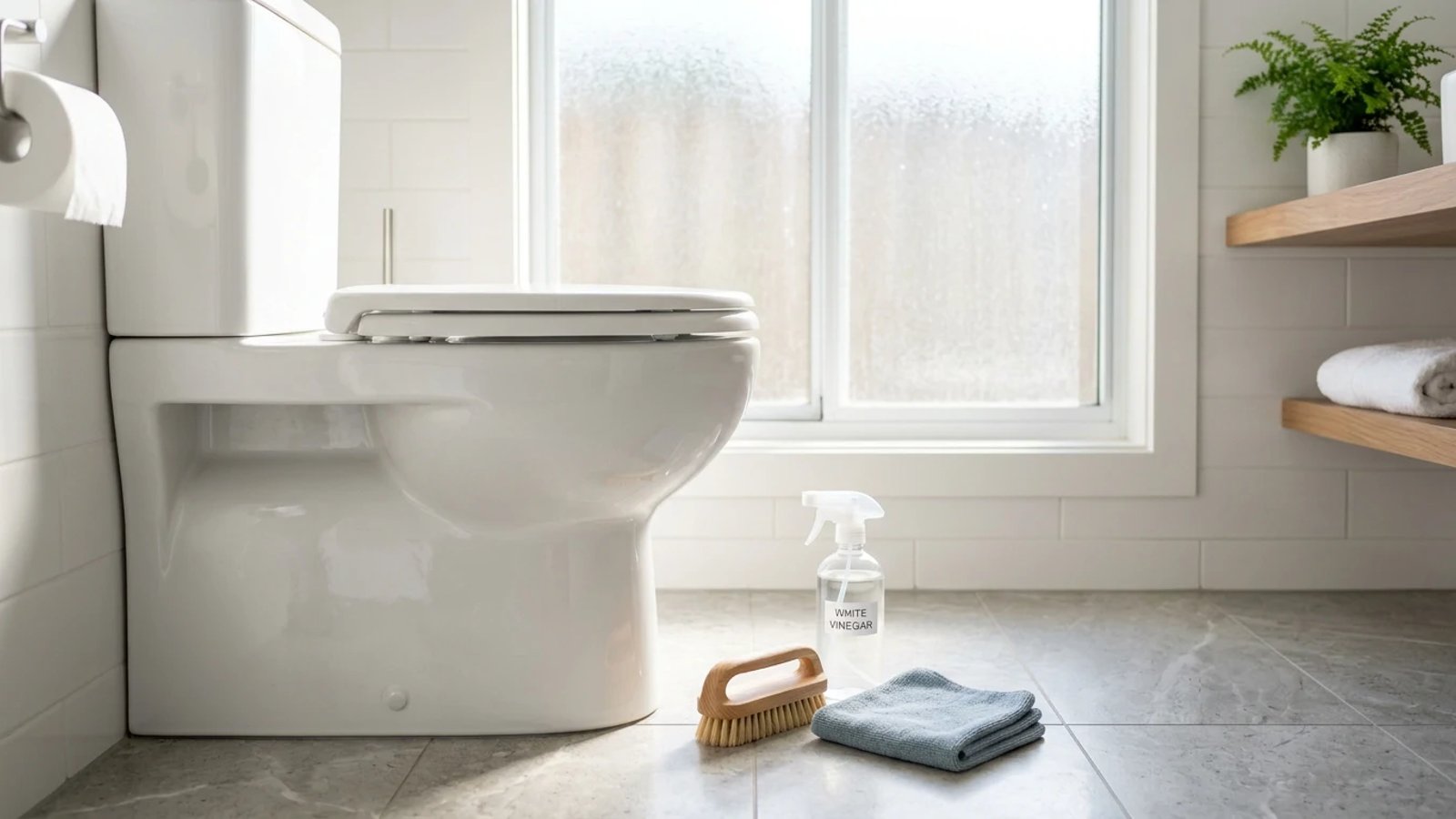
For basic upkeep, swap out your bleach-based toilet bowl cleaner for a weekly vinegar swish. Keep a spray bottle of half-water, half-vinegar next to the toilet. Once a week, spray the water line and let it sit for ten minutes before a quick scrub. This prevents the microscopic calcium layers from ever getting thick enough to turn brown.
A water softener uses ion exchange to physically remove calcium and magnesium from your home's water supply before it ever reaches your bathroom. While installing a softener is a larger upfront investment (typically ranging from $1,000 to $2,500 including installation), it protects your water heater, washing machine, and plumbing fixtures from premature failure due to scale buildup.
Tackling a stubborn toilet ring doesn't require harsh chemicals or endless scrubbing. By understanding the minerals you are fighting and using the right acidic or abrasive tools, you can easily restore your porcelain and cross one more frustrating chore off your list.
- Lower the water level in your bowl before applying any cleaner so the acid isn't diluted.
- Always keep a pumice stone soaking wet while scrubbing to protect your toilet's porcelain glaze.
- Swap bleach for a weekly vinegar swish to keep calcium from re-bonding to the bowl.