The Main Water Shutoff
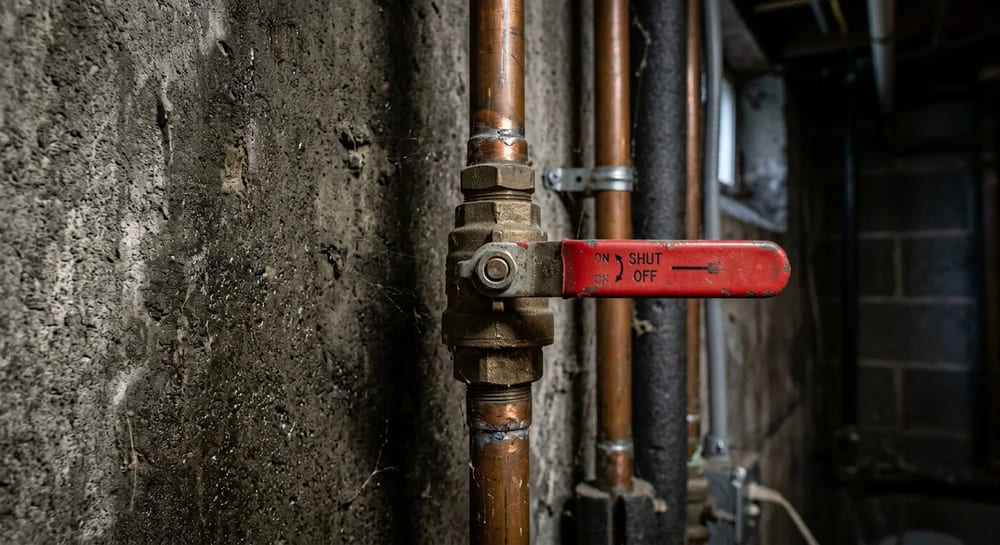
Water damage is a homeowner's worst nightmare. You need to know how to stop water fast. Find your main water shutoff valve today. It is usually in the basement, in a crawlspace, or outside near the street. Turning this valve stops all water flowing into your house. Do this immediately if a pipe bursts. Read up on handling home emergencies so you are prepared to act quickly.
The Supply Lines
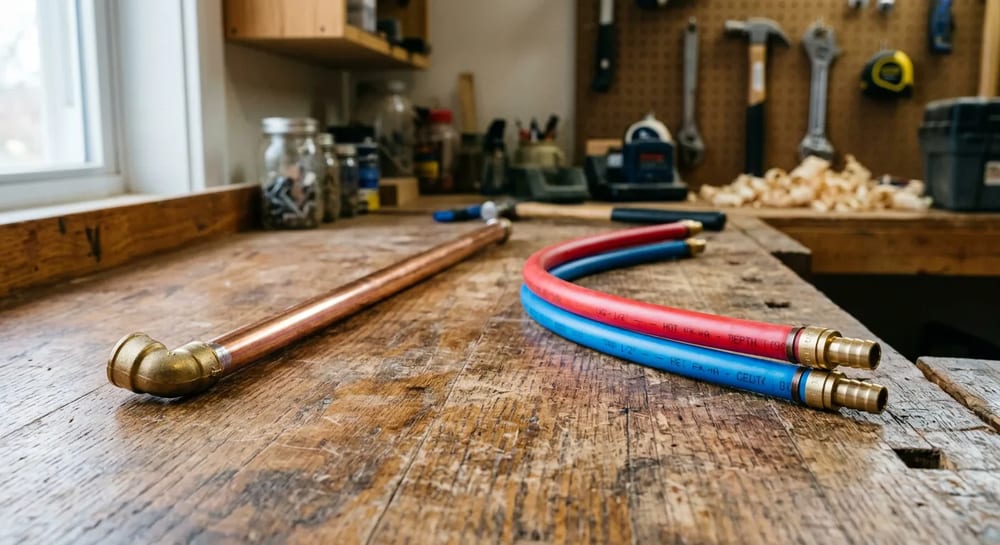
The supply system brings clean water to your sinks and showers under pressure. If you poke a hole in a supply line, water sprays everywhere. Older homes might have galvanized steel or copper pipes. Newer homes mostly use flexible plastic tubing called PEX.
| Pipe Material | Average Lifespan | Typical Repair Cost | Common Issues |
|---|---|---|---|
| Copper | 50 to 70 years | $300 to $500 | Pinholes from acidic water. |
| PEX | 40 to 50 years | $150 to $300 | Rodents can chew through it. |
| Galvanized Steel | 40 to 50 years | $400 to $800 | Rusts inside, lowers water pressure. |
| CPVC | 30 to 50 years | $200 to $400 | Gets brittle and snaps easily. |
Keep in mind that all plumbing costs vary widely by your region, the scope of the job, and the age of your home.
Drains and Vents
Drains do not use pressure. They rely on gravity to pull wastewater out of your house. This means drain pipes are larger and slope downward. Every drain has a curved pipe underneath called a P trap. This trap holds a small amount of water to block sewer gas from entering your home. If a guest bathroom smells bad, the trap might be dry. You can often fix smells and odors just by running the water for a minute to refill that trap.
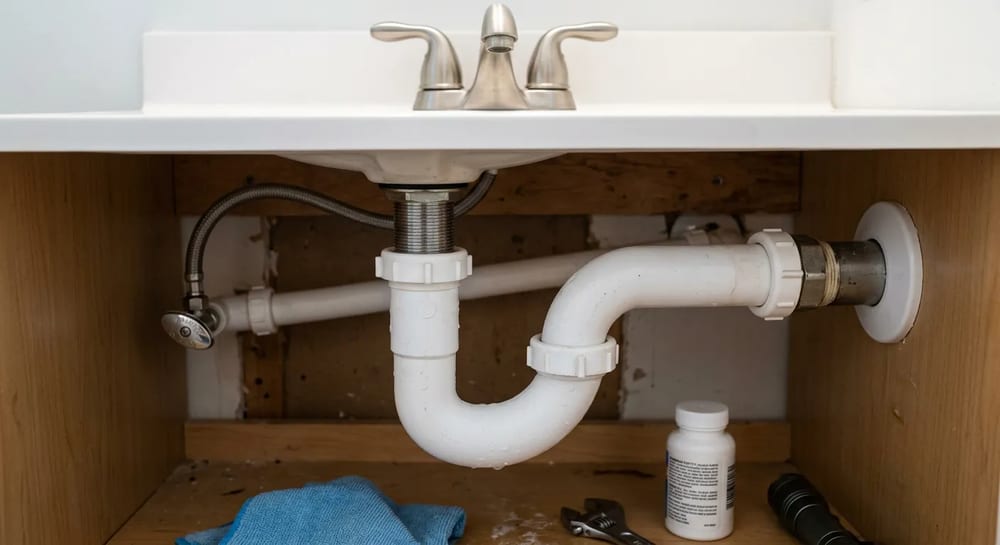
Drains also need air to flow smoothly. Vent pipes stick out of your roof to let air in and gas out. If your sinks gurgle when they drain, you might have a blocked vent on your roof.
Water Heaters
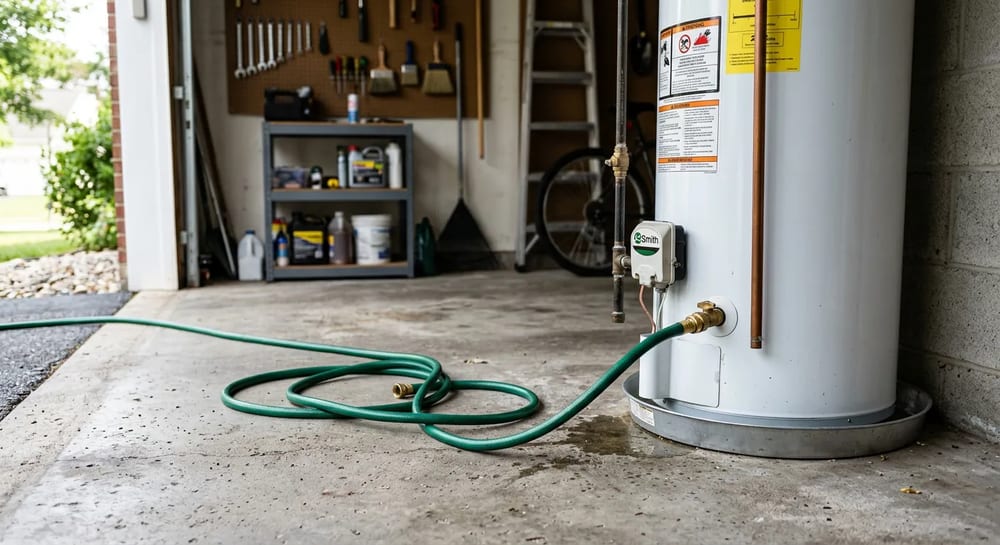
Your water heater works hard every single day. Traditional tank heaters store 40 to 50 gallons of hot water. Tankless heaters heat water on demand. A standard tank heater lasts 8 to 12 years. You can extend its life by flushing the sediment out of the bottom once a year. You should also check the anode rod. This is a metal rod inside the tank that attracts rust so the tank itself does not rust away.
Average Water Heater Replacement Costs
Remember that replacement costs vary by region, scope, and home age.
Replacing Faucets and Fixtures
Faucets wear out. The handles get drippy, the finish corrodes, or you simply want a cleaner look. Swapping a faucet is one of the most satisfying plumbing jobs a homeowner can take on, and it almost always costs far less than calling a plumber. The trick is matching the new fixture to the connections you already have. Before you buy anything, count the holes in your sink or tub deck and measure the spacing between the handles. A kitchen sink drain assembly, the basket strainer and tailpiece under the bowl, is sold as a separate kit if yours is leaking or rusted.
Bathtub and shower faucets are a little trickier than sink faucets because the valve body sits hidden inside the wall. Most replacements only swap the visible trim, the handle, escutcheon plate, and spout, while the valve stays put. If the valve itself leaks behind the wall, that is a bigger job that may require opening drywall. Always turn off the water before you start, then open the faucet to drain the line and relieve pressure.
| Fixture Job | DIY Difficulty | Typical DIY Cost | Typical Pro Cost |
|---|---|---|---|
| Replace kitchen or bath sink faucet | Easy | $80 to $250 | $200 to $450 |
| Replace tub spout and handle trim | Easy | $40 to $150 | $150 to $350 |
| Replace shower faucet (trim only) | Moderate | $60 to $200 | $250 to $500 |
| Replace shower valve (in wall) | Hard | $100 to $300 | $400 to $900 |
| Replace kitchen sink drain parts | Easy | $20 to $60 | $150 to $300 |
Prices vary by region, fixture quality, and the age of your home. A builder-grade faucet costs a fraction of a designer model.
How to Replace a Sink Faucet
- Turn off the two shutoff valves under the sink, then open the faucet to release pressure.
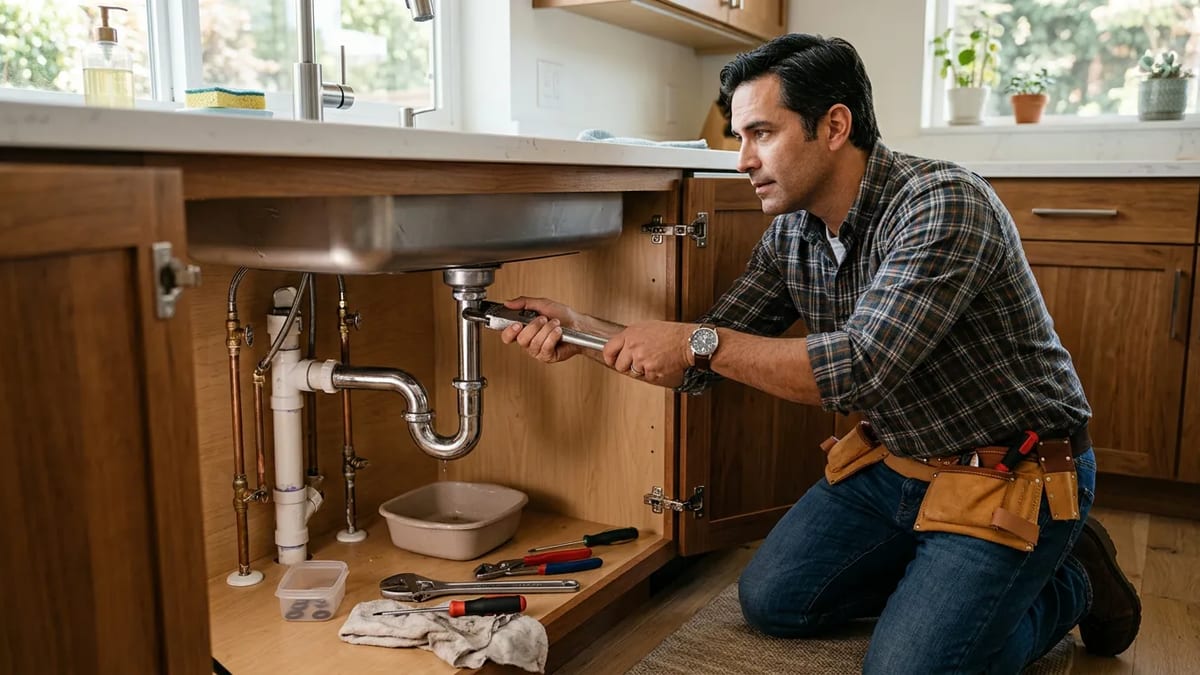
- Disconnect the supply lines with a basin wrench. Have a towel and bucket ready for the trapped water.
- Loosen the mounting nuts under the sink and lift the old faucet out from the top.
- Clean the deck, then set the new faucet with its gasket and tighten the mounting nuts from below.
- Reconnect the braided supply lines, turn the water back on slowly, and check every joint for drips.
Sump Pumps and Basement Water
If you have a basement or crawl space, a sump pump may be the single most important device keeping your home dry. It sits in a pit at the lowest point of the floor. When groundwater rises, the pit fills, a float switch trips, and the pump pushes the water out through a discharge pipe and away from the foundation. When the pump fails or loses power during a storm, water has nowhere to go, and that is when a basement water leak turns into a flood.
Most sump pumps last about 7 to 10 years. Test yours twice a year by pouring a bucket of water into the pit and watching it kick on. If it hums but does not pump, runs constantly, or stays silent, it is time for a replacement. A battery backup pump is cheap insurance, because the heaviest rain often arrives with a power outage. For deeper drainage problems around the house, our foundation and basement guide covers grading, gutters, and waterproofing that keep water away from the pit in the first place.
| Sump Pump Job | Typical Cost | What It Includes |
|---|---|---|
| Replace existing pump (same pit) | $400 to $1,000 | New pump plus labor in an existing basin. |
| New sump pump installation | $1,200 to $3,000 | Digging the pit, basin, pump, and discharge line. |
| Add battery backup pump | $300 to $900 | Secondary pump and battery for outages. |
| Pedestal pump unit only | $60 to $200 | The pump itself, for a DIY swap. |
Costs vary widely by region, how deep the pit must go, and whether new drainage piping is needed.
Common Leaks and Water Damage
Small leaks destroy homes slowly. A running toilet wastes hundreds of gallons of water a day. A dripping pipe inside a wall rots wood and grows mold. Check the rubber supply hoses behind your washing machine and toilets. If they look cracked or feel stiff, replace them with braided stainless steel hoses. Stainless hoses cost $15 to $30 and rarely burst.
If water does soak your ceiling, you will need to cut out the wet spots and patch the drywall. Check our guide to interior paint and drywall for help making it look new again.
The Water Heater Relief Valve
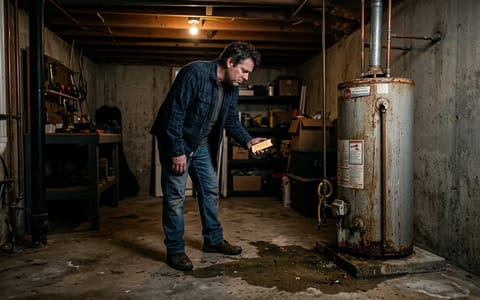
Every tank water heater has one part that is purely about safety: the temperature and pressure relief valve, often shortened to the T&P or simply the relief valve. It is the brass valve with a little lever on the top or side of the tank, with a pipe running down toward the floor. Its only job is to open and dump water if the tank ever gets too hot or builds up dangerous pressure. Without a working relief valve, an overheating tank can rupture violently. This is the one water heater part you should never ignore or cap off.
Servicing it is simple, and it is part of basic water heater maintenance. Once a year, place a bucket under the discharge pipe and gently lift the lever for a second. You should hear a rush of hot water, then it should snap shut and stop. If it dribbles afterward, keeps leaking, or does nothing at all, the valve is failing and needs replacement. A new relief valve costs about $15 to $30 and threads in like a large bolt, though many homeowners prefer to leave the swap to a plumber since it involves draining the tank.
| Symptom | Likely Cause | What To Do |
|---|---|---|
| Valve drips constantly | Worn valve or high water pressure | Replace valve; check the home pressure regulator. |
| Valve releases water occasionally | Thermal expansion or temperature set too high | Lower the temperature to 120°F; consider an expansion tank. |
| No water when lever is lifted | Valve seized with mineral scale | Replace immediately; a stuck valve cannot protect the tank. |
| Discharge pipe is hot to the touch | Tank overheating | Shut off power or gas and call a plumber now. |
If your relief valve weeps every day, the real culprit is often high water pressure in the whole house, which also strains your appliances and supply lines. A plumber can install a pressure-reducing valve and a thermal expansion tank to fix it at the source.
When to Call a Pro
You can fix a lot of plumbing issues yourself. Unclogging a sink or swapping a showerhead is easy work. But messing with the main stack or moving water lines requires a permit and serious skill. Read our advice on DIY versus hiring a pro before you cut into a pipe. A bad plumbing job will flood your house. Plumbers usually charge $100 to $200 per hour. Paying for an hour of expert help is always cheaper than replacing ruined floors.
How to Shut Off Your Water in an Emergency
When water is pouring out where it should not be, every second counts. The fastest way to stop it depends on where the problem is. For a single leaking sink or toilet, reach for the small shutoff valve right at that fixture. For a burst pipe or a leak you cannot find, go straight to the main shutoff and cut water to the whole house.
The main shutoff sits where the water line enters your home, often in the basement, a crawlspace, a utility closet, or outside in a ground box near the street. Turn the handle clockwise until it stops, or rotate a lever valve a quarter turn so it sits across the pipe. Individual fixture valves are the little oval or football-shaped knobs under sinks and behind toilets. Turn each one clockwise to close it. Knowing both layers means a dripping faucet does not have to leave the whole family without water.
- For a fixture leak, close the local shutoff valve under the sink or behind the toilet first.
- If that does not stop it, or a pipe has burst, shut the main valve to kill water everywhere.
- Open the lowest faucet in the house to drain the remaining water out of the pipes.
- For a burst pipe, also switch off the water heater and mop up standing water before it soaks into the floor.
Fixing a Running or Clogged Toilet
A toilet has two common failures, and both are easy to handle. A toilet that runs nonstop is usually leaking water from the tank into the bowl. Lift the tank lid and look at the flapper, the rubber seal at the bottom. If it is warped or stiff, water sneaks past it and the fill valve keeps topping the tank off. A new flapper costs about $10 and presses onto two pegs in a couple of minutes. If the flapper looks fine, the fill valve on the left side may be worn and can be replaced as a unit.
A clog is the other frequent problem. Start with a flanged plunger, the kind with a rubber sleeve that folds out to seal the drain hole. Push down and pull up firmly several times to build suction. If plunging does not clear it, a toilet auger, also called a closet auger, snakes a flexible cable through the trap to break up or pull out the blockage.
Why Your Water Pressure Is Low
Low water pressure is annoying, and the fix depends on whether one fixture or the whole house is weak. Test a few taps around the home. If only one faucet trickles, the problem is local. If every tap is soft, something upstream is restricting the flow.
- Clogged aerator or showerhead: Mineral buildup blocks the little screen on a single fixture. Unscrew it, soak it in vinegar, and rinse out the grit.
- Failing pressure regulator: Most homes have a bell-shaped valve where the main line enters. When it fails, pressure across the whole house drops or surges. A plumber can adjust or replace it.
- Hidden leak: A pipe leaking inside a wall or underground steals pressure. A water meter that keeps moving with every tap off is a clue.
- Partly closed valve: After repairs, the main or meter valve sometimes gets left only partway open. Check that it is turned all the way on.
- Municipal supply: Sometimes the issue is the street side. Ask a neighbor if their pressure dropped too, then call the water utility.
Old galvanized steel pipes that have rusted shut on the inside are another whole-house cause, and replacing them is a larger project.
Dealing with Hard Water
Hard water carries dissolved calcium and magnesium picked up as it moves through rock and soil. It is not a health risk, but it leaves its mark all over the house. The telltale signs are chalky white scale on faucets and showerheads, cloudy spots on glasses and dishes, soap that will not lather, and skin or hair that feels dry after a shower. Inside pipes and water heaters, that same mineral builds up as scale and slowly chokes the flow.
You have two main tools. A water softener uses salt to swap the hardness minerals for sodium, which protects pipes and stops scale across the whole house. A filter, by contrast, mostly improves taste and removes specific contaminants but does little about hardness. For scale alone, a softener is the real fix. Hard water also shortens the life of any machine that heats water, so it ties directly into caring for your appliances like the dishwasher, washing machine, and water heater. A water test kit from the hardware store tells you how hard your water actually is before you spend money on equipment.
What a Plumber Costs
Plumbing prices swing a lot by region, by how hard the job is to reach, and by whether it is a quick visit or an emergency call after hours. The ranges below are typical US and Canada estimates to set expectations before you call. Most plumbers charge either a flat rate for a known job or by the hour, often with a minimum service-call fee that covers the trip and the first bit of work.
| Common Job | Typical Low to High | Notes |
|---|---|---|
| Service call or diagnostic visit | $75 to $200 | Covers the trip and an initial look. Often credited toward the repair. |
| Clear a clogged drain | $150 to $450 | Higher for a main line or roof-vent access. |
| Replace a faucet or shutoff valve | $150 to $450 | Parts plus an hour or two of labor. |
| Install a new water heater | $1,000 to $4,500 | Tank units sit at the low end, tankless at the high end. |
| Clear or repair the main sewer line | $300 to $1,500 | Snaking is cheaper. Hydro-jetting or a dig costs much more. |
| Replace a section of burst pipe | $200 to $800 | Depends on the pipe material and how much wall must open. |
Get two or three written quotes for any large job. A clear estimate that lists parts and labor separately protects you from surprises on the final bill.