When to Pump Your Septic Tank (Before It Backs Up)
Stop guessing about your septic tank. Learn how to calculate your pumping schedule based on tank size and household size before a winter freeze causes a costly backup.
Full guide Plumbing Learn how your home plumbing works and how to stop leaks before they ruin your house.Out of sight, out of mind is a dangerous game to play with a home plumbing system. If you rely on a private septic system rather than city sewers, all the wastewater from your toilets, showers, and washing machine ends up in a concrete or plastic box buried in your yard. Knowing exactly when to pump septic tanks is the difference between a routine $400 maintenance bill and a catastrophic sewage backup in your basement.
Many homeowners simply guess at their maintenance schedule, assuming everything is fine as long as the toilets still flush. But waiting for symptoms to appear is the worst possible strategy for septic care. By the time you notice a problem inside the house, the damage to your yard and your wallet is usually already done.
Right now, in mid-fall, is the critical window to get this sorted out. Once the ground freezes solid in the winter, locating and digging up a buried septic lid becomes a miserable, labor-intensive, and highly expensive chore. Let's break down exactly how to calculate your specific pumping timeline so you can get it handled before the frost sets in.
The Hidden Risks of Waiting Too Long
To understand why timing matters, you have to understand what is happening underground. Your septic tank acts as a giant settling chamber. When wastewater enters the tank, it separates into three distinct layers. The heavy solids sink to the bottom to form a layer of sludge. Fats, oils, and greases float to the top to form a scum layer. The relatively clear water in the middle, called effluent, exits the tank and flows into your drain field to be naturally filtered by the soil.
The effluent flows out constantly, but the sludge and scum stay trapped inside the tank. Over time, that bottom sludge layer gets thicker and thicker, reducing the amount of liquid space in the middle. This sludge layer can eventually take up over 30% of your tank's total volume. If you wait too long to pump, the sludge level rises so high that raw, solid waste gets pushed out of the exit pipe and into your drain field.
In my experience managing a rural property with an older 1,000-gallon concrete tank, I learned this lesson the hard way. The previous owners hadn't pumped the tank in seven years. Because the sludge had carried over into the leach lines, the soil became entirely clogged with biomat. We ended up having to excavate and replace a massive section of the drain field—a $6,500 repair that could have been prevented by a simple $300 pump out.
Septic Tank Pumping: How Often Should You Pump?
The standard industry advice is to pump your tank every three to five years. However, that is a massive window. Your actual timeline depends entirely on two specific numbers: the total liquid capacity of your tank (in gallons) and the number of people living in your home.
According to EPA guidelines for septic maintenance, a family of four living in a home with a standard 1,000-gallon tank needs to pump every 2.6 years. If that same family of four has a larger 1,500-gallon tank, they can stretch that interval to 4.2 years.
Here is a practical baseline to help you calculate your own schedule:
- 1 to 2 people (1,000-gallon tank): Pump every 4 to 5 years.
- 3 to 4 people (1,000-gallon tank): Pump every 2.5 to 3 years.
- 5 to 6 people (1,000-gallon tank): Pump every 1.5 to 2 years.
- 3 to 4 people (1,500-gallon tank): Pump every 4 years.
If you recently bought the house and have no idea how large the tank is, look at your local property records or county health department files. In most jurisdictions, building codes dictate tank size based on the number of bedrooms. A typical rule of thumb is a minimum of 1,000 gallons for a 3-bedroom house, adding 250 gallons of capacity for each additional bedroom.
Warning Signs You Need to Pump Right Now
If you have lost track of your timeline, your plumbing will eventually start giving you physical clues that the tank has reached its maximum capacity. If you notice any of these symptoms, do not wait for your scheduled maintenance year. You need to call a vacuum truck immediately.
The most obvious sign is a distinct sulfur or rotten egg smell hovering over your yard, particularly near the drain field or the tank lid. A healthy, properly functioning septic system should not emit strong odors above ground. If you smell sewage, the tank is likely overflowing or venting improperly because it is full of solids.
Inside the house, pay close attention to how your drains behave. If a single sink is draining slowly, you probably just have a localized hair clog in the P-trap. But if every drain in the house is sluggish, and your toilets lack their normal flushing power, the main line is backing up because the tank cannot accept any more liquid.
A suspiciously lush, bright green patch of grass in mid-fall isn't a landscaping victory—it's a warning sign that raw sewage is fertilizing your lawn.
Another major red flag is gurgling sounds coming from your pipes. If you run the washing machine and hear a bubbling, percolating noise coming from the guest bathroom toilet, water is fighting for space in the main sewer line. Finally, inspect your yard. If you see standing water, damp soil, or a patch of grass that is significantly greener and taller than the rest of the lawn in mid-fall, your drain field is failing because the tank is choked with sludge.
How to Extend the Time Between Pumps
While you can never eliminate the need for pumping, you can certainly ensure you hit the 5-year mark rather than the 2-year mark by managing what goes down your drains. The golden rule of septic ownership is simple: if it isn't toilet paper or human waste, it does not belong in the toilet.
Feminine hygiene products, paper towels, dental floss, and cotton swabs are notorious for clogging septic baffles. They do not break down in water and will sit in the bottom of your tank forever. Similarly, so-called "flushable" wipes are a massive hazard. They maintain their structural integrity for years underwater, rapidly filling your tank's solid capacity.
Water conservation also plays a huge role. Your tank needs time for the solids to settle. If you run four massive loads of laundry back-to-back on a Saturday morning, you are flooding the tank with hundreds of gallons of water. This rapid influx stirs up the sludge layer, preventing it from settling and pushing suspended solids out into the drain field. Spread your heavy water usage out over the week.
What to Expect During a Septic Service
If you have never had a tank pumped before, the process is straightforward but requires some heavy equipment. Scheduling it in the fall is ideal because the ground is soft enough for digging, but the heavy summer rains have usually passed, making it easier for the heavy truck to park near the site without sinking into mud.
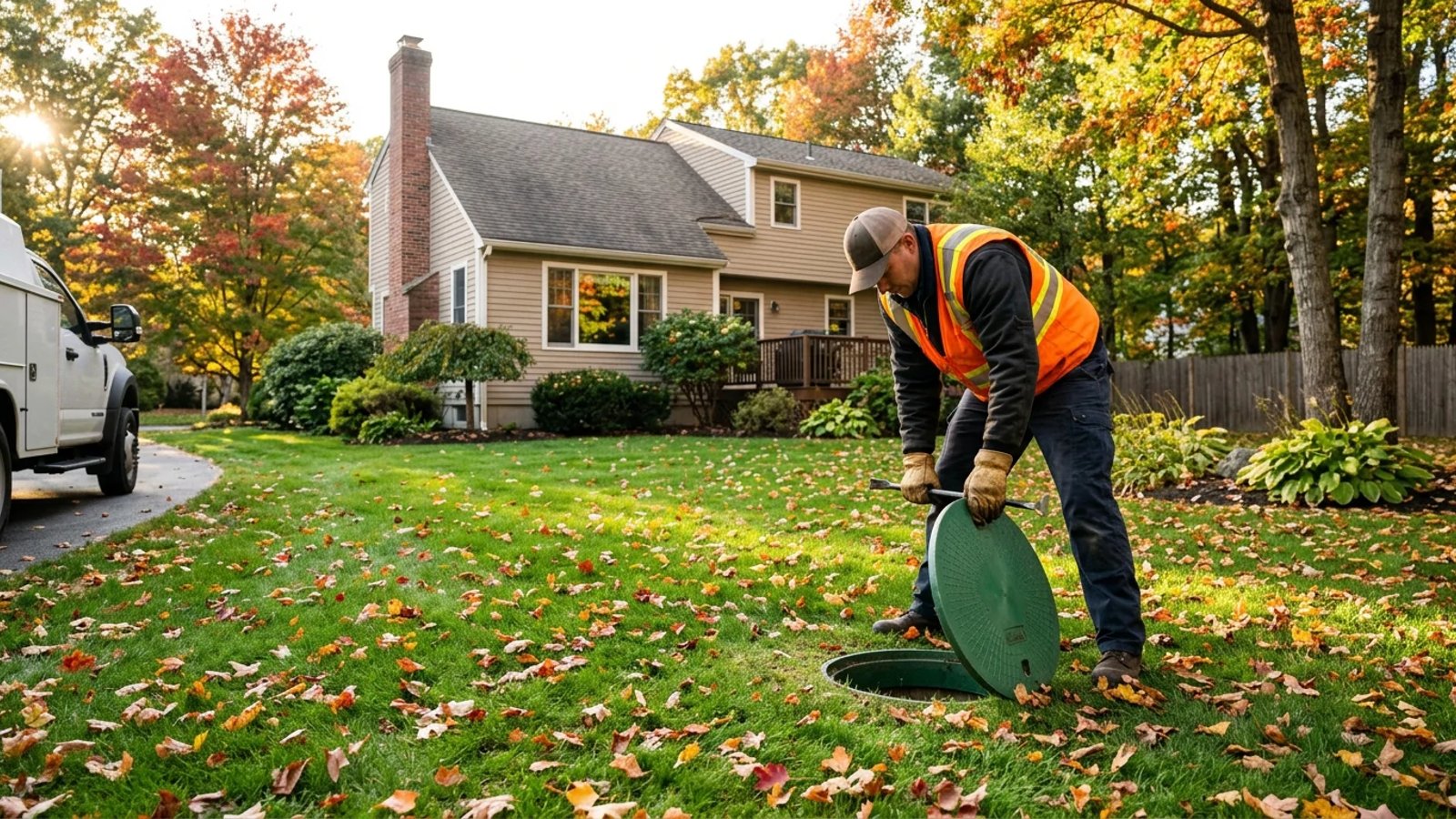
- Locate and uncover the lid. If your lid is buried, the technician will use a probe rod to find it and dig away the topsoil. If your lid is deeper than 12 inches, consider having them install a PVC riser to bring the access port up to ground level for next time.
- Break up the scum layer. Once the heavy concrete or plastic lid is removed, the technician uses a long tool called a muck rake to physically break apart the hardened layer of fats and greases floating at the top.
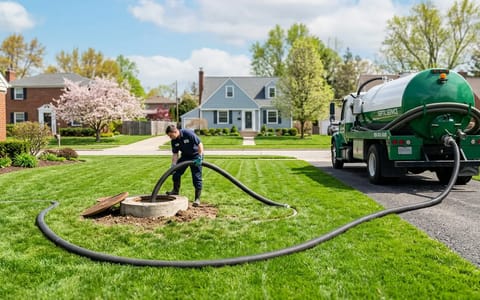
- Vacuum the tank. A massive hose is lowered to the bottom of the tank. The truck's vacuum pump removes the liquid, the scum, and the heavy sludge, usually taking about 15 to 20 minutes of active pumping.
- Inspect the baffles. While the tank is empty, a good technician will inspect the inlet and outlet baffles (the T-shaped pipes that keep solids from leaving the tank) to ensure they aren't cracked or missing.
- Close and cover. The lid is securely replaced, and the soil and grass are patted back into place.
The entire appointment usually takes between 45 minutes and an hour. You do not strictly need to be home for the service as long as the technician has access to the yard and knows where the tank is located, but it is always good practice to be there to ask questions about the condition of the tank.
Keeping Track of Your Schedule
The hardest part of septic maintenance isn't the cost; it is simply remembering to do it. When a task only happens every three to four years, it is incredibly easy for it to slip your mind until a foul odor reminds you. Do not rely on your memory. Write the date of your last pump on a piece of masking tape and stick it to the side of your electrical panel, or file the invoice in a dedicated home maintenance folder.
By understanding your household's specific timeline and getting the work done before the winter freeze makes it difficult, you protect one of the most expensive systems in your home. A little proactive scheduling today ensures your yard stays clean, your drains run fast, and your wallet stays intact.
- Calculate your exact pumping schedule using the EPA's tank-size-to-occupant ratio rather than guessing.
- Never wait for your drains to back up before calling a pumper; by then, you may have permanently damaged your drain field.
- Schedule your service in October or November before the frost line hardens the soil over your tank lid.
- Keep a permanent written record of your pumping dates, as you cannot rely on memory for a task done every few years.