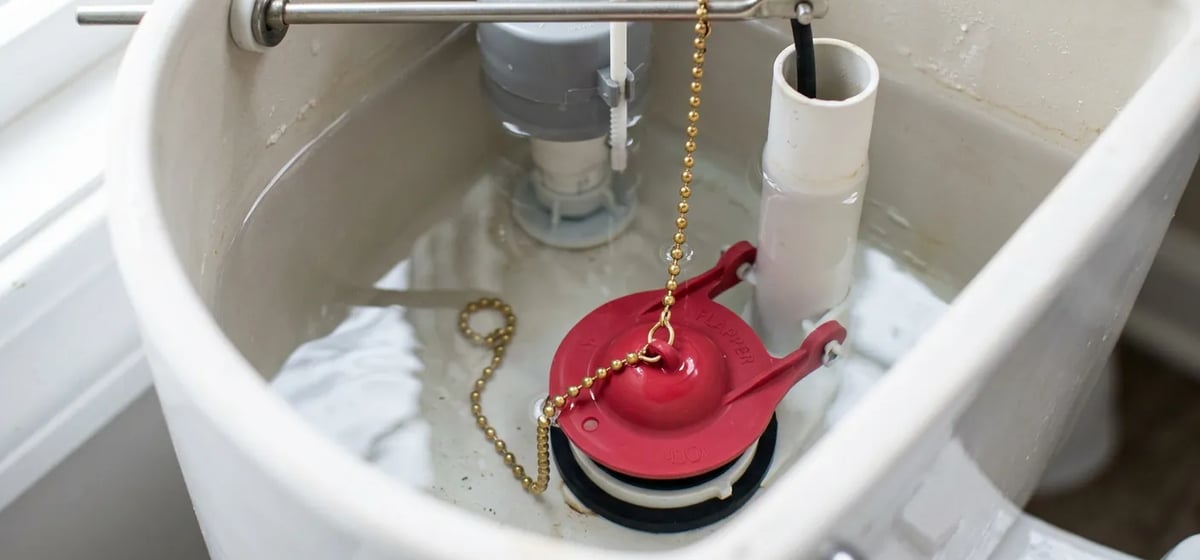
What Is a Flapper?
A flapper is the rubber plug sitting at the bottom of your toilet tank. When you press the handle to flush, a chain lifts this rubber piece up. This action lets water rush down into the toilet bowl to clear the waste. Once the tank empties, the rubber piece drops back down to seal the hole. This flapping motion is where the name comes from. It became common in plumbing jargon back in the early 1900s.
This simple part does a big job. It holds back gallons of water and releases them exactly when you need them. Because it sits in water all day, the rubber breaks down over time. Hard water, cleaning chemicals, and old age will cause it to shrink, warp, or crack.
Why It Matters to Your Wallet
A bad flapper is the most common reason for a running toilet. When the rubber seal fails, water leaks from the tank into the bowl nonstop. The fill valve then turns on to replace the lost water. This cycle wastes a huge amount of water. A single leaky toilet can waste 200 to 300 gallons of water a day. That will cause a nasty shock on your next water bill.
Taking care of small leaks early is a smart move during Your First Year as a Homeowner. Ignoring a running toilet can cost you hundreds of dollars over a few months. The part itself is very cheap, so fixing it saves you money almost instantly.
Signs Your Flapper is Failing
You can usually hear a bad flapper before you see it. Here are the most common signs that your rubber seal is worn out.
- The toilet runs constantly. You hear a hissing or trickling sound long after you flush.
- Phantom flushes. The toilet suddenly fills with water on its own when no one touched it.
- You have to jiggle the handle. The chain might be catching, or the rubber piece isn't lining up with the hole.
- A weak flush. The rubber piece drops too fast, cutting off the water flow before the bowl clears.
Replacement and Costs
Replacing this part is one of the easiest home repairs you can do. You don't need special tools. You just turn off the water behind the toilet, flush to empty the tank, and unhook the old rubber piece. Then you clip the new one in place and attach the chain.
If you buy the part at a hardware store, it usually costs 5 to 20 dollars. Universal kits fit most standard toilets. If you're not comfortable doing the work, you can call a plumber. Hiring a professional to replace it will cost 100 to 150 dollars for the trip and labor. Keep in mind that prices range widely based on where you live. If you want to learn more about when to call a professional, read our guide on DIY vs. Hiring a Pro.
It's a good idea to check these rubber seals every few years. If you're doing general Plumbing maintenance, take the lid off your toilet tank and look at the rubber plug. If it looks gooey, brittle, or faded, it's time for a new one.