What is azimuth?
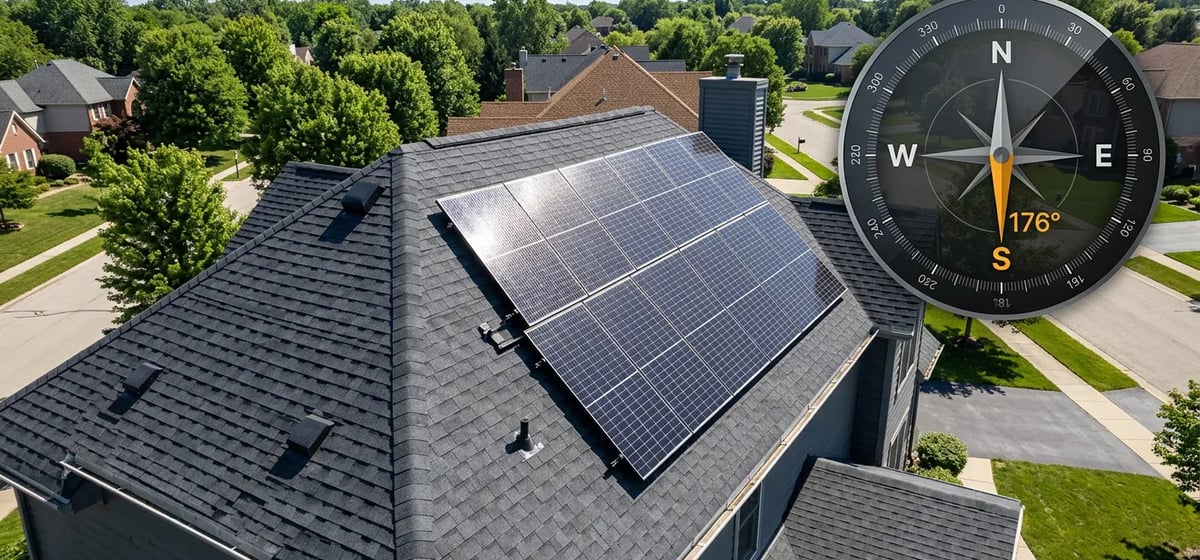
Azimuth is a compass measurement that tells you the exact direction a surface faces. Imagine standing in your yard and looking straight out from your front door. If you hold a compass, the degree number it shows is your azimuth. Here is a quick cheat sheet for roof directions:
- 0 degrees means your roof faces true north.
- 90 degrees means your roof faces east.
- 180 degrees means your roof faces true south.
- 270 degrees means your roof faces west.
You'll mostly hear this word when you talk about your roof or solar energy. The word itself comes from an old Arabic term for directions or paths. Astronomers used it long ago to map the stars in the sky. Today, a solar contractor uses it to map out how much sunlight hits your house every day.
Why it matters for solar panels
The sun moves across the southern sky in the United States. If you want to make your own power, your roof needs to catch as much sun as possible. The perfect azimuth for Solar Panels in the US is exactly 180 degrees. This means the roof faces true south.
When your roof points south, your panels grab sunlight from morning until late afternoon. This gives you the most electricity. If your roof points east or west, you still get sun. However, you'll lose about 15 to 20 percent of your potential power compared to a south facing roof. A north facing roof gets very little direct sun. Installers almost never put panels on a north facing roof because it's a waste of money.
How contractors use it
When you ask for a solar quote, the contractor looks at your house from a satellite map. They measure the azimuth of every flat surface on your roof. This helps them build a computer model of your home.
The contractor combines your azimuth with the tilt of your roof. They use this math to estimate how many kilowatt hours of power you'll make each year. This tells them how many panels you need to buy to cover your monthly power bill. An average home solar setup costs $15,000 to $25,000 to install. Keep in mind that ranges vary widely based on where you live and your roof size. Knowing your exact azimuth helps you decide if spending that money makes sense for your home.
Does a bad azimuth ruin your plans?
Don't panic if your roof doesn't face perfectly south. Very few homes have a perfect 180 degree azimuth. An east or west facing roof is still a great spot for solar energy. You might just need to buy one or two extra panels to make up for the lost sunlight. This adds a little bit to your upfront cost, but it still pays off over time.
Sometimes you have big trees or a tall chimney blocking the south side of your home. In that case, an installer might choose a west facing roof instead. A west facing roof catches the hot afternoon sun. That's actually great if your power company charges higher rates in the late afternoon. If you're replacing your roof soon, check out our Roofing guide. You can ask your roofer to clear away old vents or pipes on the south side so you have more room for future panels. You should also look at your yard. Trimming large trees on the south side of your property will make sure your perfect azimuth actually gets the sunlight it deserves.