What is a register?
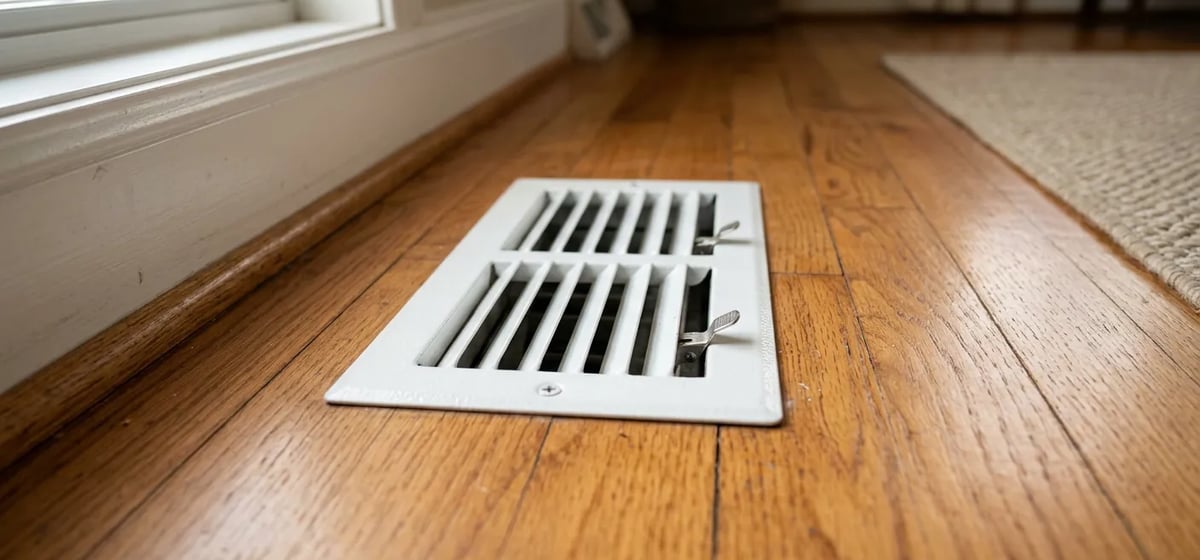
A register is the metal, plastic, or wood cover that sits over the air ducts in your floors, walls, or ceilings. You will know it is a register and not just a return grille because it has a small lever or wheel. This lever moves the louvers behind the cover. The word itself comes from Medieval Latin meaning to record or control. In your home heating and cooling system, it controls how much air blows into a room and where that air goes. You can open the louvers wide to heat up a cold room or close them off if a room gets too hot.
Every room in your house likely has at least one register. Large rooms like a living room or primary bedroom might have two or three. They are usually placed near the outside walls or under windows. This placement helps block cold drafts in the winter and hot sun in the summer.
Why your registers matter
Registers are the final stop for the air traveling through your ductwork. They play a huge role in your daily comfort. If you point the louvers away from a drafty window, you might feel warmer. If you point them toward the center of the room, the space will cool down faster.
They also help your system run smoothly. Your HVAC & Climate Control system expects a certain amount of airflow. If you shut too many registers at once, pressure builds up inside the ducts. This makes your blower motor work much harder and can even damage your furnace or air conditioner over time.
Common problems to watch for
Registers are simple parts, but they can still cause headaches. Keep an eye out for these everyday issues around your house.
- Rust and corrosion: Floor registers in bathrooms or near exterior doors often get wet. Over time, metal registers will rust and look ugly.
- Broken louvers: The little wheels and levers are fragile. If someone steps on a plastic floor register or hits a baseboard register with a vacuum, the louvers can snap.
- Dust buildup: The fins catch a lot of pet hair and dust. This can block airflow and push bad smells into your home. If your house smells musty when the heat kicks on, checking your registers is a great first step. You can read more about tracking down bad scents in our guide to Smells & Odors.
- Loose screws: Wall and ceiling registers can rattle if the screws vibrate loose. This creates an annoying buzzing sound when the fan runs.
How much do new registers cost?
Replacing old registers is a very cheap and easy project. When you move into a new place, swapping out rusty vents is a quick weekend project. Our New Homeowner Guide recommends small cosmetic updates like this to make the space feel clean. You just need a screwdriver and a tape measure.
You must measure the hole in the floor or wall, not the outside edge of the old cover. Registers are sold by this hole size, like 4 by 10 inches or 6 by 12 inches. Basic painted steel or plastic registers cost 10 to 20 dollars each. If you want fancy cast iron, solid brass, or custom wood covers, you will pay 30 to 75 dollars per register. Prices and ranges vary depending on the exact size and finish you choose. A whole house upgrade usually costs 150 to 400 dollars if you do the work yourself.