What Is a Fireplace Insert?
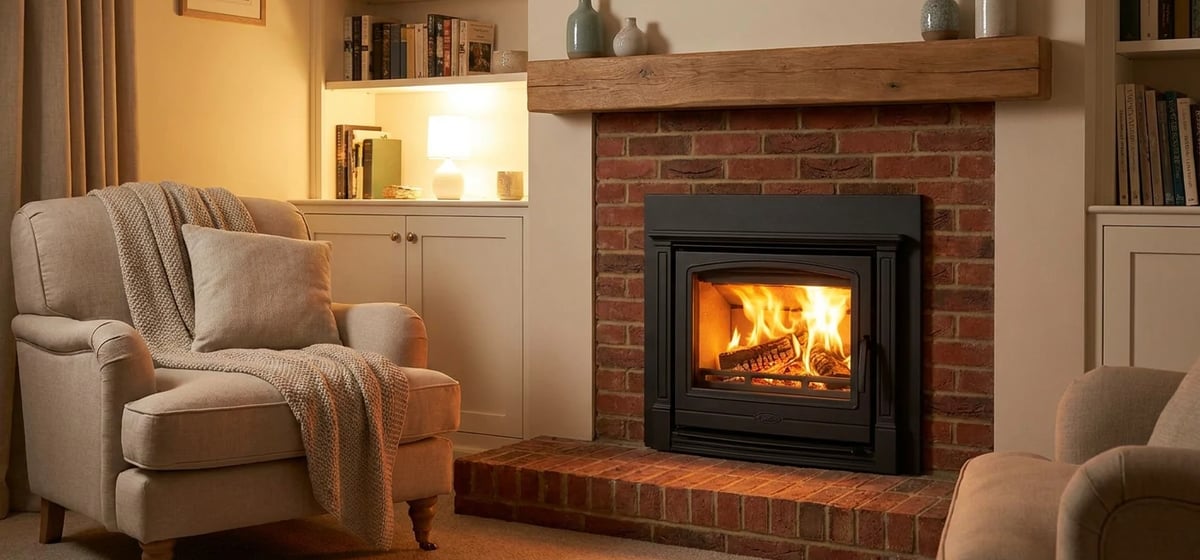
A fireplace insert is exactly what it sounds like. It is a heavy metal box that slides directly into your existing brick or stone fireplace. Traditional open fireplaces look beautiful, but they are terrible at heating your house. In fact, an open chimney acts like a giant vacuum. It sucks the warm air right out of your living room and sends it up into the sky. A fireplace insert solves this problem. It seals off the opening and turns your drafty hearth into a highly efficient heater.
These units come with a glass door on the front. They also feature a sealed metal shell that traps the heat. Most inserts have a built-in blower fan. This fan pulls cool room air in, heats it up around the hot firebox, and pushes the warm air back out into your room.
Types of Fireplace Inserts
You can choose from three main types of inserts. The right choice depends on your budget and how much work you want to do to keep the fire going.
- Gas inserts: These are the most popular choice for busy homeowners. You flip a switch or push a button on a remote control, and you get instant flames. They require a gas line run to the fireplace.
- Wood inserts: If you love the smell and crackle of real logs, this is your best bet. A wood insert burns standard firewood but gets much hotter and burns longer than an open fire.
- Pellet inserts: These burn small pellets made of compressed sawdust. You pour a bag of pellets into a hopper, and the machine feeds them into the fire automatically. They require electricity to run the feeder motor.
Why It Matters for Your Home
Upgrading to an insert is a smart move for your comfort and your wallet. An open masonry fireplace is only about 10 to 15 percent efficient. That means most of the heat goes straight up the chimney. A modern fireplace insert is 70 to 85 percent efficient. It can heat a large room or even your entire main floor. This takes a huge load off your primary heating system. You can learn more about managing your indoor climate in our guide to HVAC & Climate Control.
Inserts also make your home cleaner and safer. The sealed glass door stops sparks from popping out onto your rug. It also keeps smoke and ash from blowing back into your living room on a windy day.
What It Costs
Adding a fireplace insert is a significant investment. The total price depends on the fuel type, the size of the unit, and the condition of your chimney. Prices vary based on your location and the specific model you choose.
- The unit itself: A quality wood or pellet insert usually costs 2,000 to 4,000 dollars. A gas insert typically runs 3,000 to 5,000 dollars.
- Installation and venting: You will need a stainless steel chimney liner dropped down your existing chimney to vent the exhaust safely. Labor and parts for this usually add 1,000 to 3,000 dollars to the project.
- Total project: Expect to spend between 4,000 and 8,000 dollars from start to finish.
If you need to run a new gas line or electrical outlet to the fireplace, those trades will add a few hundred dollars more. You can read more about hiring professionals in our guide to Hiring Contractors & What Things Cost.
What to Watch For
You cannot just shove a metal box into a hole and light a fire. Every insert needs a specific type of venting system to exhaust deadly gases outside. If you buy a gas insert, you must have a licensed plumber run the gas line. If you buy a wood insert, you need a professional chimney sweep to clean your chimney before the new liner goes in.
Finally, measure your fireplace carefully before you shop. You need the exact height, width, and depth of the opening. The new insert must fit inside this space with enough room left over to run the exhaust pipes out the top.