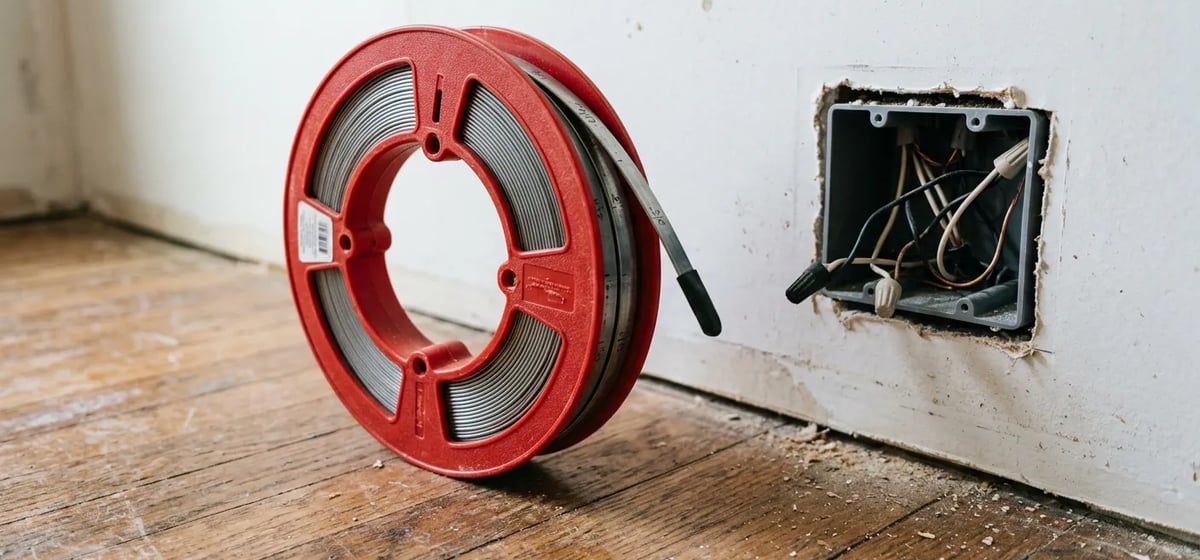
What is a fish tape?
A fish tape is a long, flat coil of stiff wire. Electricians use it to pull new wires through walls, ceilings, and pipes. The tool usually lives inside a round plastic case with a handle. You pull the metal tape out of the case and push it into a small hole in your wall. Once the tape reaches the other side, you attach your new electrical wire to the hook at the end. Then you reel the tape back in to pull the wire through the hidden space.
Tradespeople started using the term in the early 1900s. The process feels exactly like fishing. You drop a line into a dark wall cavity and try to catch the wire on the other side.
Why it matters to you
If you want to add a new outlet or put a ceiling fan in your living room, you have to get power to that spot. Without a fish tape, you would have to cut huge trenches in your walls to run the wires. This means you would spend days patching and painting later. A fish tape lets you or your electrician snake wires behind the walls with very little damage to your Interior: Paint, Drywall & Trim.
It also helps when wires need to run through plastic or metal pipes called conduit. Pushing a floppy wire through a long pipe is almost impossible. The stiff steel of a fish tape pushes easily through the pipe. Then it pulls the softer wire along for the ride.
Sometimes you might hear a contractor talk about fishing a wall. This just means they plan to use this tool to route your new cables. They use it for power lines, internet cables, and speaker wires.
Different types of fish tapes
You will find a few different materials if you look for a fish tape at the hardware store. The material you choose depends on the job you need to do.
- Steel: This is the most common and affordable type. It is very strong and pushes easily through long pipes. However, steel conducts electricity, so you must be very careful around live wires.
- Fiberglass: These tapes cost more but do not conduct electricity. They are safer to use near live circuits. They are a bit more fragile than steel and can snap if you bend them too sharply.
- Nylon: Nylon tapes are very flexible. They work great for short runs inside walls where you have to navigate tight corners. They are not stiff enough for very long runs.
How much it costs
You can buy a basic fish tape at any home improvement store. A standard 25 foot or 50 foot steel fish tape costs between $15 and $50. Longer fiberglass models can cost $80 to $150. If you hire an electrician to run a new wire for you, the tool cost is built into their fee. A pro usually charges $150 to $300 to fish a wire and install a simple outlet. Keep in mind that exact prices vary widely depending on where you live and how hard it is to access the wall space.
What to watch out for
Using a fish tape takes practice and patience. The tape can easily get stuck on nails, insulation, or wood blocks hidden inside your walls. If you pull too hard when it gets stuck, you might damage the wire or snap the tape. It is often a job for two people. One person feeds the wire smoothly into the hole while the other person turns the reel to pull the tape.
You also need to think about safety. If you push a metal tape into a wall and it touches a live wire, you could get a severe shock. When looking at DIY vs. Hiring a Pro, remember that fishing wires near live circuits is risky. Always turn off the power at your breaker box before you open a wall. If you feel unsure, it is time to call a licensed professional to handle your Electrical work.