What is a chimney liner?
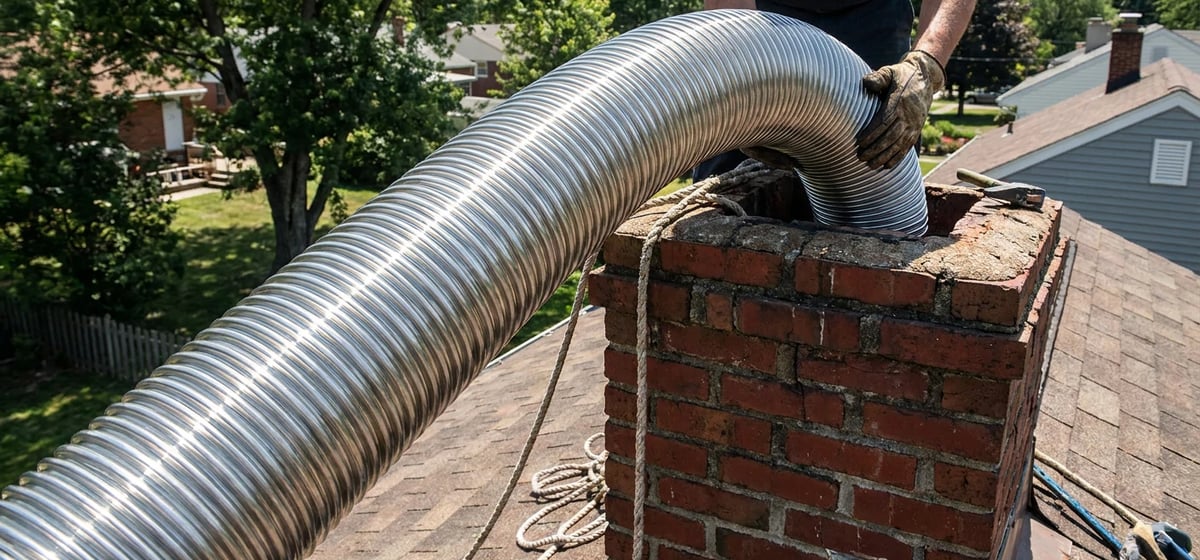
A chimney liner is a metal or clay tube that sits inside your brick chimney. It gives smoke and carbon monoxide a safe path to exit your home. Early brick chimneys deteriorated from acidic wood smoke. This led builders to add an inner lining for safety. The word liner comes from the Old English word lin. This referred to a layer of cloth or material placed inside another.
Today, nearly all local building codes require a liner for safety. There are three main types of chimney liners. Clay tiles are the most common in older construction. They are cheap and handle heat well, but they crack over time. Metal liners are usually made of stainless steel or aluminum. Aluminum is only safe for certain gas appliances, while stainless steel works well for wood, gas, and oil. The third type is a poured cement liner. This involves pouring a concrete mixture into the chimney to create a smooth, insulated passage. This method is great for fixing old, damaged brick chimneys.
Why it matters to you
Your chimney liner does three big jobs. First, it protects your home from catching fire. The liner keeps extreme heat away from the wood framing near your chimney. Second, it protects the masonry itself. The gases from your fireplace or furnace are highly acidic. Without a liner, these gases eat away at the mortar between your bricks. Eventually, your chimney could collapse.
Finally, it stops dangerous exhaust from leaking into your living space. A solid liner ensures carbon monoxide vents safely outside. Your chimney liner also helps your fireplace or furnace run efficiently. A properly sized liner creates a strong draft. A draft is the upward pull of air that draws smoke out of your house. If the liner is too large, the exhaust gases cool down too fast. Cold gases do not rise well. This causes smoke to back up into your living room. It also leads to a heavy buildup of creosote. Creosote is a sticky, highly flammable tar that causes chimney fires.
When you need a new one
Chimney liners do not last forever. Clay liners often crack or crumble after decades of use. Metal liners can rust if water gets inside. You will also need a new liner if you change how you heat your home. For example, upgrading to a high efficiency furnace or a modern wood stove changes the exhaust temperature. The old liner might be too big or the wrong material to draft properly. You can learn more about managing your home heating systems in our HVAC & Climate Control guide.
When you buy an older house, the chimney liner is a common trouble spot. Home inspectors often flag cracked clay tiles in their reports. If you are preparing for your first winter in a new place, getting the chimney checked is a smart move. You can read more about early home maintenance in our Your First Year as a Homeowner guide. A pro will drop a special camera down the chimney to look for gaps, cracks, and missing mortar joints. Even a hairline crack is enough to fail an inspection.
What to watch for and what it costs
Look for these common signs of liner damage in your home:
- Small pieces of broken clay sitting on the fireplace floor.
- White dust or sand falling down the chimney.
- Water stains on the walls or ceiling near the chimney.
- A strong, sour campfire smell on damp days.
If you suspect an issue, hire a certified chimney sweep to run a camera down the flue. If you need a replacement, expect to pay between 1,500 to 4,000 dollars for a standard stainless steel liner installation. Prices depend heavily on the height of your chimney and how hard it is to access your roof. Removing an old clay liner before installing the new metal one will push the price toward the higher end. Keep in mind that costs vary by region and the specific materials you choose. Check our guide on What Home Repairs Cost to help budget for these types of large projects.