What a Continuity Tester Is
A continuity tester is a simple, battery powered tool that checks if an electrical path is complete. Electricity needs a solid, unbroken path to work. If a wire is cut or a switch is broken, the electricity stops. This tool tells you if that path is good or bad. It's one of the cheapest and most useful gadgets you can own. You don't need to be an electrician to understand what it tells you. If the circuit is whole, the tester reacts. If there is a hidden break, the tester stays silent.
The tester usually looks like a small screwdriver with a wire coming out of the handle. It has a tiny light bulb inside and a battery. The wire ends in a small metal clip. The tip of the screwdriver is the other probe. Some modern versions are part of a larger tool called a digital multimeter, which will beep when the path is good.
Why It Matters to You
This little tool saves you a lot of guessing. When a lamp stops working, you might wonder if the bulb is burnt out, the cord is bad, or the wall outlet is dead. A continuity tester helps you pinpoint the exact problem. You can test the lamp cord to see if the wire is broken inside the plastic casing. If the tester lights up, the cord is fine.
Having one of these in your toolbox is a great step for handling basic Electrical repairs around the house. It helps you decide if you need to buy a cheap replacement part or call an expert. This choice plays a big role in DIY vs. Hiring a Pro decisions. A basic dedicated tester costs 5 to 15 dollars. A digital multimeter with a continuity setting runs 20 to 50 dollars. Keep in mind that prices vary based on the brand and where you shop.
How to Use It Safely
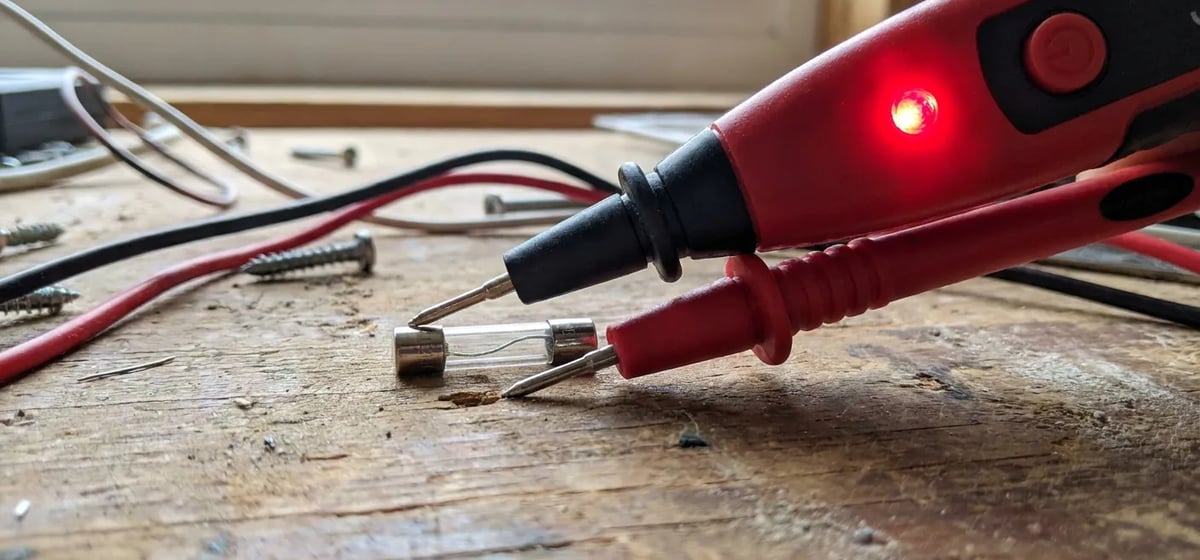
Safety is the most important part of any electrical work. A continuity tester is only meant for dead circuits. That means no electricity from the house can be flowing through the item you are testing. Using the tool is very easy once the power is off. You just touch one probe to one end of the wire or fuse. Then you touch the other probe to the opposite end. If the path is solid, the electricity from the tester battery flows all the way through and comes back. The tool will light up or beep. If nothing happens, the path is broken.
Here are a few steps to follow every time you use it:
- Make sure the item is completely unplugged from the wall.
- If you are testing a wall switch, turn off the main breaker first.
- Test the tool itself by touching the two probes together. It should light up or beep.
- Touch the probes to the two ends of the part you want to check.
Common Places You Will Use It
You'll find plenty of uses for this tool as a homeowner. It's especially helpful when dealing with broken Appliances or small electrical parts.
Fuses are the most common thing to test. A fuse is designed to burn out and break the path if too much power flows through it. Sometimes a fuse looks fine on the outside but is broken on the inside. You can touch your tester probes to both ends of the fuse. A beep means the fuse is still good.
You can also test standard light switches. You touch the probes to the two screw terminals on the side of the switch. When you flip the switch to the on position, the tester should light up. When you flip it off, the light should go out. If it doesn't light up at all, the switch is broken and needs to be replaced.
Heating elements in ovens or dryers are another great example. If your dryer spins but doesn't get hot, the heating element might be burnt out. You can unplug the dryer, find the heating element, and touch your tester probes to its two terminals. If you don't hear a beep, you'll know exactly what part to order.
Extension cords are another easy test. You can clip one probe to a prong on the plug. Then you stick the other probe into the matching slot on the other end. This tells you if the wire inside the cord got pinched or broken over time.