The Basics of Your Policy
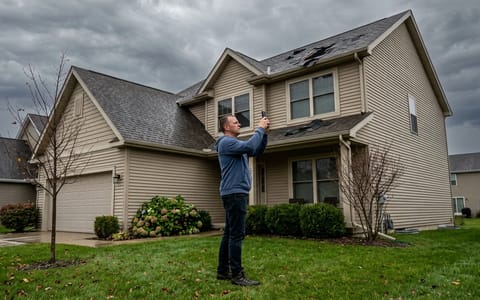
A standard homeowners policy is a package deal. It protects your house and the things inside it. It also protects your bank account if someone gets hurt on your property. Your mortgage lender requires you to have it. You usually pay for it through an escrow account tied to your monthly payment. You can read more about how escrow works in our guide to property taxes and home finances.
A good policy covers four main areas. Dwelling coverage pays to rebuild the physical structure of your house. Personal property coverage pays to replace your furniture, clothes, and electronics. Liability coverage pays for lawyers and medical bills if a guest slips on your icy driveway and sues you. Loss of use coverage pays for your hotel and food if a fire forces you to move out during repairs.
What Your Policy Actually Covers
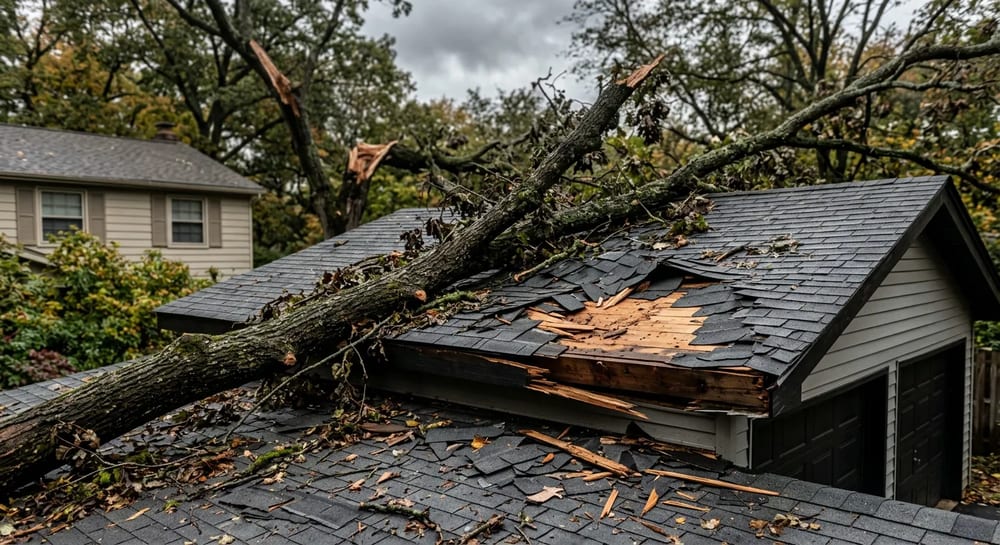
Insurance pays for sudden and accidental damage. If a kitchen fire ruins your cabinets, your policy pays to rebuild them. If a heavy storm blows a tree onto your garage, you are covered. Standard policies cover damage from fire, wind, hail, lightning, theft, and vandalism.
Insurance also covers sudden water damage. If a pipe bursts in the wall and floods your living room, your policy steps in to pay for the drywall and flooring repairs. You can learn how to prevent these messy disasters in our plumbing guide.
Does Home Insurance Cover Water Damage, Roof Leaks, and Mold?
The most common question homeowners ask is whether a specific type of damage is covered. The answer almost always comes down to one word: cause. Insurance pays when a sudden, accidental event causes the damage. It denies the claim when the damage came from slow neglect, normal aging, or an excluded peril like a flood. The same broken pipe can be a covered claim or a denied claim depending entirely on the story behind it.
Water damage is the biggest source of confusion. A pipe that bursts and floods your kitchen overnight is covered. Rising river water that enters through your front door is a flood, and standard policies exclude floods entirely. You need a separate flood policy, often through the National Flood Insurance Program in the US, for that. The table below shows how the same words can land on opposite sides of the line.
| The Situation | Covered? | Why |
|---|---|---|
| A washing machine hose suddenly bursts and soaks the floor | Yes | Sudden and accidental |
| A slow drip under the sink rots the cabinet over a year | No | Long term neglect |
| A storm rips shingles off and rain pours into the attic | Yes | Sudden wind event |
| A 25 year old roof finally wears out and leaks | No | Normal wear and tear |
| A river overflows and floods the basement | No | Flood, needs a separate policy |
| Mold that grows after a covered burst pipe | Sometimes | Often capped at $1,000 to $10,000 |
| Mold from chronic humidity or an ignored leak | No | Maintenance issue |
Roof damage follows the same rule. If a hailstorm or a falling tree damages your roof, your policy pays to repair or replace it. If your roof simply reached the end of its lifespan, the cost is yours. Many insurers now apply a separate, higher wind and hail deductible in storm-prone regions, so read your declarations page to see if that applies to you. Mold is the trickiest of all: it is usually covered only when it follows a covered event, and even then most policies cap the mold payout at a few thousand dollars. You can reduce your risk by catching leaks early in our plumbing guide and keeping your roof in good shape.
What Your Policy Will Never Cover
Home insurance is not a maintenance contract. It will never pay for normal wear and tear. If your roof is 25 years old and starts leaking, insurance will deny the claim. You are responsible for replacing old materials before they fail. You can check typical replacement timelines in our roofing section.
Standard policies also ignore damage from floods and earthquakes. You have to buy separate, specific policies for those natural disasters. Insurance also excludes damage from insects and rodents. If termites eat your wall framing, the repair bill is entirely yours. Keep a close eye out for bugs and read our pest control advice to stop them early.
Understanding Your Deductible
Your deductible is the amount of money you pay out of pocket before your insurance pays a single dime. If a storm causes 15,000 dollars in damage and your deductible is 1,000 dollars, the insurance company writes you a check for 14,000 dollars.
Choosing a higher deductible lowers your monthly premium. Choosing a lower deductible raises your premium. Most homeowners choose a flat deductible between 1,000 and 2,500 dollars. Keep in mind that all construction costs and insurance premiums vary widely based on your region, the scope of the damage, and the age of your home.
Deductible vs Out of Pocket Maximum: What Is the Difference?
People often mix up the deductible and the out of pocket maximum, partly because health insurance uses both terms together. Home insurance is simpler. In most standard homeowners policies there is no separate out of pocket maximum the way there is in health insurance. Your real out of pocket cost on any single claim is your deductible plus anything above your coverage limit. Understanding both numbers tells you exactly how much a disaster will cost you before the insurer steps in.
The deductible is what you pay per claim before the insurer pays anything. Your coverage limit is the most the insurer will ever pay for a covered loss. If your roof costs $40,000 to rebuild but your dwelling limit is only $30,000, you pay your deductible and the $10,000 gap. That gap is the hidden out of pocket cost most homeowners forget about until it is too late.
| Term | What It Means | Who Pays |
|---|---|---|
| Deductible | Fixed amount you pay on each claim first | You, every claim |
| Coverage limit | The ceiling on what the insurer will pay | Insurer, up to the limit |
| Out of pocket cost | Deductible plus any amount above the limit | You |
| Percentage deductible | A deductible set as a percent of your dwelling value (common for wind and hail) | You, often larger than a flat one |
Watch for percentage deductibles. In hurricane, hail, and wildfire regions, insurers often replace your flat dollar deductible with a 1 to 5 percent deductible on the dwelling coverage. On a home insured for $400,000, a 2 percent wind deductible is $8,000 out of your pocket before the insurer pays a cent. Follow these steps to find your true exposure:
- Pull out your declarations page, the one-page summary at the front of your policy.
- Find your flat deductible and check for a separate wind, hail, hurricane, or named-storm deductible.
- If a deductible is a percentage, multiply it by your dwelling coverage to get the real dollar figure.
- Add that worst-case deductible to your emergency fund target so a storm never catches you short.
The Math of Filing a Claim
Filing a claim is a business decision. You should only file when the damage is catastrophic. Every time you file a claim, your insurance company takes note. A single claim can raise your yearly premium by 10 to 20 percent for up to five years.

Before you call your agent, get a repair estimate from a local contractor. Compare the repair cost to your deductible. Then factor in the premium hike. The table below shows why filing small claims is a bad idea.
| Repair Cost | Your Deductible | Insurance Payout | Premium Hike (5 Years) | The Verdict |
|---|---|---|---|---|
| $1,500 | $1,000 | $500 | $1,200 total | You lose $700. Do not file. |
| $3,500 | $1,000 | $2,500 | $1,200 total | You gain $1,300. Borderline choice. |
| $25,000 | $1,000 | $24,000 | $1,200 total | You gain $22,800. File the claim immediately. |
When You Should Keep Insurance Out of It
Never file a claim if the repair cost is close to your deductible. If a tree branch breaks a window and costs 1,200 dollars to fix, just pay for it yourself. If you have a 1,000 dollar deductible, the insurance company only gives you 200 dollars. In return, they will raise your rates for years. You will end up losing money over time.
If you file two claims in a three year period, your company might drop you entirely. Finding a new insurance policy after being dropped is very difficult and very expensive. Save your insurance for massive bills like a total roof loss or a major house fire.
How Much Does Home Insurance Cost and How Do You Get It Cheaper?
Home insurance is one of the few bills you can shrink without giving anything up, simply by shopping it. Premiums vary enormously based on your region, the age and size of your home, your claim history, and even your credit. As a rough guide, an average annual premium in the US runs from about $1,200 to $2,500, but high-risk coastal and wildfire areas can run far higher. Treat any figure as a starting point, not a quote, because rates vary widely by region and home age. The calculator below turns your state's average into a personalized ballpark.
Before you assume you are stuck, understand what actually drives your number. Insurers price the cost to rebuild your home, not its market value, so a small old house can cost more to insure than a big new one. The factors below move the price the most:
- Replacement cost of the structure, including local labor and material prices.
- The age and condition of your roof, wiring, and plumbing.
- Your deductible choice, where a higher deductible means a lower premium.
- Your claim history, since past claims signal future ones to the insurer.
- Distance to a fire hydrant and fire station, and your local crime rate.
To compare quotes fairly and find the cheapest honest price, follow a simple routine once a year:
- Find your current dwelling coverage, deductible, and premium on your declarations page.
- Get three to five quotes for the exact same coverage limits and deductible, never a watered-down version.
- Ask each insurer about bundling your home and auto policies, which often cuts 10 to 25 percent.
- Ask for every discount: monitored alarm, new roof, smoke and water sensors, and being claim-free.
- Raise your deductible from $500 to $1,000 or $2,500 and watch the premium drop, then keep that savings in your emergency fund.
| Move | Typical Premium Impact | Trade-off |
|---|---|---|
| Bundle home and auto | Down 10 to 25 percent | You commit both policies to one carrier |
| Raise deductible to $2,500 | Down 10 to 20 percent | You pay more out of pocket per claim |
| Add monitored security and sensors | Down 2 to 10 percent | Upfront device and monitoring cost |
| Replace an old roof | Down 5 to 20 percent | Large one-time project cost |
| Stay claim-free for years | Down over time | You must self-pay small repairs |
One more common question: is home insurance even required? Legally, no state forces a homeowner to carry it. Practically, your mortgage lender does. As long as you owe money on the home, your loan contract requires you to keep a policy that protects the structure, and the lender can buy expensive coverage on your behalf if you let it lapse. Once you pay off the mortgage, insurance becomes optional, but dropping it means one fire or storm could erase your single largest asset. Keeping your home in good repair, covered in our roofing and electrical guides, also helps you keep cheaper coverage over the long run.
How to Make a Claim Go Smoothly
If you have a massive disaster, you need to act fast. Stop the damage from getting worse. Turn off your main water valve or put a tarp over a broken window. If you ignore a leak and let mold grow, the insurance company will not pay for the mold cleanup. Read our guide to handling home emergencies so you know exactly what to do in the first few hours.

Call your insurance company as soon as the area is safe. They will send an adjuster to look at the damage. Be polite but firm with the adjuster. Keep all your receipts for emergency repairs and hotel stays so you can be fully reimbursed.
How to File a Home Insurance Claim Step by Step
Once you have decided the loss is big enough to claim, the process follows the same path with almost every insurer. Knowing the order keeps you from making a mistake that lets the company reduce or deny your payout. The steps below walk you through a typical claim from the moment damage happens to the final check.
- Make the home safe and stop the loss. Shut off the water, tarp the roof, or board a broken window. Insurers expect you to limit further damage, and ignoring that duty can void part of the claim. Our guide to home emergencies covers the first-hour moves.
- Document everything before cleanup. Take photos and video of every damaged area, the source of the damage, and any ruined belongings. Note the date and time.
- Contact your insurer promptly. Call or open a claim online. Give the date, the cause, and a plain description. You will get a claim number and an adjuster assignment.
- Meet the adjuster. The insurer sends a person to inspect the damage and estimate the repair cost. Walk them through your photos and point out everything affected.
- Get your own repair estimate. A written quote from a local contractor gives you a number to check the adjuster's figure against.
- Review the settlement and the deductible. The insurer subtracts your deductible from the approved amount. With replacement cost coverage, part of the payment may be held back until the work is finished, then released when you submit receipts.
Replacement Cost vs Actual Cash Value
The single setting that decides how big your check is after a loss is whether your policy pays replacement cost or actual cash value. The difference is depreciation. Replacement cost pays what it takes to buy a new equivalent today. Actual cash value pays that amount minus wear, so a ten year old roof is paid as a ten year old roof, not a brand new one. The same storm can hand two neighbors very different checks based on this one line in their policies.
| Term | What It Pays | Best For |
|---|---|---|
| Replacement cost | Full price of a new equivalent item or repair, no depreciation | Most homeowners who want to fully rebuild |
| Actual cash value | Replacement cost minus depreciation for age and wear | Lower premium, smaller payout |
The number that matters most is your dwelling coverage. It should equal the cost to rebuild your house from the ground up, which is not the same as the price you paid or the market value. Land does not burn, so rebuild cost ignores the lot and counts only labor and materials, which rise every year. If your dwelling limit drifts below the true rebuild cost, you carry the gap yourself even on a covered total loss. Construction prices vary widely by region and home age, so review your limit at renewal. Keeping the structure in good shape, as covered in our roofing guide, also protects you from depreciation eating your payout.