What is a loan-to-value ratio?
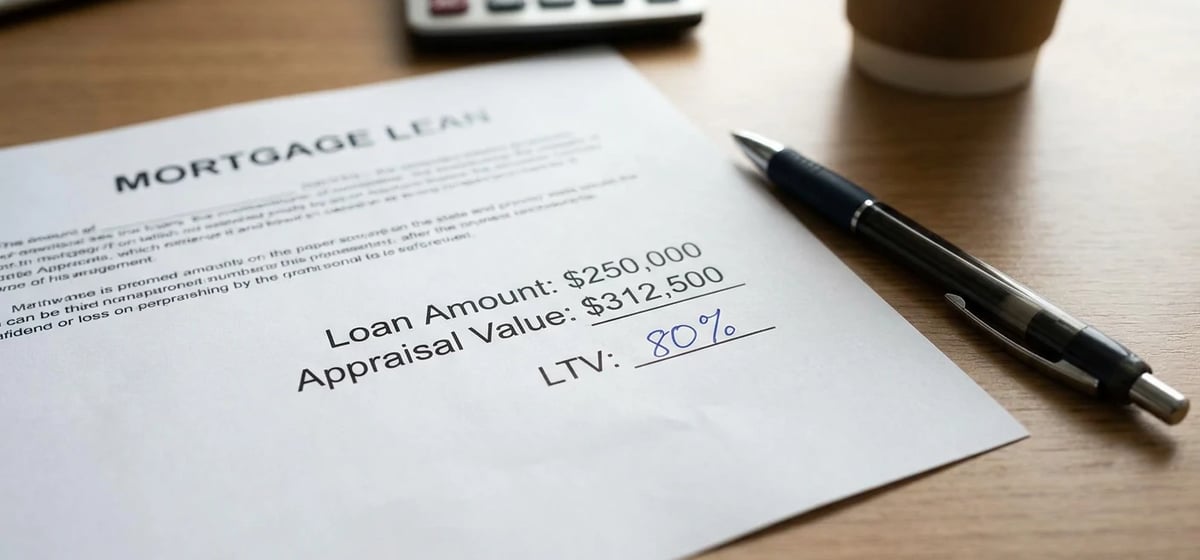
Your loan-to-value ratio is a simple math problem. It compares the amount of money you owe on your mortgage to the total value of your home. Lenders usually call this your LTV. You calculate it by dividing your current loan balance by the appraised value of the property.
Let's look at a quick example. Imagine you buy a house that appraises for $300,000. You put down $60,000 in cash. That means you need to borrow $240,000. You divide $240,000 by $300,000 to get 0.80. Multiply that by 100, and your loan-to-value ratio is exactly 80 percent. This percentage tells everyone exactly how much of the home is financed by the bank.
Why lenders care about this number
Banks and lenders use this percentage to measure their risk. If you stop making payments, the bank has to sell your house to get their money back. A lower ratio means you have more equity in the home. Equity is the portion of the home you actually own free and clear.
If your ratio is high, the bank takes on more risk. A slight drop in property values could mean the house is worth less than the loan amount. If your ratio is low, the bank feels safe. They know they can easily sell the house for more than you owe them. This risk calculation is a big part of how Mortgages work.
How it affects your wallet
This number directly impacts your monthly budget. If your ratio is higher than 80 percent when you buy a home, lenders usually make you pay for private mortgage insurance. You might hear people call this PMI. This insurance protects the lender in case you stop paying. It usually adds 50 to 200 dollars to your monthly payment. These ranges vary based on your credit score and the total size of your loan.
Your ratio also matters when you want to get a new loan. If you are looking into Mortgage Refinancing: When It Is Worth It, a lower ratio helps you get better interest rates. Lenders reserve their best rates for homeowners who owe less than 80 percent of their home value. It also determines if you can get a home equity loan. Most banks will not let you borrow money against your house if your total ratio goes above 80 or 85 percent.
How to lower your ratio
You want this percentage to go down over time. There are two main ways this happens.
- You pay down the loan. Every single monthly mortgage payment reduces your principal balance. Making extra payments toward your principal speeds this up even more.
- Your home goes up in value. If the real estate market in your area gets stronger, your home becomes worth more. This naturally lowers your ratio even if your loan balance stays exactly the same.
Sometimes you can force your home value to go up. Big home improvements like adding a bathroom or finishing a basement can increase your property value. If you think your home value has jumped up significantly, you can pay an appraiser to confirm it. A new appraisal might lower your ratio enough to drop your mortgage insurance right away. You can read more about tracking your home value in our guide on Property Taxes & Home Finances.
What to watch out for
The real estate market goes up and down. If home prices in your neighborhood drop, your home value goes down. This makes your ratio go up. If your ratio goes over 100 percent, you owe more than the house is worth. People call this being underwater on your mortgage. It makes it very hard to sell your house or refinance your loan. You should always try to keep a healthy gap between what you owe and what the house is worth. This protects you if you ever need to sell your home in a hurry during a bad housing market.