What is a service mast?
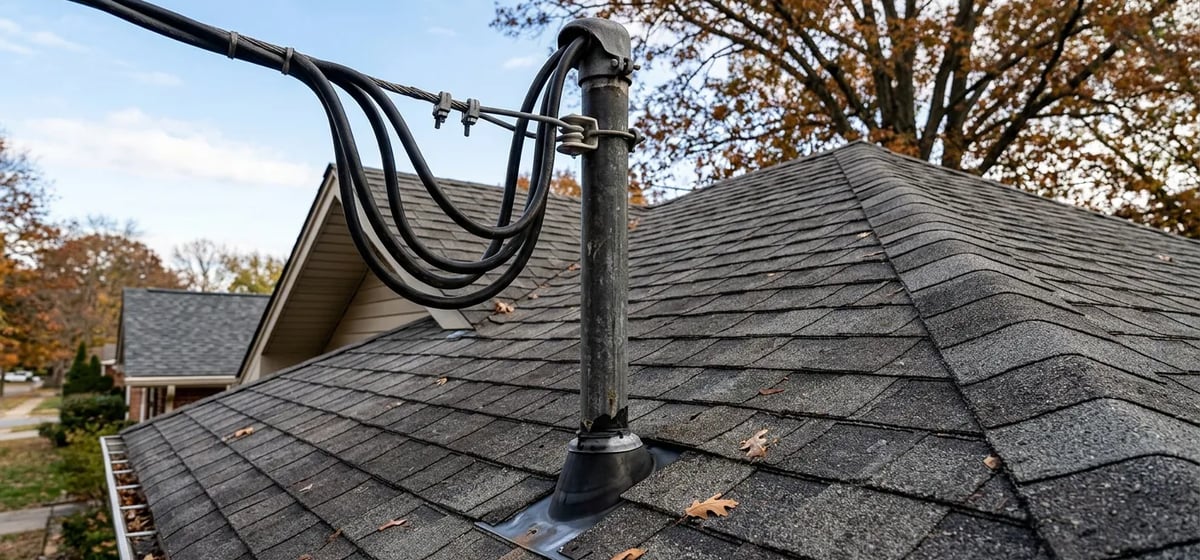
Look up at the edge of your roof where the power lines come in from the street. You will see a tall metal pipe sticking up. That pipe is your service mast. It protects the thick main power wires before they travel down into your electric panel. The word mast actually comes from old sailing ships. On a ship, the mast is the tall wooden pole holding the sails. Electricians borrowed the word because this metal pipe stands tall on your roof just like a ship mast.
The mast has a curved cap on top called a weatherhead. This cap stops rain and snow from sliding down inside the pipe. The wires loop out of this cap and connect to the utility lines. The service mast is the physical bridge between the city power grid and your home. If you want to learn more about how power moves through your house, check out our guide to Electrical systems.
Why it is important
The main job of the service mast is safety. The power wires coming from the street carry a massive amount of electricity. The mast keeps these dangerous wires high up in the air. This height is very important. It stops tall delivery trucks, moving vans, and even tall people carrying ladders from accidentally hitting the live wires.
The metal pipe also acts as a tough shield. It protects the wires from sun damage, ice, and biting pests like squirrels. Without the mast, your home wouldn't have a safe way to bring in the electricity you need every day.
Signs of trouble
Your service mast takes a beating from the weather. Over the years, things can go wrong. You should look at your mast a few times a year from the ground. Please don't climb up and touch it.
- Leaning or bending: A heavy storm or a falling tree branch can bend the pipe. If the mast leans, it can pull the wires loose.
- Rust and corrosion: Older homes often have galvanized steel masts. Over decades, the metal rusts. Severe rust can eat holes right through the pipe.
- Roof leaks: The mast passes straight through your roof. A rubber boot seals the hole around the pipe. If that rubber dries out and cracks, water will leak into your attic. You can read more about keeping your roof watertight in our Roofing guide.
- Loose mounting straps: Metal straps bolt the mast to the side of your house. If the bolts pull out of the wood, the mast becomes loose and dangerous.
Costs and repairs
Many homeowners think the power company owns the service mast. Usually, the utility company only owns the wires coming from the pole up to the connection point. You own the weatherhead, the mast pipe, the meter box, and the wires inside the pipe. If a tree branch falls and bends your mast, you have to pay to fix it.
Fixing or replacing a service mast is a job for a pro. A licensed electrician must do the work, and the city will require a permit. The utility company also has to come out to turn off the power at the street before the work begins. Replacing a damaged service mast generally costs 800 to 2,000 dollars. Prices depend on your location, the height of your roof, and whether the meter box also needs replacing. Keep in mind that costs vary widely by region. For more tips on hiring the right pro, visit our guide on Hiring Contractors & What Things Cost.